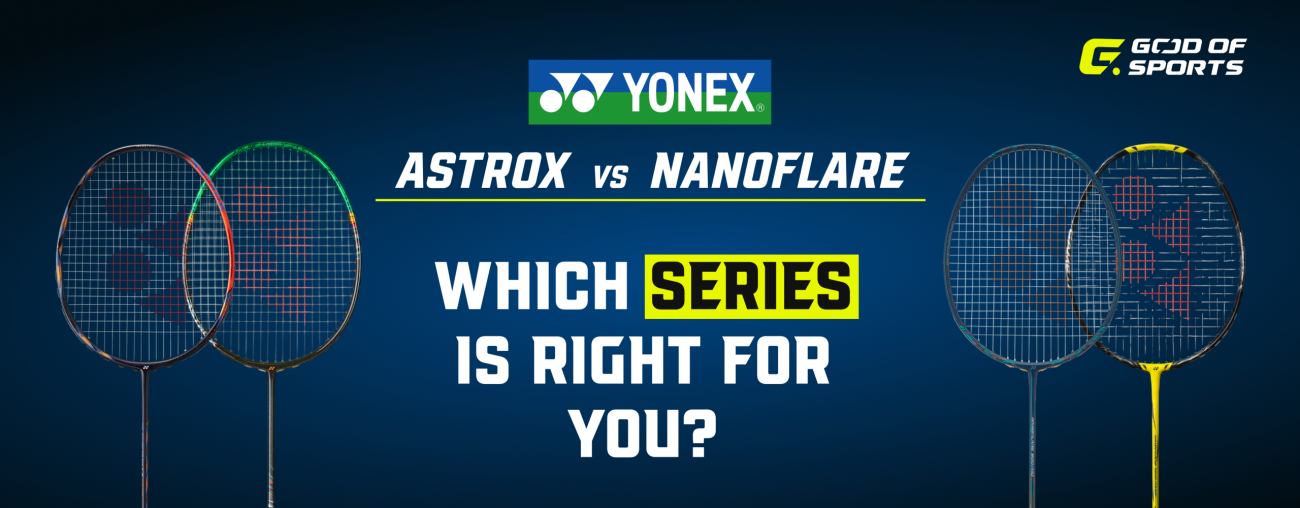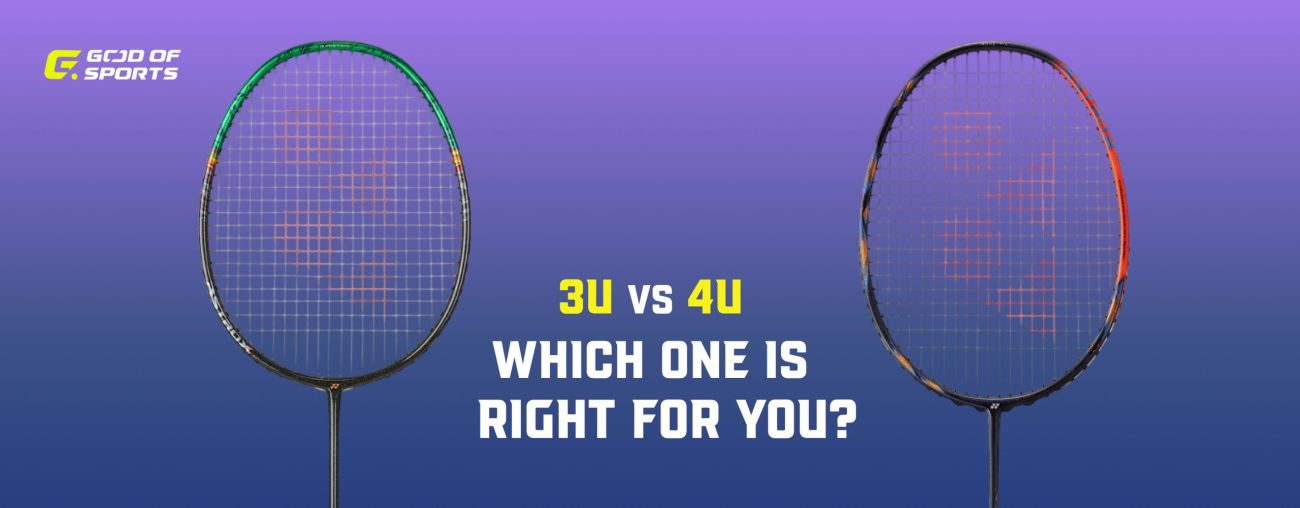

Badminton is the sport we know deepest at God of Sports. India is a badminton nation. We’ve sold Yonex racquets across every level — from enthusiastic beginners who’ve never played before to state-level players who know exactly what they want and will test us if we get a recommendation wrong. Astrox and Nanoflare are Yonex’s two flagship lines, and the question of which to buy is the most common badminton question we receive, by a significant margin.
We’ve played with both series. We’ve watched players at our events use both. We’ve spoken to coaches about when they recommend each. This guide is the distillation of all of that into the clearest framework we can give you.
The Question That Starts Every Badminton Conversation
Two customers came to us within the same week asking about Yonex racquets. Arjun, 28, plays singles three times a week in a corporate league in Pune. His game: rear-court dominant, powerful smash, wins most points by pushing opponents into the backcourt. Pradeep, 31, plays doubles five times a week. He’s the net player in his pair — quick hands, fast reflexes, wins points by intercepting and putting away net kills.
Same question. Same Yonex family. Opposite answers.
Arjun: Astrox 88D Pro. Pradeep: Nanoflare 1000 Game. Both came back to tell us the racquet felt like it was built for them. That’s what happens when the recommendation is right.
Quick Answer — If You’re in a Hurry
Power player? Smasher? Singles? Rear-court dominant? → Yonex Astrox series. Head-heavy, built for smash, rotational power.
Speed player? Net attacker? Doubles net? Quick hands? → Yonex Nanoflare series. Head-light, built for speed, explosive net play.
All-round? Not sure? Beginner? → Read the full guide. Your natural style will show itself in the questions below.
The Core Philosophy — What Each Series Was Built For
Astrox: Rotational Power
The Astrox series was engineered around one thing: maximum smash power. Yonex achieved this through what they call the Rotational Generator System — strategic weight distribution between the top of the frame, the sides, and the joint (where the shaft meets the frame). The head-heavy balance amplifies the whipping motion of a powerful smash, adding pace that you couldn’t generate with a neutral-balance racquet.
The frame uses high-modulus graphite and Namd fibre — materials that store energy during the swing and release it at impact. The result is a racquet that rewards players with aggressive rear-court games. When Kento Momota — the Japanese world champion — plays his signature steep cross-court smash, his racquet is an Astrox.
Nanoflare: Speed and Net Domination
The Nanoflare series is built for a different kind of winning: winning through speed. The head-light balance means the racquet moves faster through the air, enabling quicker preparation time and faster swings. This is what doubles net players need — the shuttle arrives fast and close, and you have milliseconds to react and redirect.
Yonex’s Nanocell Neo technology bonds nanomaterial to the graphite fibres, creating a frame that’s lightweight but extremely stiff and resilient. Stiffness in a head-light frame means the racquet doesn’t flex on impact — the energy goes into the shuttle, not absorbed by the frame. The result is a crisp, fast response at net.
Head-to-Head DNA Comparison
| Feature | Astrox Series | Nanoflare Series |
| Design Purpose | Power, smash, overhead aggression | Speed, net attack, quick swings |
| Balance Point | Head-heavy | Head-light |
| Frame Shape | Isometric head — larger sweet spot | Stiff, more compact head |
| Best Stroke | Smash, drop shot, rear-court drive | Net kill, flick, front-court play |
| Shaft Flexibility | Medium to stiff (depends on model) | Stiff — fast response |
| Playing Style | Singles baseline, doubles smasher | Doubles net player, singles quick game |
| Tech Highlight | Rotational Generator System (weight distribution) | Nanocell Neo (nanomaterial speed frame) |
| Player Type | Power-first, rear-court dominant | Speed-first, reflexes, net aggression |
Which One Is Right for You — The Decision Matrix
| You should choose… | Astrox | Nanoflare |
| Your best shot is… | Rear-court smash | Net kill / front-court |
| You play mostly… | Singles or doubles smasher | Doubles net player |
| Your court position is… | Back court dominant | Net dominant, intercepting |
| Your body type… | Strong wrist/arm for power | Fast hands, good reflexes |
| You win points by… | Smashing opponents out of position | Quick net kills and fast exchanges |
| You admire players like… | Viktor Axelsen (power-dominant) | Lee Chong Wei (speed-precision) |
A Deeper Look: Playing Style Profiles
Buy Astrox if you are: The Power-First Singles Player
You’re playing singles, or you’re the back-court player in doubles. You love the smash — it’s your primary weapon. Points typically end with you hitting a steep, hard smash into the tramline or a fast cross-court drive your opponent can’t reach. You have strong wrists and forearm strength. When you walk onto court, your mindset is attack.
The Astrox rewards this completely. The head-heavy balance amplifies your natural smashing power. You don’t need to consciously swing harder — the racquet does the work. The trade-off: quick reflex shots at the net feel slower because you’re moving a heavier frame.
Buy Nanoflare if you are: The Speed-First Net Player
You play doubles as the front player. Your game is about quick exchanges, interceptions, and net kills. A shuttle arrives at the net from a drive and you need to put it away before the opponent can recover. You don’t necessarily smash hard — you smash smart and fast. Your reflexes are your asset.
The Nanoflare puts a lighter, more responsive frame in your hand. You can prepare faster, swing faster, and redirect the shuttle faster than with a head-heavy racquet. Your kills feel crisp. The trade-off: rear-court smashes carry less natural power — you’re generating it all from technique and arm speed.
Vikram had been playing badminton for 18 months and wanted to upgrade. He came to us asking for the Astrox 99 Pro because ‘it’s what good players use.’ We asked him to describe his last five matches. He lit up talking about his net kills. He mentioned his smash three times but described it as ‘okay.’ His doubles partner handled the smashing. Vikram was the net player.
We recommended the Nanoflare 800 Pro instead. He was hesitant — he’d told everyone he was getting an Astrox. We asked him to try both in hand. He picked up the Nanoflare and swung it at an imaginary shuttle. ‘Oh. That’s fast.’ He bought the Nanoflare. Three months later he told us his net kill rate had improved dramatically.
Complete Lineup: Which Specific Model?
| Racquet | Best For | Level | Price (INR) | Weight |
| Astrox 99 Pro | Singles smasher, competitive | Advanced | ~₹16,000+ | 4U (83g) |
| Astrox 88D Pro | Doubles attacker, smash-first | Advanced | ~₹14,000+ | 4U (83g) |
| Astrox 77 Pro | All-round power, intermediate-advanced | Int-Adv | ~₹10,000+ | 4U (83g) |
| Astrox 7 | Beginner-intermediate, learning power | Beginner | ~₹2,500–5,000 | 5U (78g) |
| Nanoflare 1000 Game | Competitive speed doubles, net attack | Advanced | ~₹14,000+ | 4U (83g) |
| Nanoflare 800 Pro | Intermediate-advanced, speed game | Int-Adv | ~₹8,000+ | 4U (83g) |
| Nanoflare 370 Speed | Beginner wanting speed play | Beginner | ~₹2,000–4,000 | 5U (78g) |
Our Top Astrox Picks — Detailed
Yonex Astrox 99 Pro — ~₹16,000+
Head-Heavy | 4U (83g) | Stiff Shaft | Singles Dominant | Rotational Generator System
This is Viktor Axelsen’s racquet. Axelsen is the current Olympic champion. When we say the Astrox 99 Pro is built for the best players in the world, we’re not using marketing language — it literally is. For Indian players, this means: if you play competitive club badminton or inter-state level, your game can access this racquet’s full capability. The stiff shaft means no energy loss on fast, powerful swings. The head-heavy balance amplifies smash power automatically. The sweet spot on the isometric head is large enough to forgive minor mis-hits. This is the racquet for players whose technique is locked in and who want every watt of smash power available to them.
Buy it if: You play competitive badminton, your technique is established, and your primary weapon is the smash. You want the best power racquet money can buy.
Skip it if: You’re a net player, a doubles front-player, or your game is built on speed rather than power. You’ll be fighting the head-heavy balance all day.
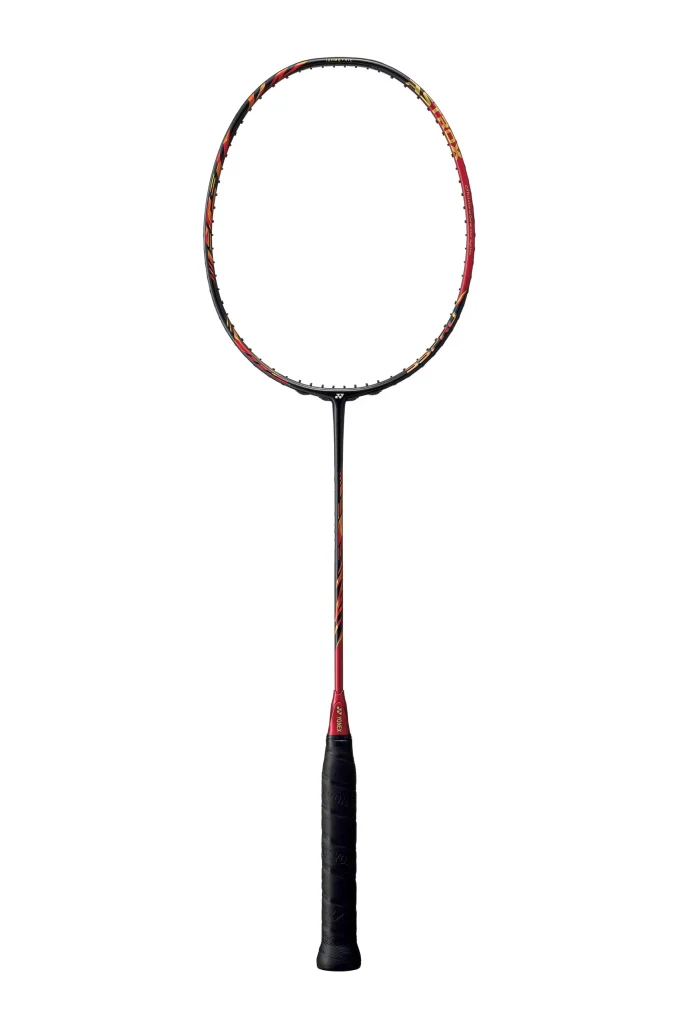
Yonex Astrox 77 Pro — ~₹10,000+
Head-Heavy | 4U (83g) | Medium-Stiff Shaft | All-Round Power | Intermediate-Advanced
The 77 Pro sits in the sweet spot between accessibility and genuine performance. The shaft is slightly more flexible than the 99 Pro, which means it generates power even for players whose technique isn’t perfectly locked in. For competitive recreational players — those playing 3–4 times a week, entering club tournaments, working with a coach — this is the Astrox that makes the most sense. It rewards power play without punishing technical imperfections. Our most popular Astrox sale at this level.
Buy it if: You play 3–4 times per week, your smash is developing well, you compete at club level, and you want genuine Astrox performance without the full pro-grade demands.
Skip it if: Your game is not power-first. And if you’re a beginner, the 77 Pro is above your immediate needs.
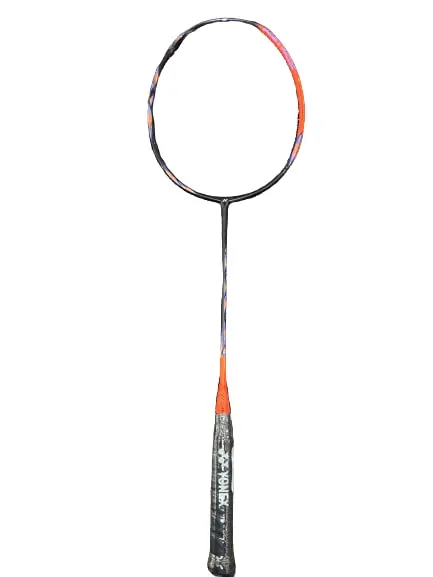
Our Top Nanoflare Picks — Detailed
Yonex Nanoflare 1000 Game — ~₹14,000+
Head-Light | 4U (83g) | Stiff Shaft | Speed-First | Nanocell Neo Technology
This is where the Nanoflare line delivers its absolute maximum. The 1000 Game is a specialist racquet — it’s built for competitive doubles net players who live at the front of the court and win through speed and precision. The Nanocell Neo technology creates a frame so stiff and responsive that net kills feel instantaneous. There’s no flex absorbing energy. The shuttle goes where you send it, at the speed you generate, without lag. For a player in a competitive doubles pair whose role is front-court domination, this is the finest racquet Yonex makes for that specific purpose.
Buy it if: You play doubles front-court at a competitive level, your role is net attack and interception, and your game depends on speed and quick exchanges.
Skip it if: You’re a singles-dominant player who values rear-court power. The head-light balance will leave you undershooting smashes.
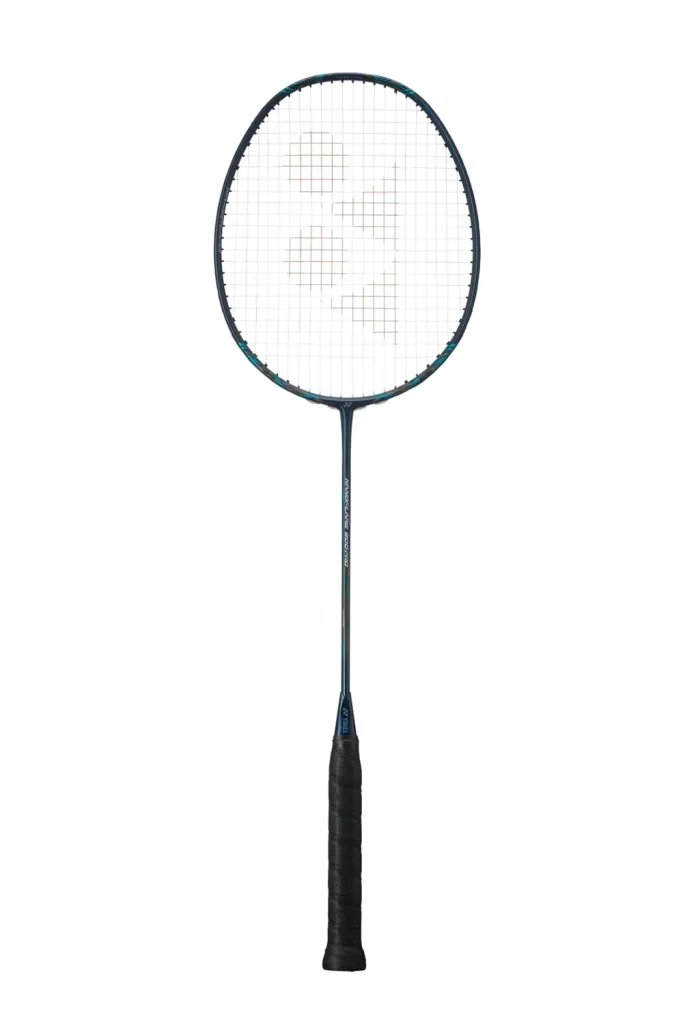
Shop Yonex Nanoflare 1000 Game →
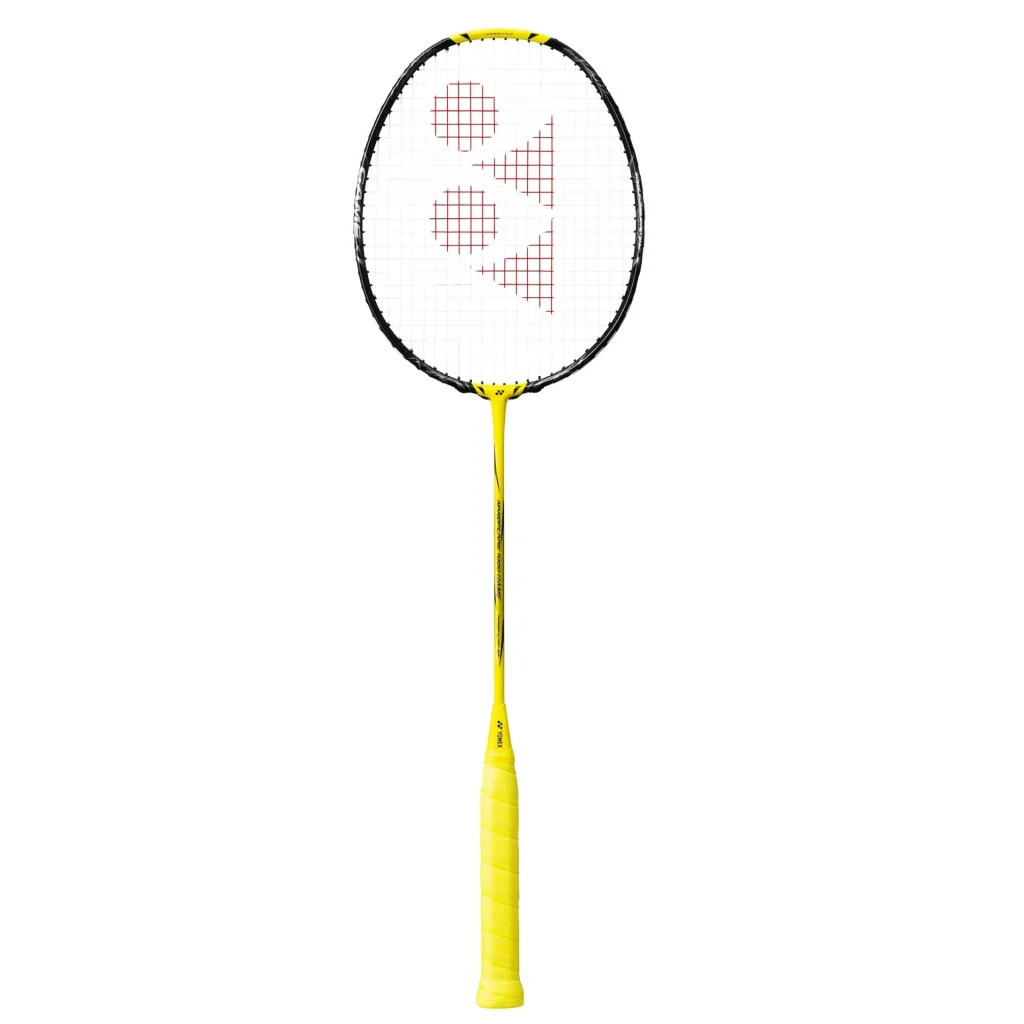
Yonex Nanoflare 800 Pro — ~₹8,000+
Head-Light | 4U (83g) | Medium-Stiff | Speed Game | Intermediate-Advanced
The 800 Pro delivers the Nanoflare philosophy at a price point that makes sense for serious recreational and competitive-recreational players. The shaft is slightly more flexible than the 1000 Game, giving you more power generation without perfect technique — you don’t need to be generating all your speed from arm mechanics alone. For a doubles player developing their net game, or a singles player who wins through speed and placement rather than raw smash power, this is our recommendation. Strong value at this price.
Buy it if: You’ve played 12+ months with coaching, you play speed-first badminton, and you want to invest in a racquet that grows with your net game.
Skip it if: You’re a power smash player. You’ll find this racquet underwhelming on overhead smashes from the rear court.
Shop Yonex Nanoflare 800 Pro →
The String Question — Don’t Ignore This
A Yonex Astrox or Nanoflare at full price, strung with whatever the shop puts in it, is a worse purchase than a slightly cheaper model strung correctly for your game.
String matters as much as the racquet — maybe more. For Astrox (power game): higher tension (24–28 lbs) maximises smash control. The string bed should be tight. Yonex BG65 Ti or Aerosonic are excellent choices. For Nanoflare (speed game): lower tension (20–24 lbs) gives a slightly larger sweet spot for net play and adds some power to compensate for the head-light frame. BG80 Power or Nanogy 98 work beautifully.
When you buy from GOS, tell us your racquet model and playing style. We’ll recommend the right string and tension for your game. Wrong string on the right racquet is a waste of a good purchase.
Frequently Asked Questions
Q: Can a beginner use an Astrox or Nanoflare?
The beginner-range models (Astrox 7, Nanoflare 370 Speed) are designed for players learning the game. Pro-range models (Astrox 99 Pro, Nanoflare 1000 Game) require established technique to use effectively and aren’t ideal for beginners. Buying a pro-range racquet as a beginner doesn’t accelerate learning — it makes the learning harder.
Q: Is Astrox better than Nanoflare?
Neither is ‘better’ — they’re built for different games. Astrox is better for power-first players. Nanoflare is better for speed-first players. The best racquet is the one that matches your natural playing style.
Q: What’s the difference between 4U and 5U weight?
4U = ~83g. 5U = ~78g. Lighter (5U) swings faster and is better for beginners or players with arm sensitivity. Heavier (4U) generates more power but requires more arm strength. Most competitive players use 4U.
Q: How often should I restring my racquet?
For regular players (4+ sessions/week): every 3–4 months. For recreational players (2 sessions/week): every 6 months. Strings lose tension over time, which affects performance. Many players never restring and wonder why their racquet feels ‘dead.’
Q: Does Yonex make racquets for doubles specialists?
Yes — the Astrox 88D Pro is specifically designed for doubles attackers (back court), while the Astrox 88S Pro is for singles players. The Nanoflare series is generally built with doubles net play in mind, though it works for singles speed players too.
Q: What’s the warranty on Yonex racquets?
Yonex provides warranty against manufacturing defects on all racquets sold through authorised dealers. God of Sports is an authorised Yonex retailer. We source directly and can support any warranty issues.
Final Verdict
You smash for points, play rear-court, and your strength is power → Astrox. Budget: Astrox 77 Pro (~₹10,000+). Performance: Astrox 99 Pro (~₹16,000+).
You win at the net, play doubles front-court, and your strength is speed → Nanoflare. Budget: 800 Pro (~₹8,000+). Performance: 1000 Game (~₹14,000+).
You’re an all-round player or a beginner building your game → Consider the Yonex Arcsaber 11 Pro (all-round) or Astrox 7 / Nanoflare 370 as entry level before committing to a style.
Related: 3U vs 4U Badminton Guide →
Related: Best Badminton Racquets India 2026 →