


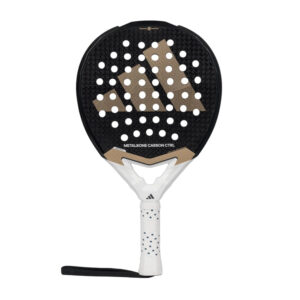
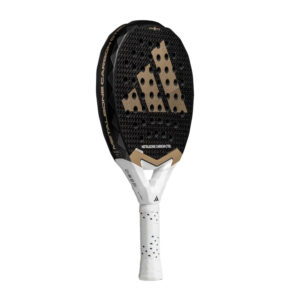


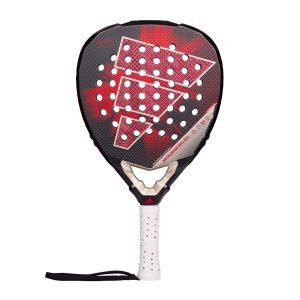
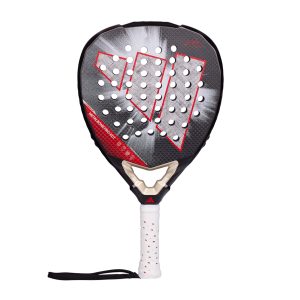
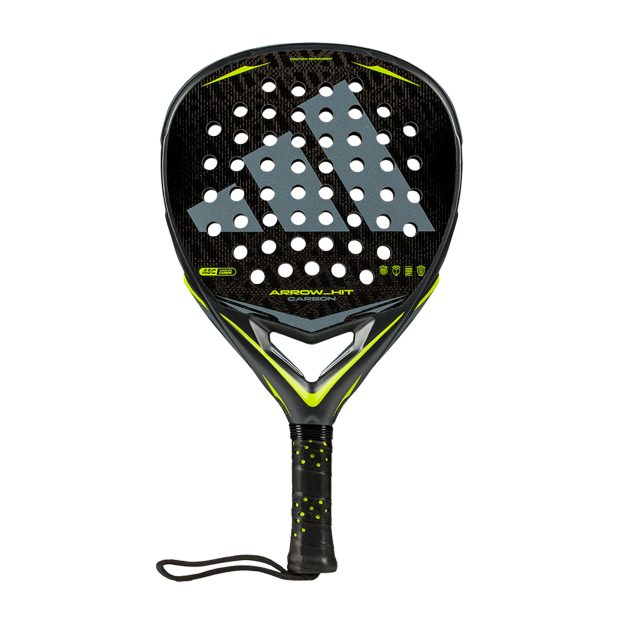
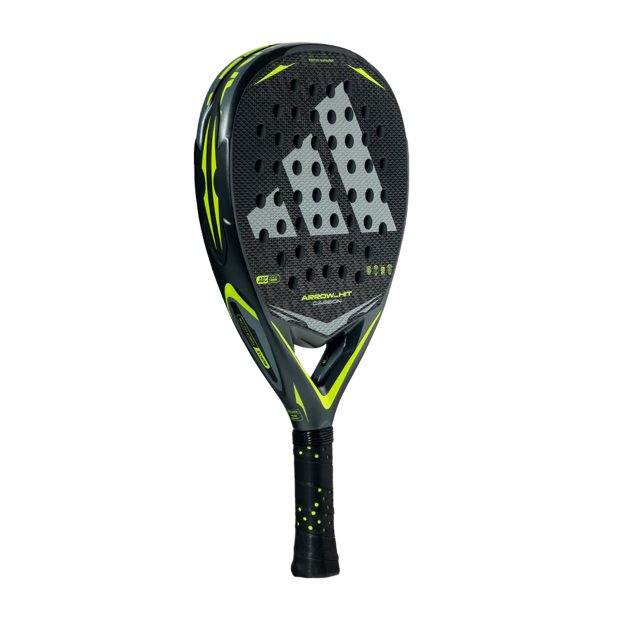
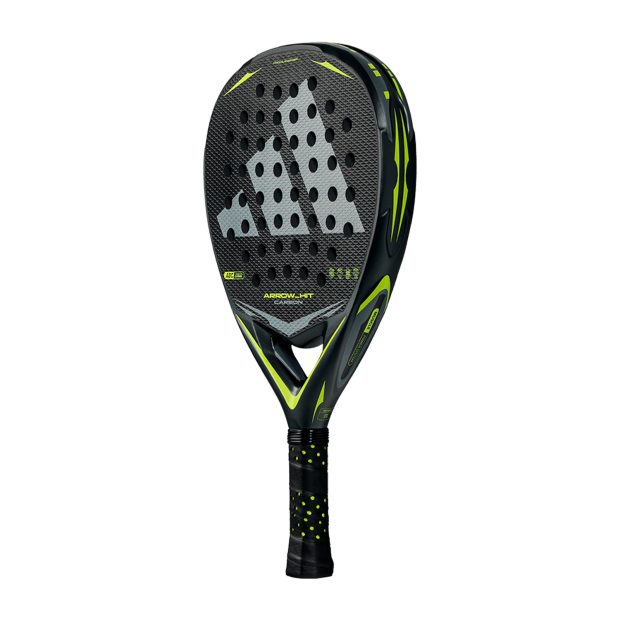
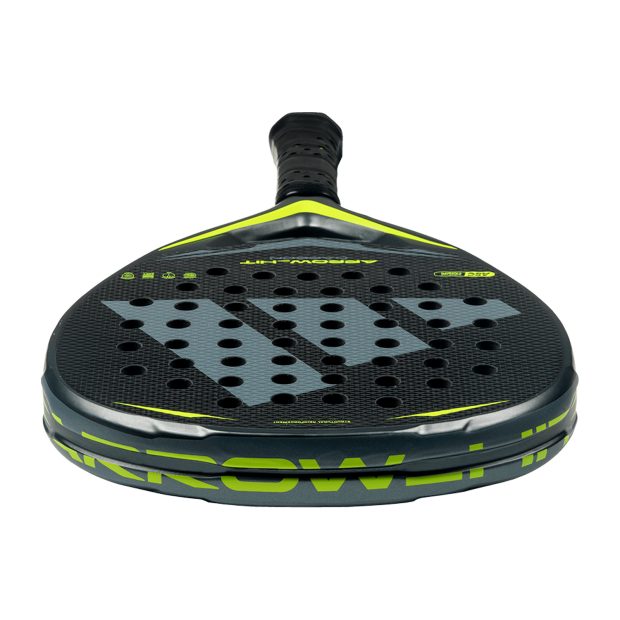
Adidas Arrow Hit Carbon Padel Racquet 2026
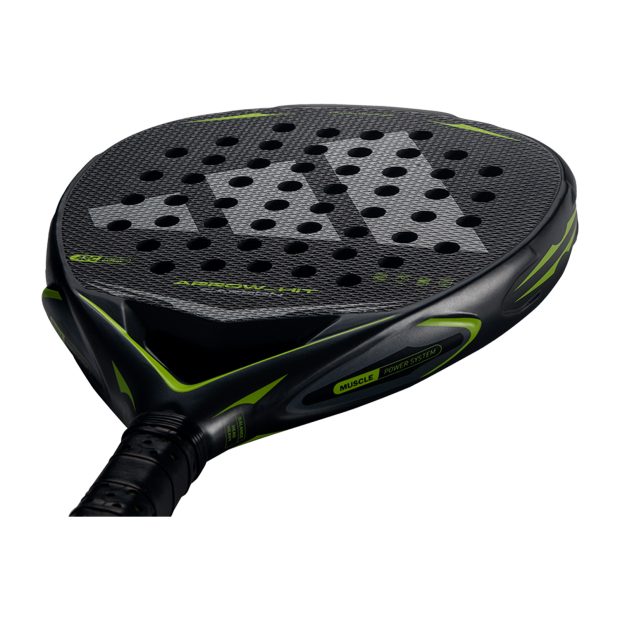
Adidas Arrow Hit Carbon Padel Racquet 2026 is a attacking diamond for intermediate-to-advanced players who want carbon performance without the uncompromising demands of the Metalbone flagship range.
Estimated Delivery Time: 2 - 4 Days (Delivery subject to pincode)
₹35,699.00 Original price was: ₹35,699.00.₹24,443.00Current price is: ₹24,443.00.
Estimated Delivery Time: 2 - 4 Days (Delivery subject to pincode)
Watch this video before Buying
Shop Online
Shop 24/7 with your smartphone
Shipping Worldwide
Free Shipping All Over India
Pay on Delivery
You're in safe hands
Frequently Bought Together
[cuw_fbt]
Product Details
Specification
Description
FAQ's
Specification
| Shape | Diamond (Head-Heavy, High Balance) |
| Face Material | ASC Carbon 3K — Adidas Surface Concept interlaced carbon fibre, moderate-stiffness weave |
| Core | Soft Performance EVA — low-density rubber (black cap) |
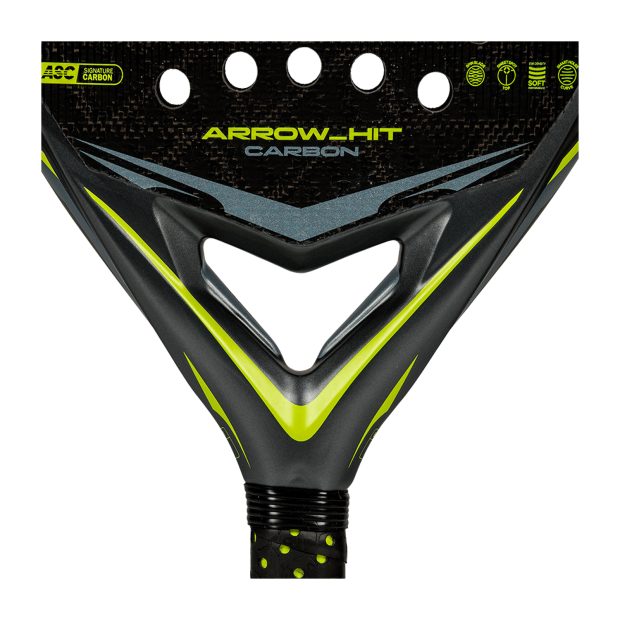
| Frame | Carbon Fibre with Structural Reinforcement |
| Weight | 368g |
| Balance | High — 265mm (head-heavy, adjustable via Intelligent Balance System) |
| Surface Texture | Spin Blade Decal — 3D relief texture for spin and contact feel |
| Hole Pattern | Smart Holes Curve — curved hole arrangement for consistent spin generation |
| Key Technologies | Intelligent Balance System (IBS) · Muscle Power System (MPS) · Power Groove · Power Extra Grip (EPG) · Structural Reinforcement |
| Pro Player | Non-signature line — Adidas Arrow Hit family 2026 |
| Skill Level | Intermediate-Advanced to Advanced |
| Playing Style | Offensive Attacking — Diamond, Left-Side Dominant |
Description
God of Sports Expert Verdict on the Adidas Arrow Hit Carbon Padel Racquet:
Adidas Arrow Hit Carbon Padel Racquet is the attacking diamond for players who want to step into carbon performance without the technical demands of the Metalbone elite range. It sits in the sweet spot of the 2026 Adidas lineup — more accessible than the Metalbone 3.5 or Carbon Padel, significantly more capable than a fiberglass model, and equipped with a technology stack that rewards aggressive, spin-oriented left-side play at intermediate-to-advanced club level.- Who it is for: Intermediate-to-advanced players who play an attacking style — smashes, viboras, aggressive net play — and want their first carbon-faced diamond padel racquet. Also a strong choice for advanced players who find the Metalbone 3.5’s stiff 16K face too demanding but want to stay in the diamond offensive shape.
- What it does best: The diamond shape and head-heavy balance concentrate swing mass at the top of the face for natural smash leverage. The ASC Carbon 3K face delivers a crisp, direct ball exit with enough dwell time to feel the contact — more forgiving on timing than the Metalbone flagship. The Intelligent Balance System lets you tune the racquet between more power and more control without changing equipment.
- The honest caveat: The Arrow Hit Carbon is still a head-heavy diamond — it is not a beginner’s tool. Players who are not yet consistent on overheads and viboras will find the tight sweet spot and head-heavy balance challenging. If you are in your first 12 months of padel, start with the Adidas Metalbone Team 2026 (fiberglass face, more forgiving). The Arrow Hit Carbon is for players who already have an attacking game and want carbon precision to go with it.
- GOS verdict: An excellent value proposition in the 2026 Adidas range. For Indian club players who play 2–4 times per week with an attacking mindset and want to move from fiberglass to a carbon diamond, the Arrow Hit Carbon is a natural and well-matched step up. The Intelligent Balance System adds genuine practical value — one racquet that can be dialled for power on match day and set neutral for training.
Performance Analysis of Adidas Arrow Hit Carbon Padel Racquet:
Smashes and Viboras (8/10) : The Arrow Hit Carbon is genuinely strong on smashes and viboras — the diamond shape and head-heavy balance concentrate swing mass at the top of the face in the same way as any diamond offensive racquet, and the ASC Carbon 3K face transfers that mass into the ball with crisp, explosive pace. What distinguishes it from a Metalbone 3.5 is the margin of error: the 3K face has enough dwell time to make fractionally mistimed overheads still usable rather than catastrophically off-line. Players with solid but not perfectly consistent technique will find smashes arrive with authority even when timing is 90% rather than 100%. The Power Extra Grip handle adds a meaningful lever advantage — compact swings generate more head speed than on a standard-length handle. On Indian artificial grass courts, the Arrow Hit Carbon’s smashes land heavy and stay low; the Spin Blade Decal and Smart Holes Curve add spin that makes kick smashes difficult to recover from the back glass. A genuinely effective attacking tool at this level. Bandeja and Lobs (7.5/10) : The Arrow Hit Carbon is more capable on bandejas and lobs than a pure offensive specification might suggest. The ASC Carbon 3K face’s moderate stiffness provides dwell time that allows you to feel the ball and adjust placement mid-contact — something the stiffer Metalbone 3.5 does not offer as readily. Bandejas land consistently and with good depth; the Spin Blade Decal loads natural rotation on the contact, making the ball skid through on the opponent’s side after the glass. Defensive lobs are manageable and reliable — the Soft Performance EVA core absorbs enough pace from the incoming ball to give you control on lifts even under pressure. The head-heavy balance still works against extreme deceleration on touch bandejas compared to a round or neutral model, but the Arrow Hit Carbon is meaningfully better at mid-court placement shots than the flagship Metalbone models at the same weight class. Volleys and Blocks (7.5/10) : At the net, the Arrow Hit Carbon is fast and effective for its level. The MPS reinforced throat holds the frame square on fast incoming volleys, meaning blocks and reflex volleys stay on target without the face rotating on contact. Punch volleys benefit from the Power Groove’s rigidity and the head-heavy balance — even compact swings inject real weight into the ball, which at club level is often enough to create winners. The Intelligent Balance System is relevant here: in its more neutral setting, the racquet handles faster in both directions at the net, making reactive coverage easier. In its head-heavy setting, punch volleys carry more pace but require faster preparation. Advanced players who take the ball early and dictate terms at the net will find the Arrow Hit Carbon confident and reliable. Players whose net game involves a lot of reactive scrambling will benefit from setting the IBS toward neutral for match play. Defense and Wall Play (7/10) : Defense is the Arrow Hit Carbon’s most demanding area, as expected from any head-heavy diamond. The high balance slows racquet movement in rushed defensive moments, and the carbon face transmits pace more directly than fiberglass — fast balls at the body require conscious dampening. That said, the Soft Performance EVA core provides meaningful comfort on hard defensive contacts, and the MPS keeps the frame stable on walls and glass — the ball comes off predictably even in tight angles when you have time to set up. The Intelligent Balance System helps significantly here: setting the tab toward neutral for matches where you know you will be under more defensive pressure is a practical strategy that this racquet uniquely enables. Players with good defensive footwork who minimise rushed situations will find the Arrow Hit Carbon adequate from the back. Read our guide on how to use the walls in padel for wall-play technique that works well with this profile.Technology used in Adidas Arrow Hit Carbon Padel Racquet:
- ASC Carbon 3K Face (Adidas Surface Concept) — ASC is Adidas’s exclusive interlaced carbon pattern applied to the hitting surface. The pattern traces the outline of the Adidas three-stripe logo, strategically reinforcing key areas of the face with additional stiffness exactly where impact forces are highest. Carbon 3K refers to 3,000 carbon fibre filaments per tow — a moderate weave density that is stiffer and more explosive than fiberglass, while remaining more flexible and tactile than the 16K Aluminized Carbon of the Metalbone flagship models. On court: you feel a crisp, direct contact on every shot. The ball exits fast and with clear directional feedback, but the face does not feel harsh or stiff on slightly off-centre hits — the 3K weave provides enough flex to cushion timing errors that a 16K face would punish more severely.
- Intelligent Balance System (IBS) — A sliding metal tab on an internal track inside the frame, adjusted with an Allen key. Move the tab toward the head and the balance shifts head-heavy, increasing smash leverage and inertia on overheads. Move it toward the grip and the balance becomes more neutral, improving maneuverability and control. On court: the racquet adapts to your game plan rather than forcing you into a fixed specification. On tournament match day, set it head-heavy for maximum smash output. In training sessions where you want to work on defence and placement, dial it toward neutral. This is a practical advantage that higher-tier Metalbone models offer only with the full Weight and Balance System.
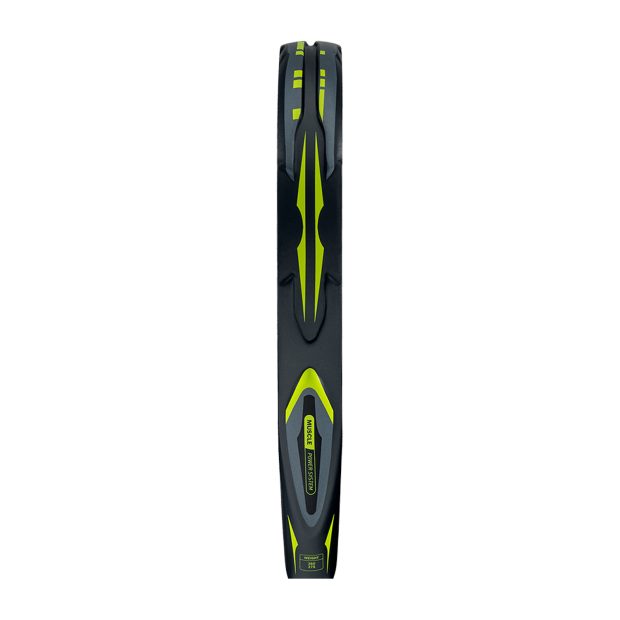
- Muscle Power System (MPS) — Carbon-fibre tendons (ribs) running through the throat of the racquet — the junction between handle and head that experiences the highest torsional stress during play. On a standard frame, an off-centre impact causes the throat to twist slightly, rotating the face and sending the ball in an unintended direction. The MPS resists that twist, keeping the face square through contact even on balls that are not struck dead centre. On court: your direction holds on difficult contacts. This is an evolution of the Dual Exoskeleton technology from previous Arrow Hit generations — the 2026 version integrates the carbon tendons more precisely into the frame structure.
- Power Groove — A structural rail inserted into the perimeter of the frame around the head zone — the area that experiences maximum flex under load on hard shots. The Power Groove stiffens this zone, preventing energy loss through frame deformation on powerful smashes. On court: your hardest hits feel more solid and punishing. The frame does not flex away from the ball on maximum effort contacts — the energy stays in the shot.
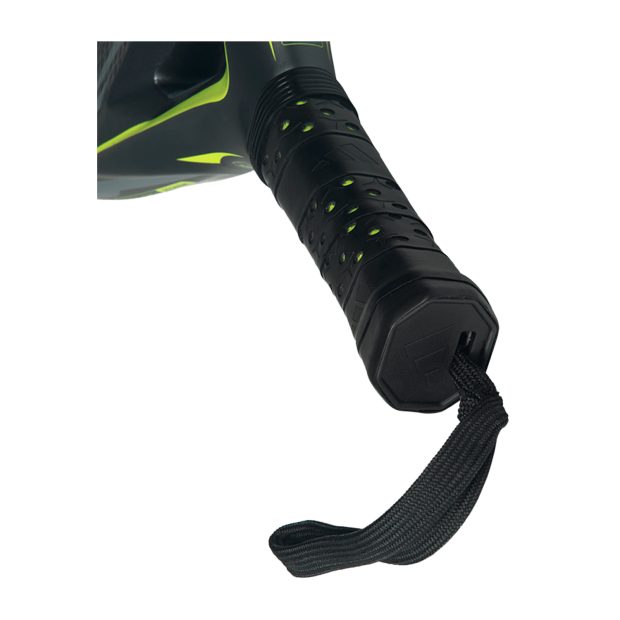
- Power Extra Grip (Extended Handle) — The handle on the Arrow Hit Carbon is longer than a standard padel grip. A longer lever arm increases the inertia generated at the top of the swing — more mass is moving at pace when you make contact, amplifying smash weight without requiring additional arm strength. On court: overheads feel heavier. Viboras generate more leverage from the wrist. Two-handed backhand players benefit from the extra handle length. Also increases the surface area available for grip layering — useful in Indian heat where re-gripping regularly is essential.
- Spin Blade Decal — A three-dimensional embossed texture applied across the hitting surface, increasing friction between ball and face. On court: viboras and bandejas grip the ball naturally through the swing, loading rotation without requiring deliberate wrist exaggeration. Kick smashes angle more sharply after the bounce. Sliced lobs carry topspin that makes wall recovery uncomfortable. The Decal version provides controlled, consistent spin application — distinct from the rougher Gritt variant used on fiberglass models.
- Smart Holes Curve — A curved hole arrangement specifically designed to optimise spin generation across all shot types. On court: every shot — not just deliberate spin shots — benefits from the hole pattern’s interaction with ball rotation. The curved layout creates more consistent aerodynamics through the swing, aiding the spin that Spin Blade Decal initiates. A technically minor feature, but one that works in combination with the surface texture to make spin the Arrow Hit Carbon’s consistent tactical advantage.
- Structural Reinforcement — Perimeter reinforcements distributed around the frame that increase resistance to the extreme torsional forces the racquet encounters during aggressive play. On court: the frame does not fatigue or deform over the course of a long session. On Indian artificial grass courts where players hit more consecutive attacking shots in tight angles during wall-play, structural consistency matters over a full match — the Arrow Hit Carbon maintains the same rigid, reliable response in the third set as in the first.
- Soft Performance EVA Core (Low Density, Black Cap) — Low-density EVA rubber provides excellent ball output and a comfortable, medium-soft contact feel across long sessions. The black handle cap identifies this core type — consistent across the Arrow Hit Carbon and most Metalbone models (excluding the HRD+ 3.5, which uses High Memory EVA and a red cap). On court: the core cushions impact enough to keep arm fatigue manageable in Indian heat across 90-minute to 2-hour sessions. Vibrations from hard contacts are controlled rather than sharp, making the racquet more arm-friendly than its diamond shape and head-heavy balance might suggest.
Is Adidas Arrow Hit Carbon Padel Racquet Right for You?
- Adidas Arrow Hit Carbon Padel Racquet IS your racquet if you:
- Are an intermediate-to-advanced player with a developing attacking game — solid overheads, basic viboras, and net confidence
- Want your first carbon-faced diamond padel racquet as a step up from a fiberglass or hybrid model
- Play left side predominantly and want to build your smash and vibora as your primary point-ending weapons
- Want the ability to tune your racquet’s balance between more power and more control with the Intelligent Balance System
- Play 2–4 times per week at club level and want a racquet that develops with your game as technique improves
- Find the Metalbone 3.5 or Metalbone Carbon Padel too demanding on timing and want a more forgiving carbon alternative
- Consider carefully if you:
- Are already at advanced or expert level with complete technique — the Metalbone Carbon Padel 2026 or Metalbone 3.5 will offer a higher performance ceiling
- Play right side more than left and rely on bandejas and defensive lobs as your primary game — a round model will serve you better
- Have arm or elbow sensitivity — the head-heavy balance and carbon face will add stress over long sessions
- Have never played with a head-heavy diamond and are not sure if you prefer the attacking shape
- Adidas Arrow Hit Carbon Padel Racquet is NOT for you if you:
- Are a complete beginner or in your first 12 months of padel — start with the Metalbone Team 2026
- Have significant elbow, shoulder, or wrist pain — a fiberglass round model is the safer choice
- Play a purely defensive or control-oriented game style — the head-heavy diamond profile does not reward that approach
Adidas Arrow Hit Carbon Padel Racquet — Where it Sits in the 2026 Adidas Padel Family:
| Model | Shape | Face | Core | Balance System | Power | Control | Best For | Level |
|---|---|---|---|---|---|---|---|---|
| Metalbone 3.5 | Diamond | 16K Aluminized Carbon | Soft EVA | Weight & Balance System | ★★★★★ | ★★★ | Elite left-side offensive finisher | Advanced–Pro |
| Metalbone Carbon Padel | Diamond | 6K Aluminized Carbon | Soft EVA | Fixed balance | ★★★★ | ★★★★ | Versatile offensive diamond with feel | Advanced |
| Arrow Hit Carbon — This racquet | Diamond | ASC Carbon 3K | Soft EVA | Intelligent Balance System | ★★★★ | ★★★★ | Attacking diamond — intermediate-to-advanced | Intermediate–Advanced |
| Metalbone Team | Diamond | Fiberglass | Soft EVA | Fixed balance | ★★★ | ★★★★ | Entry-level diamond — forgiving attacker | Intermediate |
Adidas Arrow Hit Carbon Padel Racquet vs the Best Intermediate-to-Advanced Attacking Racquets
| Racquet | Brand | Shape | Face | Weight | Touch | Balance Adjust? |
|---|---|---|---|---|---|---|
| Arrow Hit Carbon 2026 — This racquet | Adidas | Diamond | ASC Carbon 3K | ~368g | Crisp, moderate-soft | Yes — IBS sliding tab |
| Adidas Metalbone Carbon Padel | Adidas | Diamond | 6K Aluminized Carbon | 360–375g | Warm, tactile, feel-forward | No |
| HEAD Extreme Pro 2025 | HEAD | Diamond | Carbon + Fiberglass | ~360g | Explosive, arm-friendly | No |
| NOX AT10 Attack 18K Alum 2025 | NOX | Hybrid / Teardrop | 18K Aluminized | 360–375g | Medium-firm, versatile | No |
- All Adidas Padel Racquets at GOS
- HEAD Padel Racquets
- Babolat Padel Racquets
- Padel Accessories : Overgrips, Protector Tape, Wrist Straps and More
- Padel Racquets in India
- Shop the Full Padel Collection at God of Sports
FAQ's
Yes — and it is one of the best-positioned carbon upgrades in the 2026 Adidas range for exactly this player profile. Indian club players transitioning from fiberglass to carbon often misjudge the jump and end up with a Metalbone 3.5 or equivalent that their technique is not yet ready for. The Arrow Hit Carbon’s ASC Carbon 3K face is meaningfully less stiff than the Metalbone’s 16K Aluminized face — the transition is more gradual, and the Soft Performance EVA core maintains the arm comfort you are used to from fiberglass. The Intelligent Balance System is particularly useful at this stage: you can start with the balance set more neutral during the adjustment period, then gradually shift it head-heavy as your technique adapts to the diamond shape. This is a racquet that grows with the player — which is exactly what a developing Indian club player needs from a first carbon diamond.
The Intelligent Balance System uses a single sliding metal tab on an internal track inside the frame, secured with an Allen key (included). The adjustment takes about two minutes and can be done courtside between sessions. In practice at Indian club level, two configurations are most useful: the head-heavy setting for match play — where you want maximum smash leverage on your attacking shots — and the neutral setting for training sessions focused on technique development, defense practice, or long 90-minute sessions in Indian summer heat where a lighter effective balance reduces arm fatigue. The IBS is not a gimmick — it solves a real problem that most padel players face at intermediate-to-advanced level, where the same racquet needs to serve both attacking match conditions and lower-intensity training sessions. As a point of reference, the Metalbone 3.5’s Weight and Balance System is more sophisticated (two removable plates at ±11.2g) but serves the same core purpose.
The Arrow Hit Carbon is more arm-friendly than any Metalbone model with a 16K or 6K Aluminized carbon face — the standard 3K ASC carbon face is more flexible and less transmissive of vibration on mishits, and the Soft Performance EVA core absorbs impact meaningfully. For players with mild, managed elbow sensitivity (not active acute pain), the Arrow Hit Carbon is a more cautious choice than a Metalbone but is still a head-heavy diamond — and head-heavy racquets generate inertia on mishits that reaches the arm more than round or neutral models. If elbow sensitivity is a concern, setting the Intelligent Balance System toward neutral reduces head-heavy inertia and makes the racquet meaningfully more comfortable. If you have active tennis elbow or shoulder pain, the safer choice is the Metalbone Team Light 2026 — round shape, fiberglass, 345–360g, the most arm-friendly model in the Adidas range. Never play through acute pain regardless of racquet.
| Shape | Diamond (Head-Heavy, High Balance) |
| Face Material | ASC Carbon 3K — Adidas Surface Concept interlaced carbon fibre, moderate-stiffness weave |
| Core | Soft Performance EVA — low-density rubber (black cap) |
| Frame | Carbon Fibre with Structural Reinforcement |
| Weight | 368g |
| Balance | High — 265mm (head-heavy, adjustable via Intelligent Balance System) |
| Surface Texture | Spin Blade Decal — 3D relief texture for spin and contact feel |
| Hole Pattern | Smart Holes Curve — curved hole arrangement for consistent spin generation |
| Key Technologies | Intelligent Balance System (IBS) · Muscle Power System (MPS) · Power Groove · Power Extra Grip (EPG) · Structural Reinforcement |
| Pro Player | Non-signature line — Adidas Arrow Hit family 2026 |
| Skill Level | Intermediate-Advanced to Advanced |
| Playing Style | Offensive Attacking — Diamond, Left-Side Dominant |
God of Sports Expert Verdict on the Adidas Arrow Hit Carbon Padel Racquet:
Adidas Arrow Hit Carbon Padel Racquet is the attacking diamond for players who want to step into carbon performance without the technical demands of the Metalbone elite range. It sits in the sweet spot of the 2026 Adidas lineup — more accessible than the Metalbone 3.5 or Carbon Padel, significantly more capable than a fiberglass model, and equipped with a technology stack that rewards aggressive, spin-oriented left-side play at intermediate-to-advanced club level.- Who it is for: Intermediate-to-advanced players who play an attacking style — smashes, viboras, aggressive net play — and want their first carbon-faced diamond padel racquet. Also a strong choice for advanced players who find the Metalbone 3.5’s stiff 16K face too demanding but want to stay in the diamond offensive shape.
- What it does best: The diamond shape and head-heavy balance concentrate swing mass at the top of the face for natural smash leverage. The ASC Carbon 3K face delivers a crisp, direct ball exit with enough dwell time to feel the contact — more forgiving on timing than the Metalbone flagship. The Intelligent Balance System lets you tune the racquet between more power and more control without changing equipment.
- The honest caveat: The Arrow Hit Carbon is still a head-heavy diamond — it is not a beginner’s tool. Players who are not yet consistent on overheads and viboras will find the tight sweet spot and head-heavy balance challenging. If you are in your first 12 months of padel, start with the Adidas Metalbone Team 2026 (fiberglass face, more forgiving). The Arrow Hit Carbon is for players who already have an attacking game and want carbon precision to go with it.
- GOS verdict: An excellent value proposition in the 2026 Adidas range. For Indian club players who play 2–4 times per week with an attacking mindset and want to move from fiberglass to a carbon diamond, the Arrow Hit Carbon is a natural and well-matched step up. The Intelligent Balance System adds genuine practical value — one racquet that can be dialled for power on match day and set neutral for training.
Performance Analysis of Adidas Arrow Hit Carbon Padel Racquet:
Smashes and Viboras (8/10) : The Arrow Hit Carbon is genuinely strong on smashes and viboras — the diamond shape and head-heavy balance concentrate swing mass at the top of the face in the same way as any diamond offensive racquet, and the ASC Carbon 3K face transfers that mass into the ball with crisp, explosive pace. What distinguishes it from a Metalbone 3.5 is the margin of error: the 3K face has enough dwell time to make fractionally mistimed overheads still usable rather than catastrophically off-line. Players with solid but not perfectly consistent technique will find smashes arrive with authority even when timing is 90% rather than 100%. The Power Extra Grip handle adds a meaningful lever advantage — compact swings generate more head speed than on a standard-length handle. On Indian artificial grass courts, the Arrow Hit Carbon’s smashes land heavy and stay low; the Spin Blade Decal and Smart Holes Curve add spin that makes kick smashes difficult to recover from the back glass. A genuinely effective attacking tool at this level. Bandeja and Lobs (7.5/10) : The Arrow Hit Carbon is more capable on bandejas and lobs than a pure offensive specification might suggest. The ASC Carbon 3K face’s moderate stiffness provides dwell time that allows you to feel the ball and adjust placement mid-contact — something the stiffer Metalbone 3.5 does not offer as readily. Bandejas land consistently and with good depth; the Spin Blade Decal loads natural rotation on the contact, making the ball skid through on the opponent’s side after the glass. Defensive lobs are manageable and reliable — the Soft Performance EVA core absorbs enough pace from the incoming ball to give you control on lifts even under pressure. The head-heavy balance still works against extreme deceleration on touch bandejas compared to a round or neutral model, but the Arrow Hit Carbon is meaningfully better at mid-court placement shots than the flagship Metalbone models at the same weight class. Volleys and Blocks (7.5/10) : At the net, the Arrow Hit Carbon is fast and effective for its level. The MPS reinforced throat holds the frame square on fast incoming volleys, meaning blocks and reflex volleys stay on target without the face rotating on contact. Punch volleys benefit from the Power Groove’s rigidity and the head-heavy balance — even compact swings inject real weight into the ball, which at club level is often enough to create winners. The Intelligent Balance System is relevant here: in its more neutral setting, the racquet handles faster in both directions at the net, making reactive coverage easier. In its head-heavy setting, punch volleys carry more pace but require faster preparation. Advanced players who take the ball early and dictate terms at the net will find the Arrow Hit Carbon confident and reliable. Players whose net game involves a lot of reactive scrambling will benefit from setting the IBS toward neutral for match play. Defense and Wall Play (7/10) : Defense is the Arrow Hit Carbon’s most demanding area, as expected from any head-heavy diamond. The high balance slows racquet movement in rushed defensive moments, and the carbon face transmits pace more directly than fiberglass — fast balls at the body require conscious dampening. That said, the Soft Performance EVA core provides meaningful comfort on hard defensive contacts, and the MPS keeps the frame stable on walls and glass — the ball comes off predictably even in tight angles when you have time to set up. The Intelligent Balance System helps significantly here: setting the tab toward neutral for matches where you know you will be under more defensive pressure is a practical strategy that this racquet uniquely enables. Players with good defensive footwork who minimise rushed situations will find the Arrow Hit Carbon adequate from the back. Read our guide on how to use the walls in padel for wall-play technique that works well with this profile.Technology used in Adidas Arrow Hit Carbon Padel Racquet:
- ASC Carbon 3K Face (Adidas Surface Concept) — ASC is Adidas’s exclusive interlaced carbon pattern applied to the hitting surface. The pattern traces the outline of the Adidas three-stripe logo, strategically reinforcing key areas of the face with additional stiffness exactly where impact forces are highest. Carbon 3K refers to 3,000 carbon fibre filaments per tow — a moderate weave density that is stiffer and more explosive than fiberglass, while remaining more flexible and tactile than the 16K Aluminized Carbon of the Metalbone flagship models. On court: you feel a crisp, direct contact on every shot. The ball exits fast and with clear directional feedback, but the face does not feel harsh or stiff on slightly off-centre hits — the 3K weave provides enough flex to cushion timing errors that a 16K face would punish more severely.
- Intelligent Balance System (IBS) — A sliding metal tab on an internal track inside the frame, adjusted with an Allen key. Move the tab toward the head and the balance shifts head-heavy, increasing smash leverage and inertia on overheads. Move it toward the grip and the balance becomes more neutral, improving maneuverability and control. On court: the racquet adapts to your game plan rather than forcing you into a fixed specification. On tournament match day, set it head-heavy for maximum smash output. In training sessions where you want to work on defence and placement, dial it toward neutral. This is a practical advantage that higher-tier Metalbone models offer only with the full Weight and Balance System.
- Muscle Power System (MPS) — Carbon-fibre tendons (ribs) running through the throat of the racquet — the junction between handle and head that experiences the highest torsional stress during play. On a standard frame, an off-centre impact causes the throat to twist slightly, rotating the face and sending the ball in an unintended direction. The MPS resists that twist, keeping the face square through contact even on balls that are not struck dead centre. On court: your direction holds on difficult contacts. This is an evolution of the Dual Exoskeleton technology from previous Arrow Hit generations — the 2026 version integrates the carbon tendons more precisely into the frame structure.
- Power Groove — A structural rail inserted into the perimeter of the frame around the head zone — the area that experiences maximum flex under load on hard shots. The Power Groove stiffens this zone, preventing energy loss through frame deformation on powerful smashes. On court: your hardest hits feel more solid and punishing. The frame does not flex away from the ball on maximum effort contacts — the energy stays in the shot.
- Power Extra Grip (Extended Handle) — The handle on the Arrow Hit Carbon is longer than a standard padel grip. A longer lever arm increases the inertia generated at the top of the swing — more mass is moving at pace when you make contact, amplifying smash weight without requiring additional arm strength. On court: overheads feel heavier. Viboras generate more leverage from the wrist. Two-handed backhand players benefit from the extra handle length. Also increases the surface area available for grip layering — useful in Indian heat where re-gripping regularly is essential.
- Spin Blade Decal — A three-dimensional embossed texture applied across the hitting surface, increasing friction between ball and face. On court: viboras and bandejas grip the ball naturally through the swing, loading rotation without requiring deliberate wrist exaggeration. Kick smashes angle more sharply after the bounce. Sliced lobs carry topspin that makes wall recovery uncomfortable. The Decal version provides controlled, consistent spin application — distinct from the rougher Gritt variant used on fiberglass models.
- Smart Holes Curve — A curved hole arrangement specifically designed to optimise spin generation across all shot types. On court: every shot — not just deliberate spin shots — benefits from the hole pattern’s interaction with ball rotation. The curved layout creates more consistent aerodynamics through the swing, aiding the spin that Spin Blade Decal initiates. A technically minor feature, but one that works in combination with the surface texture to make spin the Arrow Hit Carbon’s consistent tactical advantage.
- Structural Reinforcement — Perimeter reinforcements distributed around the frame that increase resistance to the extreme torsional forces the racquet encounters during aggressive play. On court: the frame does not fatigue or deform over the course of a long session. On Indian artificial grass courts where players hit more consecutive attacking shots in tight angles during wall-play, structural consistency matters over a full match — the Arrow Hit Carbon maintains the same rigid, reliable response in the third set as in the first.
- Soft Performance EVA Core (Low Density, Black Cap) — Low-density EVA rubber provides excellent ball output and a comfortable, medium-soft contact feel across long sessions. The black handle cap identifies this core type — consistent across the Arrow Hit Carbon and most Metalbone models (excluding the HRD+ 3.5, which uses High Memory EVA and a red cap). On court: the core cushions impact enough to keep arm fatigue manageable in Indian heat across 90-minute to 2-hour sessions. Vibrations from hard contacts are controlled rather than sharp, making the racquet more arm-friendly than its diamond shape and head-heavy balance might suggest.
Is Adidas Arrow Hit Carbon Padel Racquet Right for You?
- Adidas Arrow Hit Carbon Padel Racquet IS your racquet if you:
- Are an intermediate-to-advanced player with a developing attacking game — solid overheads, basic viboras, and net confidence
- Want your first carbon-faced diamond padel racquet as a step up from a fiberglass or hybrid model
- Play left side predominantly and want to build your smash and vibora as your primary point-ending weapons
- Want the ability to tune your racquet’s balance between more power and more control with the Intelligent Balance System
- Play 2–4 times per week at club level and want a racquet that develops with your game as technique improves
- Find the Metalbone 3.5 or Metalbone Carbon Padel too demanding on timing and want a more forgiving carbon alternative
- Consider carefully if you:
- Are already at advanced or expert level with complete technique — the Metalbone Carbon Padel 2026 or Metalbone 3.5 will offer a higher performance ceiling
- Play right side more than left and rely on bandejas and defensive lobs as your primary game — a round model will serve you better
- Have arm or elbow sensitivity — the head-heavy balance and carbon face will add stress over long sessions
- Have never played with a head-heavy diamond and are not sure if you prefer the attacking shape
- Adidas Arrow Hit Carbon Padel Racquet is NOT for you if you:
- Are a complete beginner or in your first 12 months of padel — start with the Metalbone Team 2026
- Have significant elbow, shoulder, or wrist pain — a fiberglass round model is the safer choice
- Play a purely defensive or control-oriented game style — the head-heavy diamond profile does not reward that approach
Adidas Arrow Hit Carbon Padel Racquet — Where it Sits in the 2026 Adidas Padel Family:
| Model | Shape | Face | Core | Balance System | Power | Control | Best For | Level |
|---|---|---|---|---|---|---|---|---|
| Metalbone 3.5 | Diamond | 16K Aluminized Carbon | Soft EVA | Weight & Balance System | ★★★★★ | ★★★ | Elite left-side offensive finisher | Advanced–Pro |
| Metalbone Carbon Padel | Diamond | 6K Aluminized Carbon | Soft EVA | Fixed balance | ★★★★ | ★★★★ | Versatile offensive diamond with feel | Advanced |
| Arrow Hit Carbon — This racquet | Diamond | ASC Carbon 3K | Soft EVA | Intelligent Balance System | ★★★★ | ★★★★ | Attacking diamond — intermediate-to-advanced | Intermediate–Advanced |
| Metalbone Team | Diamond | Fiberglass | Soft EVA | Fixed balance | ★★★ | ★★★★ | Entry-level diamond — forgiving attacker | Intermediate |
Adidas Arrow Hit Carbon Padel Racquet vs the Best Intermediate-to-Advanced Attacking Racquets
| Racquet | Brand | Shape | Face | Weight | Touch | Balance Adjust? |
|---|---|---|---|---|---|---|
| Arrow Hit Carbon 2026 — This racquet | Adidas | Diamond | ASC Carbon 3K | ~368g | Crisp, moderate-soft | Yes — IBS sliding tab |
| Adidas Metalbone Carbon Padel | Adidas | Diamond | 6K Aluminized Carbon | 360–375g | Warm, tactile, feel-forward | No |
| HEAD Extreme Pro 2025 | HEAD | Diamond | Carbon + Fiberglass | ~360g | Explosive, arm-friendly | No |
| NOX AT10 Attack 18K Alum 2025 | NOX | Hybrid / Teardrop | 18K Aluminized | 360–375g | Medium-firm, versatile | No |
- All Adidas Padel Racquets at GOS
- HEAD Padel Racquets
- Babolat Padel Racquets
- Padel Accessories : Overgrips, Protector Tape, Wrist Straps and More
- Padel Racquets in India
- Shop the Full Padel Collection at God of Sports
Yes — and it is one of the best-positioned carbon upgrades in the 2026 Adidas range for exactly this player profile. Indian club players transitioning from fiberglass to carbon often misjudge the jump and end up with a Metalbone 3.5 or equivalent that their technique is not yet ready for. The Arrow Hit Carbon’s ASC Carbon 3K face is meaningfully less stiff than the Metalbone’s 16K Aluminized face — the transition is more gradual, and the Soft Performance EVA core maintains the arm comfort you are used to from fiberglass. The Intelligent Balance System is particularly useful at this stage: you can start with the balance set more neutral during the adjustment period, then gradually shift it head-heavy as your technique adapts to the diamond shape. This is a racquet that grows with the player — which is exactly what a developing Indian club player needs from a first carbon diamond.
The Intelligent Balance System uses a single sliding metal tab on an internal track inside the frame, secured with an Allen key (included). The adjustment takes about two minutes and can be done courtside between sessions. In practice at Indian club level, two configurations are most useful: the head-heavy setting for match play — where you want maximum smash leverage on your attacking shots — and the neutral setting for training sessions focused on technique development, defense practice, or long 90-minute sessions in Indian summer heat where a lighter effective balance reduces arm fatigue. The IBS is not a gimmick — it solves a real problem that most padel players face at intermediate-to-advanced level, where the same racquet needs to serve both attacking match conditions and lower-intensity training sessions. As a point of reference, the Metalbone 3.5’s Weight and Balance System is more sophisticated (two removable plates at ±11.2g) but serves the same core purpose.
The Arrow Hit Carbon is more arm-friendly than any Metalbone model with a 16K or 6K Aluminized carbon face — the standard 3K ASC carbon face is more flexible and less transmissive of vibration on mishits, and the Soft Performance EVA core absorbs impact meaningfully. For players with mild, managed elbow sensitivity (not active acute pain), the Arrow Hit Carbon is a more cautious choice than a Metalbone but is still a head-heavy diamond — and head-heavy racquets generate inertia on mishits that reaches the arm more than round or neutral models. If elbow sensitivity is a concern, setting the Intelligent Balance System toward neutral reduces head-heavy inertia and makes the racquet meaningfully more comfortable. If you have active tennis elbow or shoulder pain, the safer choice is the Metalbone Team Light 2026 — round shape, fiberglass, 345–360g, the most arm-friendly model in the Adidas range. Never play through acute pain regardless of racquet.
Customer Reviews
Products from same brand
Joola Agassi Pro IV Pickleball Paddle (16mm)
Joola Perseus Pro V Pickleball Paddle - Ben Johns (16mm)
Joola Hyperion Pro V Pickleball Paddle (16mm)
Similar Products
Babolat Technical Veron Padel Racquet 2.6 (2026)
Adidas Metalbone Pro EDT Padel Racquet 2026
NOX AT10 Limited Edition Padel Shoes (Black/Red)
Recently Viewed
God's Advice

Best Padel Racquet in India 2026
By
Sports Analyst
March 24, 2026
Best Badminton Racquet for Beginners in India 2026
By
Sports Analyst
March 24, 2026
Best Pickleball Balls in India 2026
By
Sports Analyst
February 27, 2026