Before you read a word of this guide, here’s why you should trust it and why you should walk away if any of these things aren’t true of a site giving you padel advice.
Our experience: God of Sports has sold padel racquets in India since 2024. We’ve shipped to players in Mumbai, Pune, Bangalore, Delhi, Hyderabad, and the Gulf. We’ve seen what beginners actually buy. We’ve tracked what they return. We know which racquets generate elbow complaints and which ones get repeat orders from the same customer 8 months later.
We play the sport: Our team has played padel. We’ve hosted the GOS Open padel tournament in Indore. We’ve hit with these racquets not just read their spec sheets. When we say the NOX AT10’s 18K carbon gives you a different quality of feedback, we mean we felt it.
We’re honest about what we don’t know: We’re not professional padel coaches. We don’t claim to know your exact game. What we can do is tell you what hundreds of Indian padel players bought, what they loved, what they complained about, and what we’d buy ourselves at each level.
We’ll tell you not to buy things: If a racquet is wrong for your level, we’ll say so even if it’s one of our highest-margin products. That’s what makes advice worth taking.
The ₹28,000 Mistake We See Every Month
Real Story: Rahul from Pune the diamond racquet mistake
Rahul called us three weeks after buying a NOX AT10. He’s been playing padel for four months, twice a week at a club in Kothrud. Enthusiastic, improving fast, loves the sport. He saw the AT10 in a YouTube video of Agustín Tapia the best padel player in the world and bought it on the spot. “I figured if I’m going to do this, I’m going to do it properly.”Three weeks later: tennis elbow. Every mis-hit and at four months in, there are lots of mis-hits sent vibration straight up his wrist.
The small sweet spot of a diamond racquet punishes you when your footwork isn’t perfect yet. His footwork wasn’t perfect yet.Rahul isn’t alone. We have this conversation at least four times a month. The AT10 is a phenomenal racquet. It’s also completely wrong for someone in their first year of padel and we wish someone had told Rahul that before he spent ₹28,000 and hurt his arm.
Padel is exploding in India. Courts are opening in Mumbai, Pune, Bangalore, Delhi, Hyderabad. New players are picking up racquets every week. And because padel is new in India, there’s almost nobody in any store who plays the sport and can tell you what to actually buy.
That’s the gap this guide fills. We play padel. We sell padel racquets. And we’re going to give you the same advice we’d give a friend who called us before walking into a sports store.
QUICK ANSWER Skip Here If You’re in a Hurry
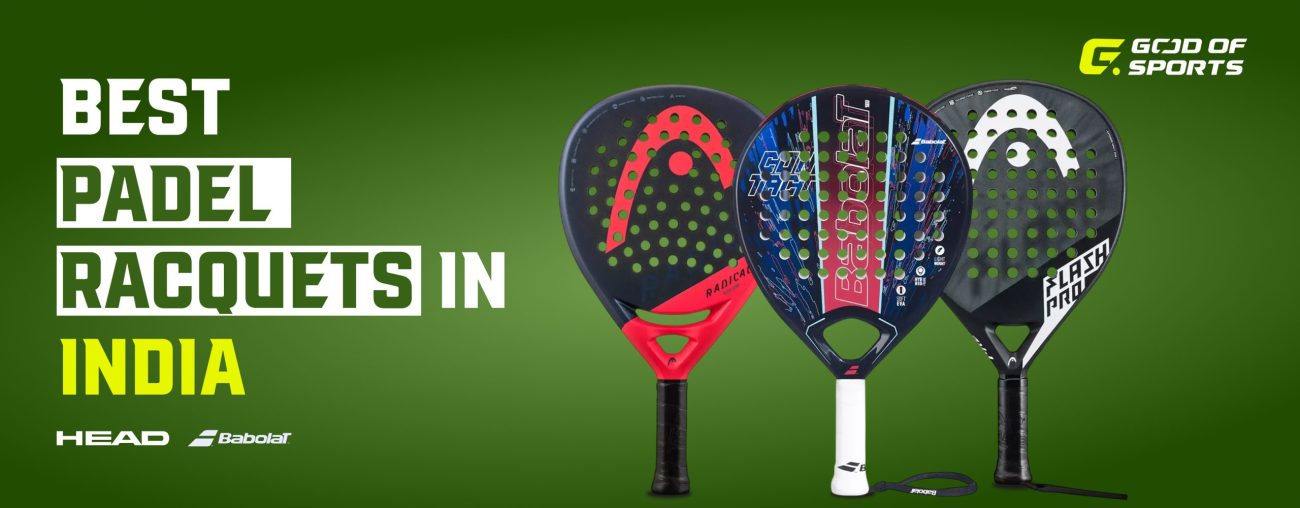
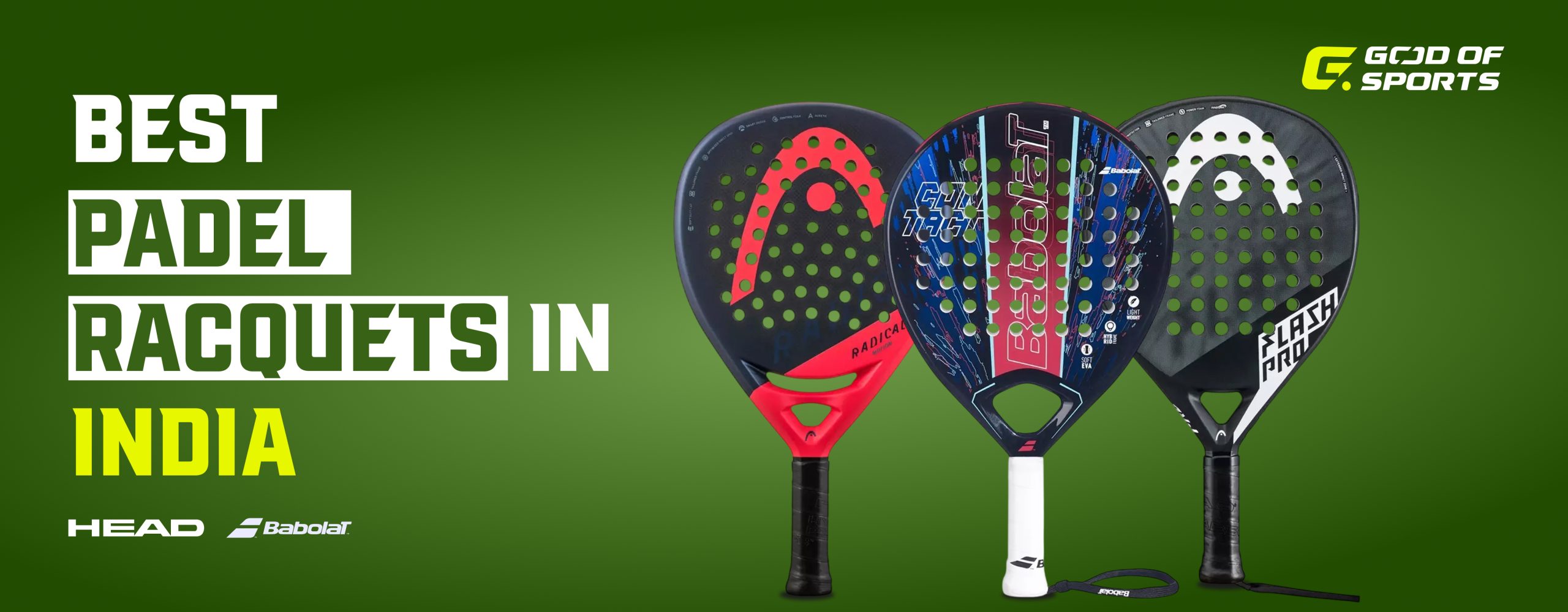
Just started (under 6 months): Babolat Contact (~₹8,500) or HEAD Flash Pro (~₹9,500). Round shape. Light. Forgiving. Do not buy a diamond racquet yet.
Playing regularly (6 months–2 years): HEAD Radical Motion 2024 (~₹18,352). This is our most recommended intermediate racquet. Teardrop shape, 3K carbon, genuine performance tech at a fair price.
Competing at club level (2+ years, coached): NOX AT10 Genius 18K 2025 (~₹30,092). The racquet Agustín Tapia uses on the World Padel Tour. If your technique is ready, nothing else comes close.
If you want to understand why and make sure you’re buying the right one for your specific game the full guide is below. It takes 15 minutes and could save you ₹20,000.
How Padel Racquets Actually Work The Foundation
A padel racquet is a solid frame no strings with a perforated hitting surface. Inside is a foam core. That combination of surface material and foam determines everything about how the racquet plays.
Here’s the one thing that will make every spec suddenly make sense:
Power and control exist on a spectrum. Every decision you make about a racquet shape, weight, balance point, surface material moves you somewhere on that line. The more power you buy, the less forgiveness you get. Every time.
Beginners need to be on the control end. Advanced players choose where they sit based on their playing style. A power-style smasher and a tactical control player are optimised for completely different racquets, even at the same level.
This is why generic “best padel racquet” lists don’t work. There is no single best racquet. There is only the best racquet for you.
Real Story: What we learned from 18 months of Indian padel sales
When we look at our customer data across 18 months, a pattern emerges: our happiest customers are the ones who bought appropriate for their level. Our most common complaints come from players who bought up who bought an intermediate racquet at month two, or a diamond at month six.
The racquet they bought technically performed better. Their game couldn’t access that performance yet. The result: frustration, not improvement.Buying right for your level isn’t settling. It’s the fastest path to the racquet you actually want.
The 5 Questions That Narrow It Down
Before looking at any specific racquet, answer these. They’ll take your choices from hundreds to five.
Question 1: How many months have you been playing padel?
This matters more than almost anything else. Technique determines which racquet actually performs better in your hands not specs.
- Under 6 months → round shape, light weight, soft core. Non-negotiable.
- 6 months to 2 years → teardrop is your growth zone.
- 2+ years with regular coaching → you know your style. Choose based on that.
Question 2: Do you have any arm, wrist, or elbow history?
If yes or if you play other racquet sports and already have minor strain this changes everything. You need softer foam, lower balance point, lighter weight. The wrong racquet at the wrong time is how tennis elbow starts. We’ve seen it.
Question 3: What’s your natural playing style?
- Power player you love the overhead smash, you play aggressively at the net → higher balance, stiffer surface.
- Control player you win through placement, angles, consistency → mid or low balance, softer feel.
- Don’t know yet → you’re a beginner. Round shape. Answer this question again in 12 months.
Question 4: What’s your real budget?
Be honest with yourself. Don’t stretch to ₹28,000 for your first racquet. But also don’t buy ₹4,000 no-brand racquets that will feel terrible and teach you bad habits. There’s a reason the ₹8,000–₹10,000 range exists it’s genuinely good for new players.
Question 5: Is this for you, or a gift?
If it’s a gift for someone new to padel, the answer is always a round beginner racquet, regardless of how much they’re going to love the sport. A gift that hurts their arm in month two isn’t a gift.
Shape: Round vs Teardrop vs Diamond The Most Important Decision
Get this wrong and nothing else matters. The shape determines the sweet spot location, the balance point, and the fundamental character of how the racquet plays.
| Shape | Sweet Spot | Best For | Skip If |
| 🟢 Round | Centre large, forgiving | Beginners, casual, injury-prone | You want more smash power |
| 🟡 Teardrop | Upper-mid balanced | 6mo+ experience, club players | You’ve never played before |
| 🔴 Diamond | Near top small, explosive | 2+ years, coached, competitive | You still mis-hit regularly |
Round Racquets For Control, Forgiveness, and Learning
The sweet spot sits in the centre of the frame. This is the largest, most forgiving hitting zone of any padel racquet shape off-centre hits still feel decent, still go roughly where you aimed.
Round racquets also carry their weight lower in the frame (lower balance point), which means less rotational force on your wrist when you swing. For a beginner whose technique is still forming, this prevents injury and builds confidence.
Real Story: The beginner who proved the point
We had a customer in Mumbai 45 years old, started padel after his daughter got him onto the court. He asked us for “the best racquet, price is no issue.” We sold him the Babolat Contact at ₹8,500 instead of the ₹25,000 diamond he was eyeing. He came back six months later to upgrade.
Before the upgrade, he thanked us. “I’d have hurt myself and quit if you’d let me buy the expensive one.”
Teardrop Racquets The All-Rounder for Developing Players
The sweet spot moves upward, slightly toward the tip of the frame. This gives you noticeably more power on smashes and overhead shots compared to a round racquet while still offering a sweet spot large enough that reasonable mis-hits are manageable.
The jump from round to teardrop is real and immediate. If you’ve been playing for six months and can consistently find the centre of the strings, a teardrop will unlock power you didn’t have before. Most serious recreational padel players in India use teardrop racquets.
Diamond Racquets For Power, Precision, and Advanced Technique
The sweet spot sits near the top of the frame. Small. Powerful. Unforgiving. On a clean hit exactly on that sweet spot the power and feedback from a diamond racquet is extraordinary. On a mis-hit, it feels like hitting a brick.
Diamond racquets have a high balance point, meaning the weight sits toward the head. This generates explosive force on overhead smashes. It also means your wrist and forearm are working harder with every swing. If your footwork isn’t positioning you perfectly, you will feel it.
The Diamond Warning
This comes up enough that we need to say it clearly: if you’ve been playing padel for under 18 months and haven’t had regular coaching, do not buy a diamond racquet. The stories we could tell about elbow injuries from premature diamond purchases would fill a separate article. This isn’t us being cautious. This is us being honest.
Weight, Balance, and Materials What the Specs Actually Mean
Weight: The Number Everyone Reads Wrong
Most players see a heavier racquet and assume it means better quality. It doesn’t. It means more power at the cost of control and arm fatigue. Here’s how to actually read weight:
| Weight | Feel | Power | Ideal Player |
| 340–355g | Very light, fast | Lower | Beginners, arm issues, older players |
| 356–370g | Balanced | Medium | Intermediate most common range |
| 371–385g | Heavy, stable | High | Advanced, power-style, net aggression |
For most recreational padel players in India playing 2–3 times a week without professional coaching the 356–370g range is optimal. It’s enough weight to generate power naturally, light enough to play a full 90-minute session without your shoulder complaining.
Balance Point: Where the Weight Lives
- Low balance / head-light: Weight sits toward the handle. Comfortable, easy to manoeuvre, less wrist stress. → Round racquets.
- High balance / head-heavy: Weight toward the head. More power on smashes, heavier swing feel. → Diamond racquets.
- Mid balance: The goldilocks zone for most intermediate players. → Teardrop racquets.
Surface Material: Fibreglass vs Carbon Fibre
Fibreglass: Softer feel, more flex, more forgiveness. Better for beginners and intermediate players. Most racquets under ₹15,000 use fibreglass. It’s not inferior it’s correct for those players.
Carbon Fibre: Stiffer, more power transfer, better touch for experienced players. The weave density number (3K, 12K, 18K) tells you how dense and stiff the weave is. Higher = stiffer = more power = less room for error. The NOX AT10 18K is named for its 18K carbon face the stiffest commercially available surface on a padel racquet.
EVA Foam Core: Harder, more power transfer. Standard in intermediate and advanced racquets.
Soft Foam / Rubber Core: Softer feel, more control, more vibration absorption. Better for touch players and injury-prone players.
Real Story: Why the carbon weave number matters a real example
A customer asked us once why the NOX AT10 costs ₹30,000 when it looks similar to a ₹15,000 HEAD racquet. We handed him both and asked him to hold them and tap the surface.
The 3K carbon surface of the HEAD has a slight give. The 18K carbon of the NOX is like hitting a solid panel. That stiffness is where the power comes from and it’s also why your technique needs to be immaculate before you can use it properly.
Best Padel Racquets for Beginners in India Under ₹12,000
At this range, you’re looking for three things: forgiveness, light weight, and a round or soft-teardrop shape. A racquet that costs ₹8,500 and suits your level will make you a better player faster than a ₹28,000 racquet that’s designed for a game you don’t have yet.
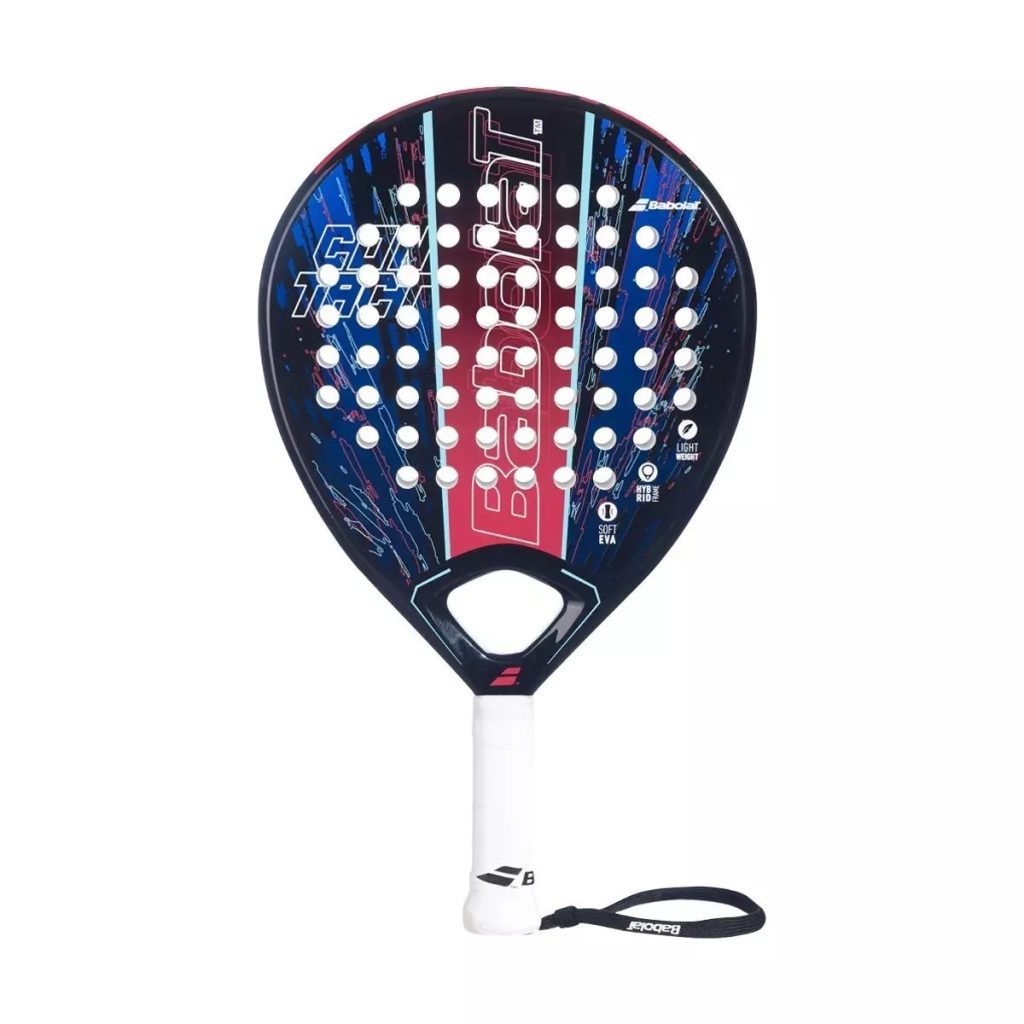
OUR TOP PICK BEGINNER Babolat Contact Padel Racquet ~₹8,500
Round Shape | ~355g | Low-Mid Balance | Soft Foam Core | Fibreglass Surface
The story: The customer we think about when we recommend this racquet is Priya 34, works in finance, started padel after a friend dragged her to a session at a Mumbai club. She asked us what to buy for under ₹10,000. We gave her the Babolat Contact. Six months later she’s playing three times a week and just upgraded to the Radical Motion. The Contact did exactly what it was supposed to do: it let her learn without frustration.
The soft foam core absorbs impact instead of transmitting it. The round shape means a mis-hit still goes roughly where you aimed. It’s not glamorous. It’s exactly right.
Buy it if: You’ve been playing under 6 months. You want to learn properly without hurting your arm. You’re not sure yet how seriously you’ll take this sport.
Skip it if: You’ve been playing over a year and want to improve your smash. You’ve outgrown this racquet.
Shop Babolat Contact Padel Racquet →
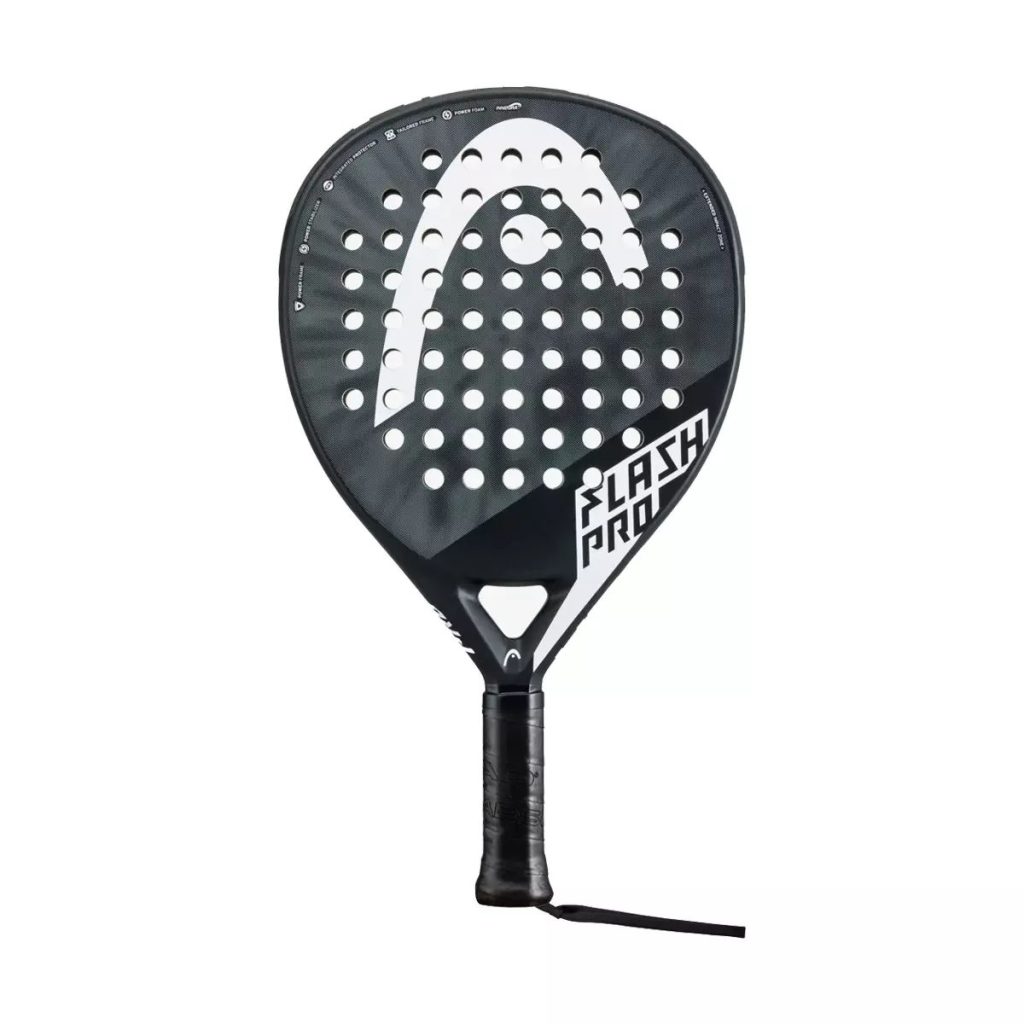
RUNNER-UP BEGINNER HEAD Flash Pro 2023 Padel Racquet ~₹9,500
Round Shape | ~355g | Low Balance | EVA Soft Core | Fibreglass
The story: If the Babolat Contact is a gentle teacher, the HEAD Flash Pro is the same lesson with slightly better handwriting. The EVA foam gives a touch more responsiveness you start learning what “good contact” feels like, which matters for your development.
HEAD’s build quality is exceptional and their brand support in India is strong, which means if you ever have a question or issue, there’s someone to call. A slightly better choice if you know you’re going to take padel seriously from day one.
Buy it if: You’re a beginner who wants to invest a little more and use one racquet through your first full year of development.
Skip it if: You want to play casually once a month. The Babolat Contact is fine for that.
Shop HEAD Flash Pro 2023 Padel Racquet →
Budget Option Under ₹7,000
If budget is genuinely tight, SIUX makes usable entry-level racquets. The Hybrid Air is light, round-shaped, and forgiving. Build quality is a step below HEAD and Babolat, but it’ll hold up for your first 3–6 months of learning. We’d rather you buy this than skip padel entirely. → Shop SIUX Padel Racquets here
Best Padel Racquets for Intermediate Players ₹12,000 to ₹25,000
This is where the quality jump is real. Better materials, actual carbon construction, proper performance technology. If you’ve been playing for six months or more and want to genuinely improve not just play spend here. The difference between a ₹9,000 racquet and a ₹18,000 racquet at this level is not marginal.
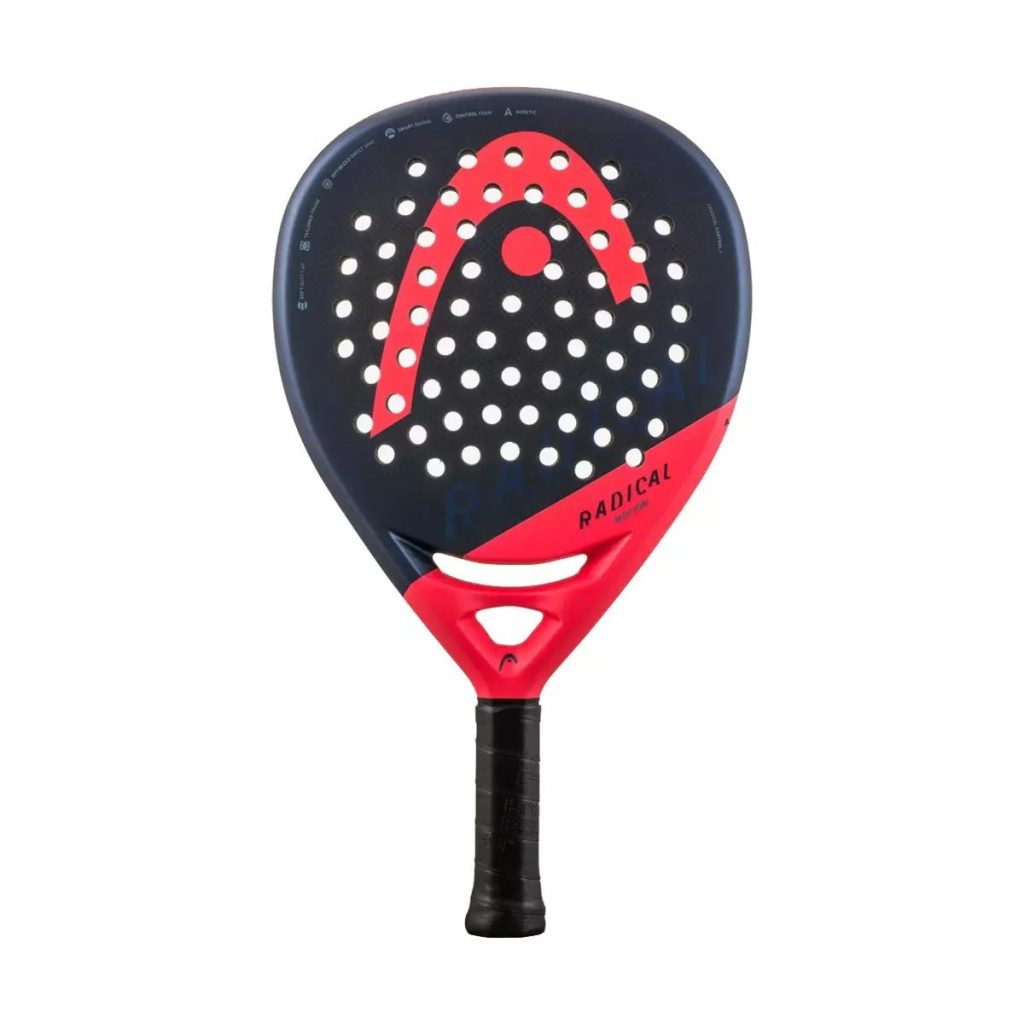
OUR TOP PICK INTERMEDIATE HEAD Radical Motion 2024 Padel Racquet ~₹18,352
Teardrop Shape | ~360g | Mid Balance | 3K Carbon Surface | Control Foam Core
The story: This is the racquet we buy for ourselves when we want to play well without overthinking it. We’ve tested multiple intermediate racquets over the past 18 months. The Radical Motion keeps coming back as our recommendation not because it’s the most powerful or the most technical, but because it’s the most complete. The 3K carbon gives you real feedback and stiffness a genuine upgrade from fibreglass.
The Control Foam core is softer than standard EVA, which means you keep touch on drop shots and angled volleys even as you start hitting harder. HEAD’s Auxetic frame structure adapts to impact for better feel, and the Soft Butt Cap reduces vibration transmission into the wrist you’ll notice this after a two-hour session where your arm isn’t tired. If you play padel 2–4 times per week and want to improve, this is the racquet.
Buy it if: You’ve been playing 6 months or more, have had some coaching, and want to start competing or improving seriously.
Skip it if: You’re still in your first six months. Save the extra ₹9,000 and buy the Babolat Contact then come back.
Shop HEAD Radical Motion 2024 →
Real Story: The customer who asked us to talk him out of the AT10
Aditya had been playing padel for eight months and was improving fast. He came to us ready to buy the NOX AT10. We asked him to describe his last five sessions. He said his volleys were inconsistent, his smash was “getting there,” and he was still working on positioning at the net.
We told him: the AT10 will not help with any of that. The AT10 amplifies a game that’s already consistent. It doesn’t build one.We sold him the Radical Motion instead. Two months later, he messaged us: “How did you know that was the right call?” The answer is: we’ve had this conversation many times.
BEST FOR SPEED & QUICK HANDS HEAD One Ultralight Padel Racquet ~₹17,543
Round Shape | ~300g (exceptionally light) | Low Balance | Fibreglass Surface
The story: The lightest adult padel racquet we’ve tested by a significant margin. At ~300g, it swings like nothing else. We recommend this to a very specific player: someone who came to padel from badminton, squash, or table tennis. Players who are wired for quick hands and fast reactions, who rely on placement and reflexes rather than power.
Also anyone with wrist or elbow sensitivity, or older players who find standard-weight racquets fatiguing after a long session. The trade-off is clear you lose some smash power. For the right player, it doesn’t matter. Speed and placement win just as many points.
Buy it if: You play fast hands at the net. You came from badminton or squash. You have arm sensitivity. You play 2+ hours per session and want less fatigue.
Skip it if: You want a big overhead smash. You’re a power player. This racquet will leave you under-hitting.
FOR POWER-STYLE INTERMEDIATES HEAD Coello Team 2025 Padel Racquet ~₹19,492
Diamond Shape | ~370g | High Balance | Fibreglass + Carbon Hybrid
The story: Named after Arturo Coello World No. 2 as of this writing. The Coello Team is the most accessible diamond racquet we’d recommend to someone who isn’t fully advanced yet. The fibreglass in the surface slightly softens the typically brutal feedback of a diamond frame, giving you more forgiveness than a full carbon diamond.
Our recommendation for this racquet is very specific: players who’ve been playing 12–18 months, compete regularly at their club, and feel their smash lacks the punch to win points outright. You know who you are. This racquet adds the missing power.
Buy it if: You’ve played 12–18 months with coaching, you compete at club level, and your smash is technically sound but lacks power.
Skip it if: You’re still working on footwork and timing. Diamond shape demands technique. Buy the Radical Motion first.
Best Padel Racquets for Advanced Players ₹25,000+
At this level, you know your game. You’ve played enough to understand what’s limiting you whether that’s power on the smash, control at net, or touch on the lob. The racquet becomes a precision tool. Every spec matters because you’re capable of accessing the full range of the racquet’s performance.
THE WEAPON TOP PICK FOR ADVANCED NOX AT10 Genius Attack 18K 2025 (Agustín Tapia Edition) ~₹30,092
Diamond Shape | ~370g | High Balance | 18K Carbon Surface | Hard EVA Core
The story: Agustín Tapia is ranked World No. 1. The AT10 is his racquet. The naming is literal his initials and jersey number. We’ve hit with this racquet, and the 18K carbon is unlike anything else at this price point. Tapping the surface with your knuckle tells the whole story: it sounds and feels like a precision instrument.
On a clean hit exactly on the sweet spot the power transfer is extraordinary, the feedback is crystal clear, and the ball goes exactly where you intended with exactly the pace you generated. The sweet spot is unforgiving. Every mis-hit tells you that you mis-hit. At this level, you shouldn’t be mis-hitting. This is the racquet our highest-value customers buy. They play 4–5 times per week. Several compete in local tournaments. They’ve earned this racquet.
Buy it if: You play 4+ times per week, have had coaching for 2+ years, compete or have competed, and your technique is consistent under pressure.
Skip it if: You still mis-hit more than once every three rallies. That’s not an insult it’s just not time yet. Come back in six months.
Shop NOX AT10 Genius Attack 18K 2025 →
THE TACTICAL CHOICE ADVANCED HEAD Radical Pro 2024 Padel Racquet ~₹20,392
Teardrop Shape | ~365g | Mid-High Balance | 3K Carbon | EVA Core
The story: Not every advanced player is a power player. Some win through positioning, reading the game, angles, and consistent net play. If that’s your style if you win more points through tactical intelligence than explosive smashes the
Radical Pro might be the better choice over the AT10, even though it’s cheaper. The teardrop shape retains more forgiveness than a diamond while the 3K carbon and EVA core give you the precision and power of an advanced racquet. This is the racquet of the smart padel player the one who controls the point rather than ending it with brute force.
Buy it if: You’re an advanced player with a tactical, control-oriented game. You want precision over raw power.
Skip it if: You’re a power player who wants the biggest smash possible. The AT10 is built for you.
Brand Showdown: NOX vs Adidas vs HEAD vs Babolat
We’ve sold racquets from all four brands. Here’s our honest assessment not the marketing version.
| Brand | Based In | Known For | GOS Honest Verdict |
| NOX | Spain | Tour-grade carbon, Tapia endorsement, pure padel DNA | Best for advanced players who have the technique to use it. No fluff. |
| HEAD | Austria | Widest range, best tech-to-price, Auxetic system | Safest brand for most India buyers. Reliable at every price point. |
| Adidas | Germany | Tour presence, Metalbone, fashion-forward design | Excellent top-end. Limited India range. Metalbone is gold when available. |
| Babolat | France | 140yr racquet heritage, reliable build, honest pricing | Best value at beginner and intermediate level. Never flashy, always solid. |
NOX Built Only for Padel
NOX is a padel-only brand. That matters. Every engineering decision they make is about padel not tennis, not badminton, not general sports. The AT10 Tapia line is what Agustín Tapia actually plays on the World Padel Tour, not a co-branded product designed for retail. Their carbon technology is top-tier. Their racquets hold resale value better than most brands. For advanced players, NOX is the benchmark everything else is measured against.
HEAD The Safest Choice for Most Indian Buyers
HEAD has been in racquet sports since 1950. Their padel line has genuine technology Auxetic frame structures, Smart Bridge connectors, performance foams that are actually differentiated. The Radical series is one of the best-selling padel lines globally. Their quality control is excellent. For Indian buyers who want reliable performance at every price point, HEAD is the brand we’d default to if we couldn’t recommend anything else.
Adidas Excellent Top-End, Limited India Range
Adidas makes outstanding padel racquets at the top of their range. The Metalbone series is legitimately tour-grade and competes with NOX directly. What holds them back in India is availability and mid-range value. The Metalbone is excellent when you can find it at a fair Indian price. Their mid-range doesn’t offer the same quality-per-rupee as HEAD. Our recommendation: if you’re buying advanced, look for the Metalbone. For mid-range, HEAD beats Adidas on value in the Indian market right now.
Babolat 140 Years of Racquet DNA
Babolat made their first string in 1875. They understand racquet sports deeply, and that heritage shows in build quality. Their padel racquets aren’t the flashiest but they’re consistently well-made, appropriately priced, and honest about what they are. The Contact series is our go-to for beginners for a reason. For intermediate players, their Storm line is underrated. Babolat won’t wow you with marketing. The racquets just work.
Padel Racquet Price Guide for India What Your Budget Actually Buys
| Budget | What You Actually Get | GOS Recommendation |
| Under ₹6,000 | Basic fibreglass, no real tech avoid unless gifting a child | Skip. Save up. |
| ₹6,000–₹10,000 | Solid beginner racquet, round shape, forgiving, correct materials | Babolat Contact / HEAD Flash Pro |
| ₹10,000–₹18,000 | Good intermediate, hybrid materials, real performance tech | HEAD Radical Motion / SIUX Hybrid |
| ₹18,000–₹25,000 | Serious performance, 3K carbon, pro-grade foam construction | HEAD Radical Pro / Coello Team |
| ₹25,000–₹35,000 | Near-pro build, premium carbon, what tour players actually use | NOX AT10 18K / Adidas Metalbone |
The India Sweet Spot Our Honest Opinion
For most serious recreational padel players in India playing 2–4 times per week, no professional coaching, playing at a club level the ₹16,000–₹22,000 range gives you everything you need. The HEAD Radical Motion 2024 at ~₹18,352 sits exactly here. Genuine carbon construction, real performance technology, appropriate for a 12-month improvement arc. Spending more before you can fully use a ₹18,000 racquet is money that improves your racquet, not
What to Buy Alongside Your Racquet
A padel racquet alone doesn’t complete your setup. Here’s what else you need in priority order.
Must-Have You Cannot Play Without These
Padel Balls
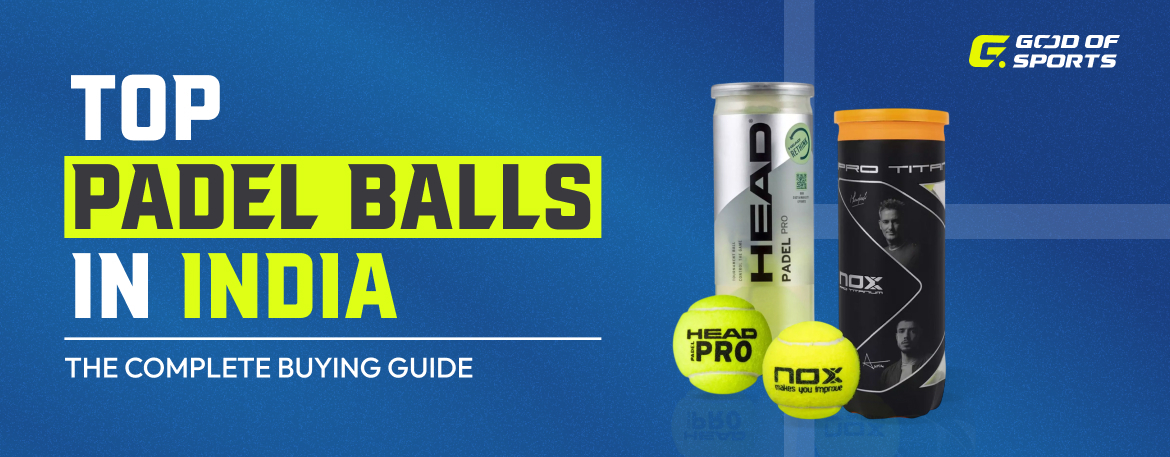
Padel balls are not tennis balls. They’re slightly less pressurised, which keeps rallies controlled and speeds consistent on smaller courts. Buy them in bulk a tube of 3 costs more per ball than buying 18 at once. For regular players, you’ll go through a tube every few sessions. → thegodofsports.com/product-category/padel/padel-balls/
Overgrip
The factory grip on most padel racquets even expensive ones becomes slippery within 3–4 sessions, especially in India’s humidity. An overgrip (₹150–₹300) is the cheapest performance upgrade you can make. It improves control, absorbs sweat, and protects the original grip. Buy 5 at a time. Replace when it starts feeling smooth. → thegodofsports.com/padel-accessories/
Strongly Recommended Once You’re Playing Regularly
Padel Shoes
Most Indian padel courts use artificial turf. Padel shoes are designed for lateral movement on this surface the sole grip pattern is different from tennis shoes, and the lateral support prevents the ankle rolls that happen when you change direction fast. Not essential for your first five sessions. Essential once you’re playing twice a week. → thegodofsports.com/product-category/padel/padel-shoes/
Padel Bag with Thermal Protection
Heat degrades foam cores. India is not a cold country. Leaving your ₹28,000 racquet in a hot car or in direct sun breaks down the foam that makes it play well. A padel bag with thermal lining keeps the core temperature stable. This is how you protect your investment.
Frequently Asked Questions
Q: Can a beginner use a diamond racquet?
We strongly advise against it and we’ve seen the consequences often enough to say that firmly. A diamond racquet has a small sweet spot that punishes mis-hits. Beginners mis-hit constantly. That’s not a flaw; it’s part of learning. But every mis-hit on a diamond racquet transmits vibration straight to your wrist, which is how you get tennis elbow before you’ve even fallen in love with the sport. Start round. Earn the diamond.
Q: How long does a padel racquet last?
For regular players (3+ sessions per week), expect 12–18 months before performance degrades noticeably. The foam core loses its responsiveness before the frame shows visible damage you’ll notice shots starting to feel “dead” even when you’re hitting clean. Casual players (once a week) can get 3+ good years from a quality racquet.
Q: Does a more expensive racquet make you a better player?
Not immediately, and this is the most important thing we can tell you. A ₹30,000 diamond racquet in the hands of a player with six months of experience will perform worse than a ₹10,000 round racquet in the hands of someone with consistent technique. The racquet amplifies the game you already have. It doesn’t build it for you. Buy for your current level, not your aspirational level.
Q: What weight should I choose as a beginner?
Under 365g ideally 350–360g. Lighter racquets reduce arm fatigue and lower your risk of developing tennis elbow while your swing mechanics are still forming. You can always move to a heavier racquet as your strength and technique develop. Going too heavy too early and injuring yourself is the mistake we see most often.
Q: Is padel equipment in India authentic? How do I know I’m buying genuine?
This is a real concern in the Indian market. We source every racquet we sell from authorised distributors and verify authenticity before dispatch. Genuine NOX, HEAD, and Babolat racquets come with specific quality markers weight within spec, correct foam feel, proper branding, warranty cards. If a price seems too good to be true for a premium racquet, it probably isn’t genuine. God of Sports is an authorised retailer for all brands we carry.
Q: What’s the best padel racquet for a tennis player switching sports?
A mid-weight teardrop racquet. Your tennis instincts reading angles, net positioning, court awareness transfer beautifully to padel. Your swing mechanics need to adjust (shorter, more wrist, less linear). A teardrop gives you enough power to leverage your tennis strength while training you to work the walls. The HEAD Radical Motion 2024 is our specific recommendation for tennis converts.
Q: Can I use a padel racquet for pickleball?
No and don’t try. Padel racquets are designed for a different ball weight, different court surface, and different swing mechanics. Using a padel racquet for pickleball degrades the foam core faster and produces poor results in both sports. They’re separate equipment for separate sports.
Q: How often should I replace my overgrip?
When it starts to feel smooth or slightly sticky rather than tacky. For players in humid Indian cities like Mumbai, that could be every 3–4 sessions. For drier climates like Delhi in winter, every 6–8 sessions. Never let it get to the point where you’re gripping the racquet tighter to compensate for slippage that’s how wrist strain starts.
Real Story: Why we wrote this guide
Six months ago, a customer called us after buying a diamond racquet somewhere else based on a recommendation from a YouTube channel that as far as we could tell had never touched a padel racquet. He’d hurt his elbow. He was going to quit padel.
We spent 40 minutes on the phone with him, figured out the right racquet for his actual level, and he’s now one of our most loyal customers. That phone call is why this guide exists. Padel is too good a sport to lose players because of bad buying decisions made in the absence of real expertise.
The GOS Framework One Final Time
Just starting out? Babolat Contact or HEAD Flash Pro. Round shape. Light. Forgiving. The racquet that lets you fall in love with the sport.
Playing seriously for 6+ months? HEAD Radical Motion 2024. Our most recommended racquet, full stop. The best all-round intermediate padel racquet available in India.
Competing at club level? NOX AT10 Genius 18K 2025. If your technique is consistent, nothing we carry comes close to its performance ceiling.
Not sure which category you’re in? That’s completely normal. WhatsApp us and describe your game. We’ll tell you exactly what to buy. We’re padel players. We’re not guessing.
Read Next: Best Padel Balls India 2026 →