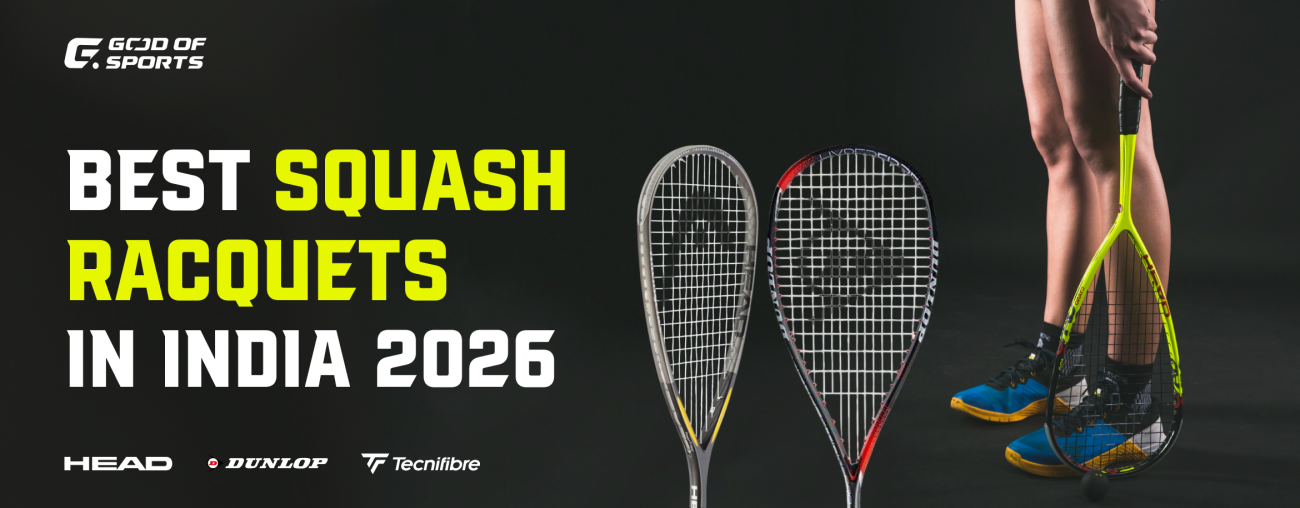
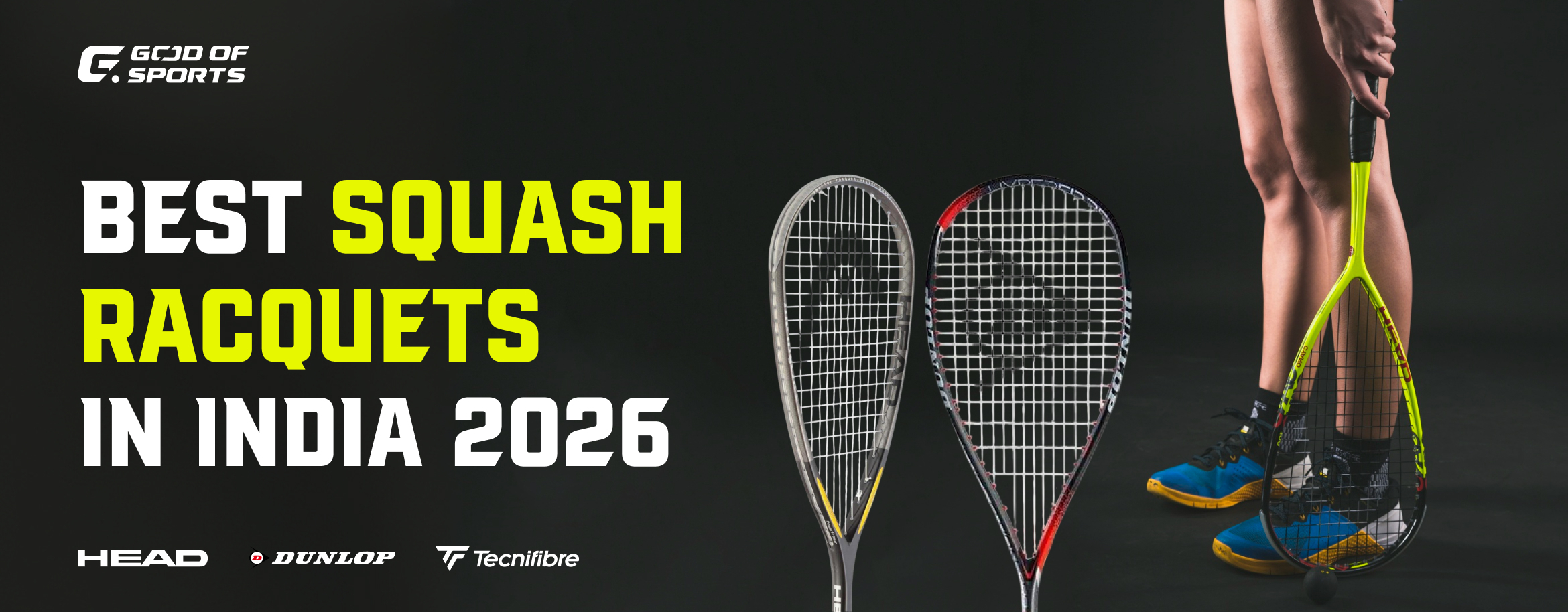
This guide is designed to be India’s most comprehensive squash racquet buying resource. We cover the specifications that matter, the brands that are worth buying, and the mistakes that cost players money and progress.
Why Squash Racquet Buying Goes Wrong
The Badminton-to-Squash Mistake We See Every Month
Squash courts in India frequently share facilities with badminton courts — they’re in the same clubs, sometimes run by the same facility managers. As a result, we regularly encounter players who’ve come to squash from badminton and assume the equipment logic is similar.
A common scenario: a player who’s been playing badminton walks into a sports shop, holds a squash racquet, and buys something that ‘feels about right’ without any spec knowledge. They come back frustrated two months later. The racquet they bought was a cheap aluminium frame — impossible to generate proper swing mechanics with, vibrating badly on wall shots, causing wrist fatigue.
Squash racquets look like smaller, heavier badminton racquets. They’re not. They’re built for an entirely different set of forces — hitting against walls, generating power in confined spaces, absorbing court wall rebounds. The spec logic is different, the materials are different, and the buying decision is different.
Important Buying Warning
Never buy an aluminium squash racquet. Aluminium frames vibrate excessively on wall shots and transmit that vibration directly into your wrist and elbow. Graphite composite frames start from approximately ₹3,000 and are the minimum construction quality for proper squash play. Any racquet below ₹2,500 is almost certainly aluminium — avoid it regardless of branding.
Quick Answer — If You’re in a Hurry
Just starting squash: HEAD i.110 or Dunlop Revelation Pro Lite (approximately ₹3,500–₹5,000). Graphite composite, beginner-friendly, won’t punish developing technique.
Playing 6–18 months: Dunlop SQ Blackstorm (approximately ₹7,000–₹10,000). Mid-range graphite with proper technology.
Competitive club player: Tecnifibre Carboflex or Dunlop Hyperfibre+ (approximately ₹14,000–₹22,000). Tour-grade engineering.
Understanding the Specifications
How Squash Racquet Specs Differ from Tennis and Badminton
| Specification | What It Means | Why It Matters |
| Lighter = faster swing, heavier = more power | Unlike badminton, squash racquets are heavier — 120–135g typical. Balance point matters more than raw weight. | |
| Head Shape | Teardrop vs classic oval | Teardrop = larger sweet spot, more power. Oval = more control, smaller head. |
| Balance Point | Head-heavy vs head-light | Head-heavy adds power on drives. Head-light adds speed and control for touch players. |
| String Pattern | Open (14×18) vs closed (16×19) | Open gives more power. Closed gives more control and durability. |
| Frame Material | Graphite, titanium, composite | Full graphite = lightest, stiffest, most responsive. Composite = forgiving, budget-friendly. |
| Grip Size | Grip 1 (small) to Grip 5 (large) | Most Indian players use Grip 2 or 3. Wrong grip causes wrist strain — measure before buying. |
Brand Guide — What’s Worth Buying in India
| Brand | Known For | GOS Honest Assessment |
| Dunlop | Hyperfibre+ — elite control | The most prestigious name in squash racquets. Nick Matthew and Ramy Ashour both played Dunlop. Hyperfibre technology creates exceptional feel. Dominates professional squash globally. |
| Head | Extreme, Graphene — power range | Strong beginner-to-intermediate range. Good entry-point racquets. Less prestigious in elite squash than tennis, but reliable quality throughout the lineup. |
| Tecnifibre | Carboflex — world tour racquet | Mohamed ElShorbagy’s brand. The Carboflex is the benchmark for power-control at the top level. Smaller brand presence in India but genuinely exceptional engineering. |
| Prince | O3 technology — air ports | Unique air-port design reduces air resistance. Good mid-range value. Less popular in India but worth considering for price-performance. |
| Wilson | Multi-sport brand with squash range | Better known for tennis. Squash range is competent but not specialist. Entry-level Wilson squash is fine for beginners. |
Budget Guide
| Budget | What You Get | GOS Pick |
| Under ₹3,000 | Basic aluminium or low-grade composite — avoid | Skip. Causes wrist strain, breaks fast. |
| ₹3,000–₹6,000 | Entry graphite composite, serviceable | HEAD i.110 / Dunlop Hyperfibre+ Revelation Pro Lite |
| ₹6,000–₹12,000 | Mid-range graphite, real technology | Dunlop SQ Blackstorm / HEAD Extreme 120 |
| ₹12,000–₹22,000 | High-performance, near pro-spec | Tecnifibre Carboflex / Dunlop Hyperfibre+ Revelation |
| ₹22,000+ | Tour spec — same racquets pros use | Dunlop Hyperfibre+ series top models |
Our Top Picks — Tested and Recommended
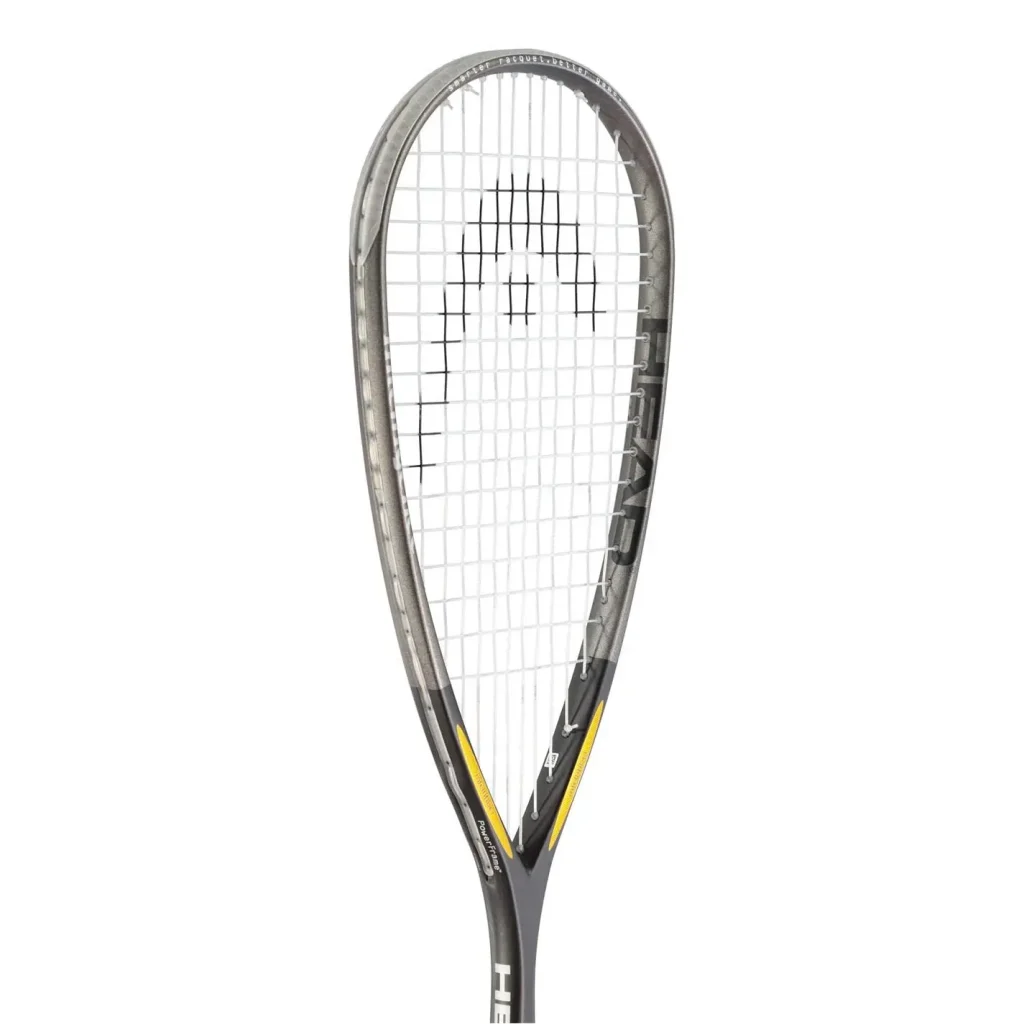
Top Beginner Pick — HEAD i.110 Squash Racquet (approximately ₹3,500–₹5,000)
110 sq in | approximately 130g | Composite Graphite | Open String Pattern | Beginner
The HEAD i.110 is the squash racquet we hand to every beginner without hesitation. The large 110 sq in head gives the largest sweet spot available at this price — essential while technique is forming. The composite graphite construction (not aluminium — important) provides proper feel on wall shots without the wrist-punishing vibration of cheap frames. It’s light enough at 130g that developing players can generate swing speed while learning mechanics. We’ve seen players use this racquet for 12–18 months before feeling ready to upgrade. That’s exactly what a beginner racquet should do.
Buy it if: You’re new to squash, playing 1–2 times per week, and want a proper racquet that won’t punish you while learning.
Skip it if: You’ve played squash 12+ months. You’ve outgrown this racquet’s forgiveness and need more precision.
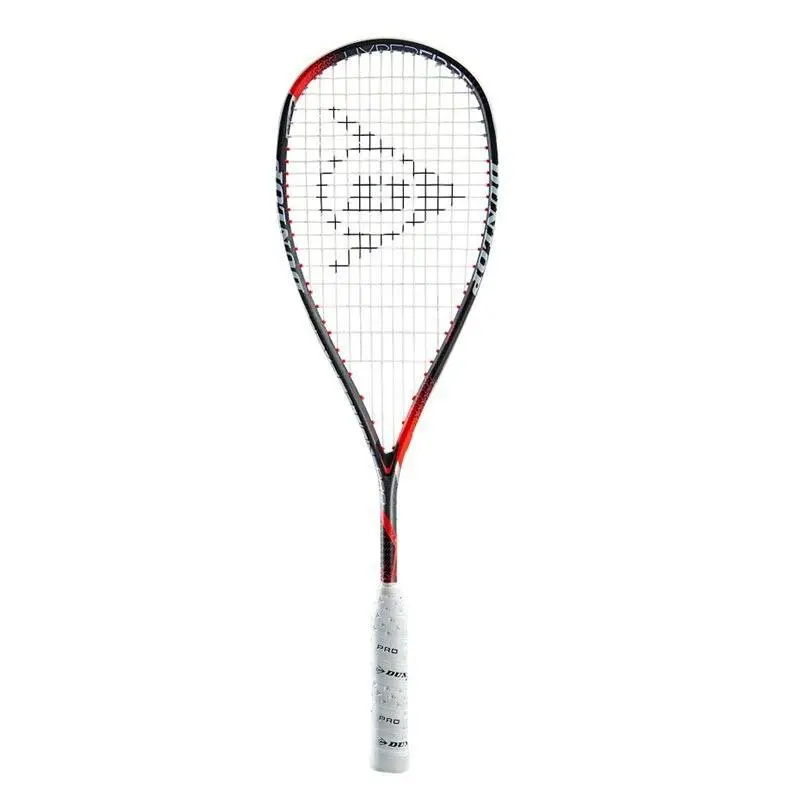
Top Mid-Range Pick — Dunlop Hyperfibre+ Revelation Pro Lite (approximately ₹8,000–₹12,000)
approximately 105 sq in | approximately 120g | Hyperfibre+ Graphite | Even Balance | Intermediate-Advanced
Dunlop is the most prestigious name in squash. The Revelation Pro Lite is the entry point into their Hyperfibre technology — a carbon composite that provides exceptional stiffness-to-weight ratio. Players stepping up from a beginner racquet feel the difference immediately: shots that were previously inconsistent become precise. The 120g weight enables faster swing speed than heavier racquets. The Lite designation means it’s the most accessible model in the Revelation range without the full-Pro’s demanding stiffness. We’ve sold this to every level from confident intermediate to competitive club player.
Buy it if: You’ve been playing 6+ months, want genuine Dunlop engineering, and are ready for a performance upgrade that will last 2+ years.
Skip it if: You’re still building basic technique. The Revelation Pro Lite rewards correct mechanics — beginners won’t access its full capability.
Top Advanced Pick — Tecnifibre Carboflex 125 NS ElShorbagy Edition (approximately ₹14,000–₹20,000)
approximately 100 sq in | approximately 125g | Carboflex Graphite | Head-Light Balance | Advanced-Competitive
Mohamed ElShorbagy — three-time World Champion — plays Tecnifibre. The Carboflex 125 NS is his racquet construction available to consumers. The Carboflex graphite technology creates an exceptionally stiff, lightweight frame that generates maximum power in compact squash swings. The head-light balance gives advanced players the control and speed needed for tight front-court shots and deceptive drops. For competitive club players in India who’ve developed their game and want the best available tool, this is the benchmark. We’ve sold this to several serious squash players in Mumbai and Delhi who came back and told us it elevated their game noticeably.
Buy it if: You play competitive squash, train regularly, and want world-class engineering. Your technique is complete enough to use a demanding stiff racquet.
Skip it if: You’re under 2 years playing or have inconsistent technique. The stiffness of the Carboflex punishes off-centre hits.
The Indian Court Context — What’s Different
Court Surface and Temperature
Indian squash courts vary more in condition than European or Gulf courts. Many club courts in India have older surfaces — softer, slightly irregular. This means the ball plays slower in some conditions and faster in others. For beginners, this makes a forgiving racquet (large head, composite) especially important — you’re already compensating for surface variation without adding equipment variation.
Humidity and Ball Selection
Squash balls become faster and bouncier as temperature increases — and Indian courts, especially in summer, can get warm. Beginners and intermediates should use a double-yellow dot ball (standard competition ball) only in cooled, climate-controlled courts. On warm Indian courts, a red dot or blue dot ball often plays better for recreational play. This is a ball question, but it affects how your racquet feels — a ball that’s too bouncy makes any racquet feel like it has too much power.
Frequently Asked Questions
Can I use my badminton racquet for squash?
Never. Badminton racquets are built for lightweight feathered shuttles. A squash ball weighs approximately 24g — significantly heavier. Hitting it with a badminton racquet will likely break the frame within one session. The frames are structurally incompatible.
What weight should a beginner’s squash racquet be?
130–140g for beginners. Light enough to generate swing speed without arm conditioning, heavy enough to feel stable on wall rebounds. Below 120g is advanced territory — too light creates control difficulty for developing technique.
How often do squash racquets need to be restrung?
For regular players (3+ times per week): every 3–4 months. String tension in squash drops with use — when shots start feeling dead, check the string. Squash string tension typically ranges from 24–30 lbs, with most recreational players using 26–28 lbs.
Is squash expensive to start in India?
Equipment cost: ₹3,500–₹6,000 for a proper beginner setup (racquet + balls + grip). Ongoing cost: court fees (₹200–₹600 per session at most Indian clubs) and balls (₹300–₹500 per ball, lasting 2–4 months of regular play). Far more affordable than golf or tennis in setup terms.
Should I buy squash shoes or can I use court shoes?
Dedicated squash shoes are recommended. They’re similar in construction to badminton shoes — non-marking sole, lateral reinforcement — but specifically designed for squash’s side-to-side and forward lunge movements. Court shoes from other sports are acceptable alternatives. Running shoes are not.
Final Recommendation
New to squash: HEAD i.110. Large head, graphite composite, proper construction. Approximately ₹4,000.
6–18 months playing: Dunlop Revelation Pro Lite. Hyperfibre technology, intermediate-advanced. Approximately ₹10,000.
Competitive club player: Tecnifibre Carboflex. World tour technology. Approximately ₹16,000.
Budget under ₹3,000: Please wait until budget allows ₹3,500 or more. Buy a proper graphite racquet — not aluminium.