

SHOP ONLINE 24/7

Shop with your smartphone

SHIPPING WORLDWIDE

Free Shipping All Over India

Pay on Delivery

You're in safe hands

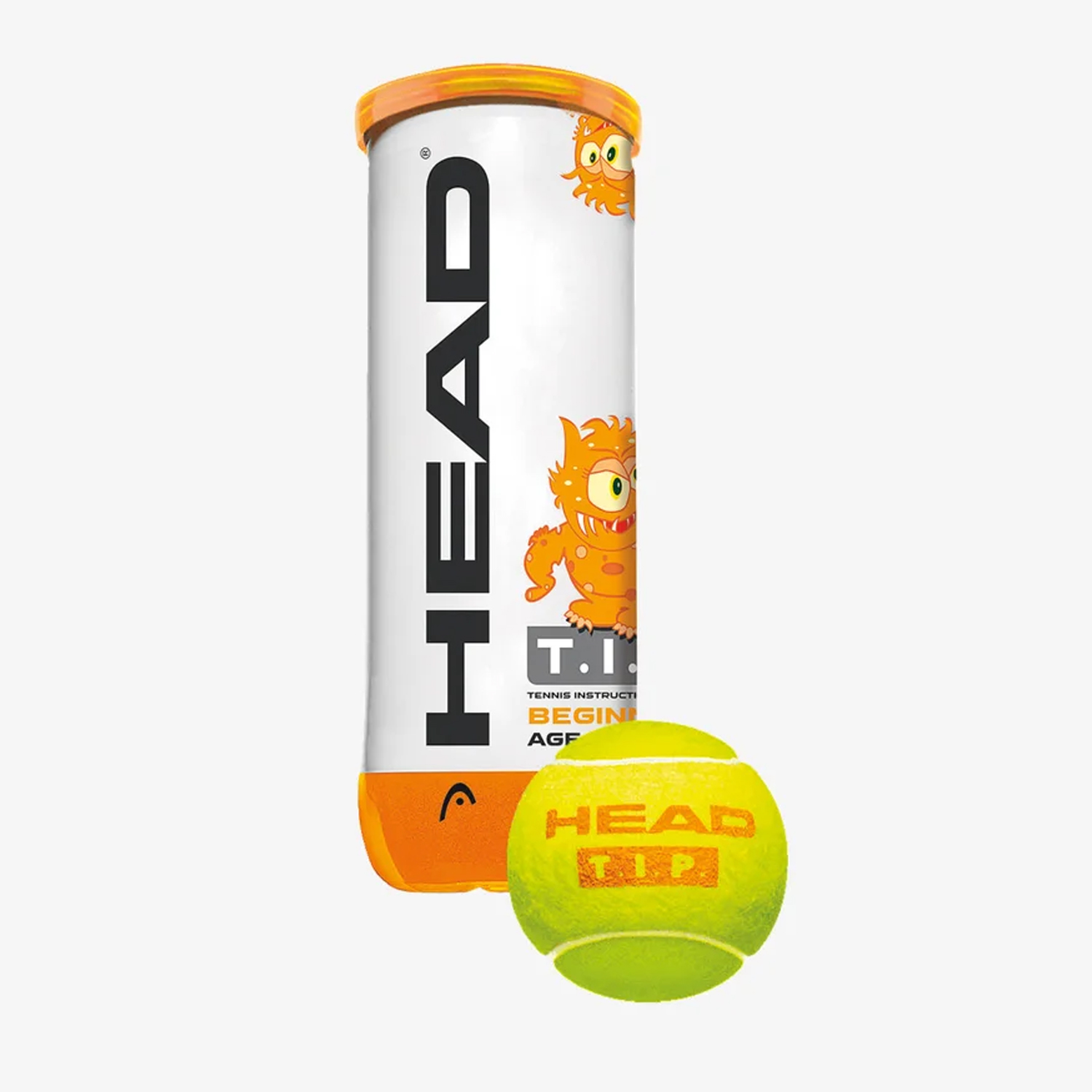
Head TIP 2 Orange Tennis Ball Can (3 Balls)

Head TIP 2 Orange Tennis Ball is the Stage 2 junior transition ball which is designed for children aged 8–9 who have outgrown the smaller court

Estimated Delivery Time: 2 - 4 Days (Delivery subject to pincode)

Original price was: ₹499.00.Current price is: ₹382.00.

Estimated Delivery Time: 2 - 4 Days (Delivery subject to pincode)

Watch this video before Buying

Shop Online

Shop 24/7 with your smartphone

Shipping Worldwide

Free Shipping All Over India

Pay on Delivery

You're in safe hands

Frequently Bought Together

Product Details

ITF Stage Stage 2 (Orange) — ITF Tennis Play+Stay approved
Target Age 8–9 years (transitioning from Stage 3 Red to Stage 1 Green)
Ball Type Pressureless — no internal air pressure, does not go flat
Speed 50% slower than a standard tennis ball
Size Slightly larger than a standard tennis ball
Softness Softer than a standard tennis ball
Felt Colour Orange and yellow two-tone (ITF Stage 2 compliance)
Court Size Mid orange court — 18m × 5.6–8.23m
Development Goal Stroke technique, rally consistency, transition to larger court
Development Partner Developed with coaches and children · ITF Play+Stay
Next Stage HEAD T.I.P. Green (Stage 1) — 25% slower, full-size court

God of Sports Expert Verdict on Head TIP 2 Orange Tennis Ball:

  • 🔴 Stage 3 Red (T.I.P. Red) — Ages 5–8 · 75% slower · Mini court (11m) · Foam or low-compression ball · First introduction to hitting
  • 🟠 Stage 2 Orange (T.I.P. Orange) — Ages 8–9 · 50% slower · Mid orange court (18m) · Developing stroke technique and rally consistency
  • 🟢 Stage 1 Green (T.I.P. Green) — Ages 9–10 · 25% slower · Full-size court · Transitioning to standard game speed
  • 🟡 Yellow (Adult) — Ages 10+ (ready players) · Standard speed · Full court · Full adult game

The TIP Stage Progression Guide — Which Ball Does My Child Need?

  • Choosing the Right Stage : HEAD’s T.I.P. system follows the ITF’s four-stage Play+Stay progression. The correct stage is based primarily on age and physical development, not skill level. Using a ball that is too fast for the child’s current stage does not accelerate development — it undermines technique formation by forcing compensatory movements that become harder to correct later.
  • When to Move from Orange to Green : A child is ready to move from the Head TIP Orange Tennis Ball to the T.I.P. Green when they can consistently sustain rallies of 5–7 shots on the orange court, move efficiently to balls hit to both sides, and execute basic groundstrokes with reasonable technique and control. Age-wise, this typically occurs between 9 and 10 years. Moving too early — before the child has consolidated the fundamental movement and stroke patterns — makes the transition to full court pace unnecessarily difficult.
  • When to Move from Orange to Full Adult Balls : A child should not skip the Green stage and move directly to adult yellow balls just because they are physically capable of making contact. The 25% speed reduction of the Green ball is specifically calibrated for the technique consolidation phase on a full-size court — a stage that shapes long-term stroke development. Skipping it by going directly to adult balls on a full court typically produces technically deficient strokes that are difficult to correct at more advanced levels. Trust the progression.

Cross-Stage Comparison for Head TIP 2 Orange Tennis Ball — HEAD TIP Junior Balls on God of Sports:

Ball Stage Speed Age Court
HEAD TIP Red Stage 3 75% slower 5–8 years Mini red court (11m)
HEAD TIP Orange (this ball) Stage 2 50% slower 8–9 years Mid orange court (18m)
HEAD TIP Green Stage 1 25% slower 9–10 years Full-size court
HEAD Championship Adult Standard 10+ (ready) Full-size court

Is HEAD TIP Orange 3 Tennis Ball Right for Your Child?

  • Children aged 8–9 currently playing on a mini or orange court : Head TIP Orange Tennis Ball is the correct equipment for this age and stage. It is slower, softer, and larger specifically to match the developing physical capabilities of 8–9 year olds. Using it will produce faster skill development, better technique, and more enjoyment than either the slower Red ball (which they may have outgrown) or the faster Green or adult balls (which are too fast for their current stage).
  • Schools and academies running ITF Play+Stay junior programmes : Head TIP Orange Tennis Ball is the specified Stage 2 ball for ITF Play+Stay compliant junior programmes. Schools and academies following the Play+Stay curriculum should use this ball for Stage 2 groups. The 72-ball pack provides a full basket supply and excellent per-ball cost for programme use.
  • Home practice between academy sessions : The pressureless construction means Head TIP Orange Tennis Ball maintain their bounce indefinitely between sessions — perfect for parents who want their child to practise at home between academy sessions without worrying about balls going flat. The 12-ball pack is ideal for home use.
Junior Tennis Ball and next steps at God of Sports:
Standard adult tennis balls are pressurised — they have internal air pressure that creates their bounce. Once the can is opened, this pressure gradually leaks away, and the ball becomes less bouncy over days to weeks. Pressureless balls like the T.I.P. Orange have no internal air pressure — their bounce comes from the rubber core material itself. This means they do not go flat with use or time. A pressureless ball you buy today will bounce the same way in six months. For junior programmes and home practice where balls are used regularly from a shared basket, this is a significant practical advantage over pressurised balls.
Yes — the T.I.P. Orange can be used on a full-size court, and in India where orange court markings are not always available, this is a practical necessity. The 50% speed reduction compensates partially for the longer court by giving children more time to reach balls. However, the developmental benefit is maximised on the correctly sized orange court (18 metres), where shorter distances allow children to build rally consistency more effectively. If possible, use temporary tape or cones to mark the correct orange court dimensions on a full court.
The transition from Stage 2 Orange to Stage 1 Green is typically appropriate at age 9–10 when the child can consistently maintain 5–7 shot rallies, move efficiently to both sides of the court, and execute basic forehand and backhand groundstrokes with reasonable technique and control. If in doubt, consult your child’s coach — the T.I.P. system is designed for coaches to manage progressions based on both age and demonstrated competency.
Yes — the TIP Orange is approved under the ITF’s Stage 2 (Orange) ball specification for junior competition played according to Play+Stay guidelines. AITA junior events following the Play+Stay format use Stage-compliant balls at each age group. Confirm specific ball requirements with your tournament organiser.

Customer Reviews

Products from same brand

Similar Products

Recently Viewed

Home
Shop
Wishlist0
Back to Top

Search For Products

Product has been added to your cart
Compare (0)