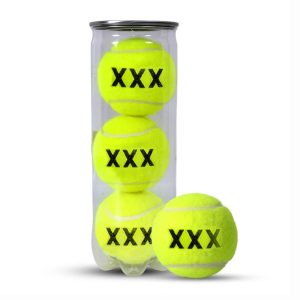

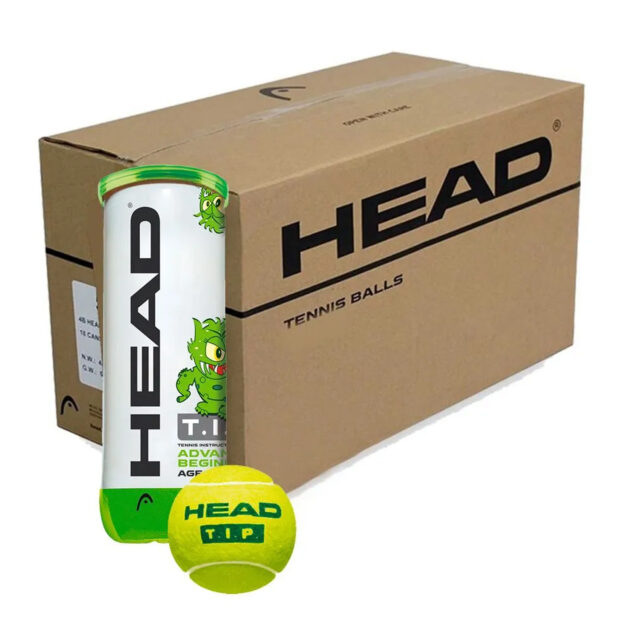


Head TIP Green Tennis Ball Carton (72 Balls)
Head TIP Green Tennis Ball is the Stage 1 junior ball — the final and most important step in the T.I.P. transition programme, bridging the gap between junior orange court play and the full adult game.
Estimated Delivery Time: 2 - 4 Days (Delivery subject to pincode)
₹13,194.00 Original price was: ₹13,194.00.₹8,032.00Current price is: ₹8,032.00.
Estimated Delivery Time: 2 - 4 Days (Delivery subject to pincode)
Watch this video before Buying
Shop Online
Shop 24/7 with your smartphone
Shipping Worldwide
Free Shipping All Over India
Pay on Delivery
You're in safe hands
Frequently Bought Together
Product Details
Specification
Description
FAQ's
Specification
| ITF Stage | Stage 1 (Green) — ITF Tennis Play+Stay approved |
| Target Age | 9–10 years · Also suitable for beginner adults |
| Ball Type | Pressureless — no internal air pressure, does not go flat |
| Speed | 25% slower than a standard tennis ball |
| Size | Slightly larger than a standard tennis ball |
| Softness | Slightly softer than a standard tennis ball |
| Felt Colour | Yellow-green (all yellow with green dot — ITF Stage 1 compliance) |
| Court Size | Full-size court — 23.77m × 8.23m (singles) / 23.77m × 10.97m (doubles) |
| Development Goal | Full-court technique consolidation, court coverage, near-adult game development |
| Tournament Eligibility | ITF Stage 1 Green approved for all competitive play except professional circuit events. Eligible for domestic club tournaments and most AITA junior formats |
| Development Partner | Developed with coaches and children · ITF Play+Stay |
| Previous Stage | Head TIP Orange Tennis Ball (Stage 2) — 50% slower, mid orange court |
| Next Stage | HEAD Championship — adult ball for beginners/intermediates |
Description
God of Sports Expert Verdict on Head TIP Green Tennis Ball:
- 🔴 Stage 3 Red (TIP Red) — Ages 5–8 · 75% slower · Mini court (11m) · First introduction
- 🟠 Stage 2 Orange (TIP Orange) — Ages 8–9 · 50% slower · Mid orange court (18m) · Stroke development
- 🟢 Stage 1 Green (TIP Green) — Ages 9–10 · 25% slower · Full-size court · Technique consolidation, near-adult game
- 🟡 Yellow (Adult) — Ages 10+ (ready players) · Standard speed · Full court · Full adult game
The TIP Stage Progression Guide — Which Ball Does My Child Need?
- Choosing the Right Stage : HEAD’s T.I.P. system follows the ITF’s four-stage Play+Stay progression. The correct stage is based primarily on age and physical development, not skill level. Using a ball that is too fast for the child’s current stage does not accelerate development — it undermines technique formation by forcing compensatory movements that become harder to correct later.
- When to Move from Orange to Green : A child is ready to move from the Head TIP Orange Tennis Ball to the Head TIP Green Tennis Ball when they can consistently sustain rallies of 5–7 shots on the orange court, move efficiently to balls hit to both sides, and execute basic groundstrokes with reasonable technique and control. Age-wise, this typically occurs between 9 and 10 years. Moving too early — before the child has consolidated the fundamental movement and stroke patterns — makes the transition to full court pace unnecessarily difficult.
- When to Move from Orange to Full Adult Balls : A child should not skip the Green stage and move directly to adult yellow balls just because they are physically capable of making contact. The 25% speed reduction of the Green ball is specifically calibrated for the technique consolidation phase on a full-size court — a stage that shapes long-term stroke development. Skipping it by going directly to adult balls on a full court typically produces technically deficient strokes that are difficult to correct at more advanced levels. Trust the progression.
Cross-Stage Comparison — HEAD T.I.P. Junior Balls on God of Sports:
| Ball | Stage | Speed | Age | Court |
|---|---|---|---|---|
| HEAD TIP Red | Stage 3 | 75% slower | 5–8 years | Mini red court (11m) |
| Head TIP Orange | Stage 2 | 50% slower | 8–9 years | Mid orange court (18m) |
| Head TIP Green (this ball) | Stage 1 | 25% slower | 9–10 years · beginner adults | Full-size court (23.77m) |
| HEAD Championship | Adult | Standard | 10+ (ready) · Adults | Full-size court |
Is Head TIP Green Tennis Ball Right for Your Player?
- Children aged 9–10 moving to a full-size court from the orange court : The Head TIP Green Tennis Ball is specifically designed for this transition — the first time a child plays on a full adult court. The 25% speed reduction gives developing players the time to cover the longer court correctly and build the technique, footwork, and positioning habits that will define their adult game.
- Beginner adults trying tennis for the first time : Adult beginners benefit from the same controlled introduction to full-court play that the T.I.P. Green provides for children. The additional reaction time allows adults to develop correct technique rather than relying on athleticism and improvisation — a foundation that accelerates progress significantly compared to starting on a full-speed ball.
- Junior tournament players whose events follow ITF Play+Stay Stage 1 format : The T.I.P. Green is ITF approved for all competitive play outside the professional circuit, including domestic Indian club and AITA junior events that follow Play+Stay guidelines. Academies running Stage 1 competitive programmes should use the T.I.P. Green for both training and intra-club competition.
- HEAD TIP Orange Tennis Balls — Stage 2, 50% slower, ages 8–9, mid orange court
- HEAD Championship Tennis Balls — adult ball for beginners and recreational players after Green stage
- All Tennis Ball at God of Sports
- HEAD Tennis at God of Sports
- Tennis at God of Sports — racquets, shoes, strings and accessories
FAQ's
Yes — the T.I.P. Green (Stage 1) is the final transition stage in the ITF Play+Stay progression before standard adult yellow balls. After the Green stage, children who demonstrate consistent full-court play and control at 75% speed are ready to transition to standard adult balls, typically starting with an accessible adult ball like the HEAD Championship. Most players make this transition at age 10–11, though the right time depends on individual development rather than age alone.
Yes — the ITF gives the Stage 1 Green ball broader approval than the Orange and Red stages. It is eligible for all competitive play except world-ranking professional events, Davis Cup/BJK Cup, Olympic events, and the ITF professional circuit. This means it is eligible for most domestic club and AITA junior competition formats in India. Always confirm with your tournament organiser which ball specification is required for your specific event.
Yes — use the stage that matches your child’s developmental readiness, not their age. If a 10-year-old is not yet consistently controlling full-court play at 75% speed, continuing with the T.I.P. Green until they achieve this consistency is exactly the right approach. The ITF stage recommendations are approximate age guides — individual development varies significantly, and the skill-based readiness markers (consistent rallies, correct footwork, controlled groundstrokes) are more reliable progression indicators than age alone.
Because the Head TIP Green Tennis Ball is pressureless, it does not go flat over time. The limiting factor is felt wear from repeated hitting on abrasive surfaces. For children playing 3–5 times per week at coaching intensity, a tube of 3 balls typically provides 3–6 weeks of consistent use before felt wear becomes significant. For home practice (1–2 times per week), the same tube can last 2–4 months. Buying the 12-ball pack provides several months of practice supply at home use frequency.
| ITF Stage | Stage 1 (Green) — ITF Tennis Play+Stay approved |
| Target Age | 9–10 years · Also suitable for beginner adults |
| Ball Type | Pressureless — no internal air pressure, does not go flat |
| Speed | 25% slower than a standard tennis ball |
| Size | Slightly larger than a standard tennis ball |
| Softness | Slightly softer than a standard tennis ball |
| Felt Colour | Yellow-green (all yellow with green dot — ITF Stage 1 compliance) |
| Court Size | Full-size court — 23.77m × 8.23m (singles) / 23.77m × 10.97m (doubles) |
| Development Goal | Full-court technique consolidation, court coverage, near-adult game development |
| Tournament Eligibility | ITF Stage 1 Green approved for all competitive play except professional circuit events. Eligible for domestic club tournaments and most AITA junior formats |
| Development Partner | Developed with coaches and children · ITF Play+Stay |
| Previous Stage | Head TIP Orange Tennis Ball (Stage 2) — 50% slower, mid orange court |
| Next Stage | HEAD Championship — adult ball for beginners/intermediates |
God of Sports Expert Verdict on Head TIP Green Tennis Ball:
- 🔴 Stage 3 Red (TIP Red) — Ages 5–8 · 75% slower · Mini court (11m) · First introduction
- 🟠 Stage 2 Orange (TIP Orange) — Ages 8–9 · 50% slower · Mid orange court (18m) · Stroke development
- 🟢 Stage 1 Green (TIP Green) — Ages 9–10 · 25% slower · Full-size court · Technique consolidation, near-adult game
- 🟡 Yellow (Adult) — Ages 10+ (ready players) · Standard speed · Full court · Full adult game
The TIP Stage Progression Guide — Which Ball Does My Child Need?
- Choosing the Right Stage : HEAD’s T.I.P. system follows the ITF’s four-stage Play+Stay progression. The correct stage is based primarily on age and physical development, not skill level. Using a ball that is too fast for the child’s current stage does not accelerate development — it undermines technique formation by forcing compensatory movements that become harder to correct later.
- When to Move from Orange to Green : A child is ready to move from the Head TIP Orange Tennis Ball to the Head TIP Green Tennis Ball when they can consistently sustain rallies of 5–7 shots on the orange court, move efficiently to balls hit to both sides, and execute basic groundstrokes with reasonable technique and control. Age-wise, this typically occurs between 9 and 10 years. Moving too early — before the child has consolidated the fundamental movement and stroke patterns — makes the transition to full court pace unnecessarily difficult.
- When to Move from Orange to Full Adult Balls : A child should not skip the Green stage and move directly to adult yellow balls just because they are physically capable of making contact. The 25% speed reduction of the Green ball is specifically calibrated for the technique consolidation phase on a full-size court — a stage that shapes long-term stroke development. Skipping it by going directly to adult balls on a full court typically produces technically deficient strokes that are difficult to correct at more advanced levels. Trust the progression.
Cross-Stage Comparison — HEAD T.I.P. Junior Balls on God of Sports:
| Ball | Stage | Speed | Age | Court |
|---|---|---|---|---|
| HEAD TIP Red | Stage 3 | 75% slower | 5–8 years | Mini red court (11m) |
| Head TIP Orange | Stage 2 | 50% slower | 8–9 years | Mid orange court (18m) |
| Head TIP Green (this ball) | Stage 1 | 25% slower | 9–10 years · beginner adults | Full-size court (23.77m) |
| HEAD Championship | Adult | Standard | 10+ (ready) · Adults | Full-size court |
Is Head TIP Green Tennis Ball Right for Your Player?
- Children aged 9–10 moving to a full-size court from the orange court : The Head TIP Green Tennis Ball is specifically designed for this transition — the first time a child plays on a full adult court. The 25% speed reduction gives developing players the time to cover the longer court correctly and build the technique, footwork, and positioning habits that will define their adult game.
- Beginner adults trying tennis for the first time : Adult beginners benefit from the same controlled introduction to full-court play that the T.I.P. Green provides for children. The additional reaction time allows adults to develop correct technique rather than relying on athleticism and improvisation — a foundation that accelerates progress significantly compared to starting on a full-speed ball.
- Junior tournament players whose events follow ITF Play+Stay Stage 1 format : The T.I.P. Green is ITF approved for all competitive play outside the professional circuit, including domestic Indian club and AITA junior events that follow Play+Stay guidelines. Academies running Stage 1 competitive programmes should use the T.I.P. Green for both training and intra-club competition.
- HEAD TIP Orange Tennis Balls — Stage 2, 50% slower, ages 8–9, mid orange court
- HEAD Championship Tennis Balls — adult ball for beginners and recreational players after Green stage
- All Tennis Ball at God of Sports
- HEAD Tennis at God of Sports
- Tennis at God of Sports — racquets, shoes, strings and accessories
Yes — the T.I.P. Green (Stage 1) is the final transition stage in the ITF Play+Stay progression before standard adult yellow balls. After the Green stage, children who demonstrate consistent full-court play and control at 75% speed are ready to transition to standard adult balls, typically starting with an accessible adult ball like the HEAD Championship. Most players make this transition at age 10–11, though the right time depends on individual development rather than age alone.
Yes — the ITF gives the Stage 1 Green ball broader approval than the Orange and Red stages. It is eligible for all competitive play except world-ranking professional events, Davis Cup/BJK Cup, Olympic events, and the ITF professional circuit. This means it is eligible for most domestic club and AITA junior competition formats in India. Always confirm with your tournament organiser which ball specification is required for your specific event.
Yes — use the stage that matches your child’s developmental readiness, not their age. If a 10-year-old is not yet consistently controlling full-court play at 75% speed, continuing with the T.I.P. Green until they achieve this consistency is exactly the right approach. The ITF stage recommendations are approximate age guides — individual development varies significantly, and the skill-based readiness markers (consistent rallies, correct footwork, controlled groundstrokes) are more reliable progression indicators than age alone.
Because the Head TIP Green Tennis Ball is pressureless, it does not go flat over time. The limiting factor is felt wear from repeated hitting on abrasive surfaces. For children playing 3–5 times per week at coaching intensity, a tube of 3 balls typically provides 3–6 weeks of consistent use before felt wear becomes significant. For home practice (1–2 times per week), the same tube can last 2–4 months. Buying the 12-ball pack provides several months of practice supply at home use frequency.
Customer Reviews
Products from same brand
Joola Agassi Pro V Pickleball Paddle (14mm)
Joola Perseus Pro IV Pickleball Paddle – Ben Johns (14mm)
Joola Perseus Pro IV Pickleball Paddle - Ben Johns (16mm)
JOOLA Primo Pickleballs (Pack of 20)
Similar Products
Dunlop ATP Tour Tennis Balls (36 Balls)
Asics Court Slide 3 Tennis Shoes (Blue Expanse/White)
Wilson Blade 100UL V9 Tennis Racquet
Yonex Ezone 98L Tennis Racquet
HEAD PENN X-Out Tennis Ball Can (3 Balls)
Yonex Ezone 110 Tennis Racquet
Wilson RF 01 Future Tennis Racquet
Yonex Percept 100L Tennis Racquet
Asics Court Slide 3 Tennis Shoes (White/Mako Blue)
Recently Viewed
God's Advice
Best Pickleball Balls in India 2026
By
Sports Analyst
February 27, 2026
How Padel Is Growing in India: A New Era of Racket Sports
By
Sports Analyst
January 9, 2026
Announcing GOS Open – Indore Edition: Everything You Need to Know
By
Sports Analyst
January 9, 2026
Local Tournaments & Why They Matter for India’s Padel Community
By
Sports Analyst
January 9, 2026