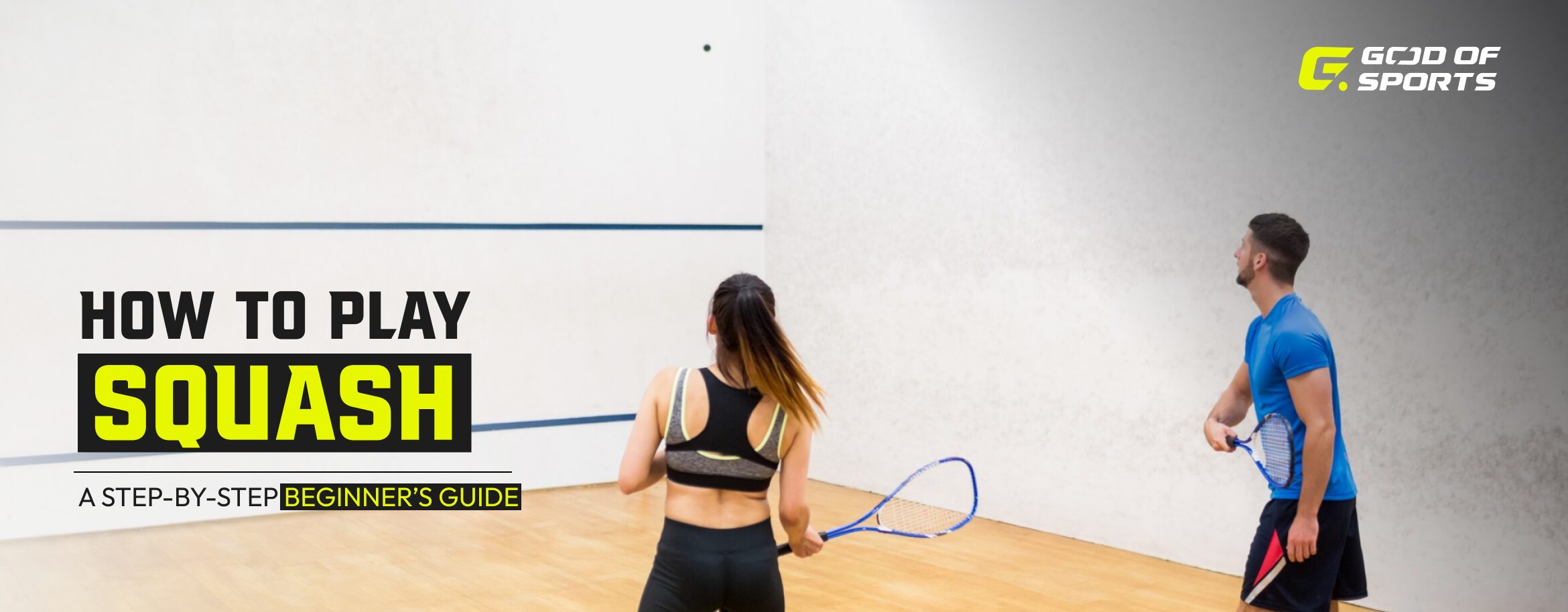
Four walls, one ball, endless action—welcome to squash.
Squash isn’t just a game—it’s a battle of reflexes, strategy, and endurance played inside four walls where the ball never seems to slow down. Ranked among the world’s healthiest sports for its mix of speed, agility, and cardio intensity, squash challenges both your body and your mind. But for newcomers, stepping onto the court can feel overwhelming: What’s with all the lines? How do you serve? And how do you keep up with a ball that seems to vanish into the corners?
This step-by-step beginner’s guide cuts through the confusion. Whether you’re picking up a racket for the first time or looking to turn casual rallies into real games, you’ll learn the basics—rules, equipment, strokes, movement, and strategies—to start playing squash with confidence.
1) Gear You Actually Need (and what to skip)
- Racket: Start with a mid-weight frame (130–140g unstrung) and an even or slightly head-light balance.
- Ball: Beginners should use a single yellow dot (or even blue); double-yellow is for advanced play and will feel dead.
- Shoes: Indoor non-marking court shoes with good lateral support.
- Eyewear: Mandatory for safety, especially against volleys and ricochets.
- Overgrip: A tacky grip helps keep control as you sweat.
2) Know the Court and the Lines
- Service boxes: Where serves begin.
- Short line: Splits front from back.
- Half-court line: Splits left from right at the back.
- Tin: Lower metal strip on the front wall; below it is out.
- Outline & service line: Ball above these is out.
Core rule: The ball must always hit the front wall before or after the side/back walls and bounce no more than once.
3) How Scoring Works
- Point-a-rally (PAR) to 11, win by 2.
- Matches are best of 3 or 5 games.
- Either player can score—no need to be serving.
4) Serving and Receiving
Serve checklist:
- One foot in the service box.
- Hit above the service line on the front wall.
- Land in the opposite back quarter.
- Alternate boxes after winning points.
Receiving tip: Aim to return deep and seize the T-position (center court).
5) Safety, Interference, Let & Stroke
- Let: Rally replayed if obstructed but not decisive.
- Stroke: Point to the striker if blocked from a direct winning shot.
- Golden rule: Always clear space after hitting your shot.
6) The Beginner-Proof Grip
- Hold it like a handshake.
- V-shape of thumb/index on the back edge of the racket.
- Relax your grip; tighten only on contact.
7) Four Core Shots to Learn
- Straight Drive (rail): Deep and tight along the side wall.
- Crosscourt Drive: Forces opponent off the T.
- Drop Shot: Soft, low shot close to the tin.
- Boast: Use the side wall to bring the ball forward when stuck.

8) Movement & Footwork
- Control the T-position.
- Use a split step as your opponent hits.
- Lunge smartly and recover quickly.
- Keep movements short, sharp, and efficient.
9) A Simple Beginner Game Plan
- Serve high lobs, preferably to the backhand side.
- Keep shots deep with rails.
- Volley whenever possible.
- Use drops sparingly—only when balanced.
- Boast from defensive positions.
10) Five Starter Drills
- Solo straight drives – 100 per side.
- Figure-8 volleys – build touch & timing.
- Ghosting – shadow footwork to all corners.
- Drive–boast routine – partner drill for control.
- Serve & return ladder – practice starting rallies.
11) One-Week Beginner Plan
- Day 1: Rules + solo drives.
- Day 2: Footwork + drive–boast.
- Day 3: Short games to 7.
- Day 4: Rest/mobility.
- Day 5: Serve & return + conditioned play.
- Day 6: Full match.
- Day 7: Light solo practice + stretch.
12) Warm-Up, Cool-Down & Prevention
- Warm-up (5–8 mins): Skipping, dynamic stretches, light ghosting.
- Cool-down: Light jog + stretches for calves, quads, hamstrings, and shoulders.
- Hydrate & refuel with carbs + protein after play.

14) Court Etiquette Every Player Should Follow
- Arrive on time with clean shoes.
- Call “let” clearly and apologize if interfering.
- Retrieve balls promptly.
- Wipe sweat patches to prevent slips.
15) Quick FAQs on Squash
1. Is squash hard to learn for beginners?
Not at all. While squash is fast-paced, the rules and basics are simple to pick up. Most beginners can start rallying within their first session. The challenge—and fun—comes from improving your control, movement, and strategy over time.
2. How often should I play squash to improve?
Two sessions per week (one practice, one match) is a solid start. Consistency matters more than volume—regular practice helps you build muscle memory, improve fitness, and develop court awareness without burning out.
3. What’s the difference between squash balls (blue, red, yellow dots)?
-
Blue dot: Fastest, bounciest, ideal for beginners.
-
Red dot: Slightly slower, for improving players.
-
Single yellow dot: Standard club ball, for intermediate players.
-
Double yellow dot: Slowest, for advanced and pro play.
Choose a livelier ball (blue or red) until you can generate enough pace yourself.
4. Can I play squash if I’ve never played another racket sport?
Yes! Unlike tennis or badminton, squash doesn’t require prior racket experience. The skills—like grip, footwork, and shot-making—are unique, so everyone starts fresh. In fact, complete beginners often learn faster because they don’t carry over habits from other sports.
5. What’s the best way to win points as a beginner?
Focus on three basics:
-
Serve high and deep (especially to the backhand side).
-
Hit straight drives tight along the walls.
-
Always recover to the T after your shot.
Even without fancy shots, controlling depth and position will win you more rallies than trying to hit risky winners.
Final Rally
Squash may look intimidating at first, but once you understand the court, the rules, and a few key shots, the game quickly turns into an addictive mix of speed, skill, and strategy. Every rally teaches you something new—about timing, positioning, and even how to push through fatigue.
Remember the essentials: serve smart, hit deep, recover to the T, and keep rallies alive with controlled shots. As you practice, the chaos of chasing the ball around four walls transforms into rhythm, flow, and eventually, confidence.
So grab your racket, find a court, and step into the game. Because once you start, you’ll understand why squash has been called “the sport for life”—fast, social, endlessly challenging, and always worth that final sprint to the ball.