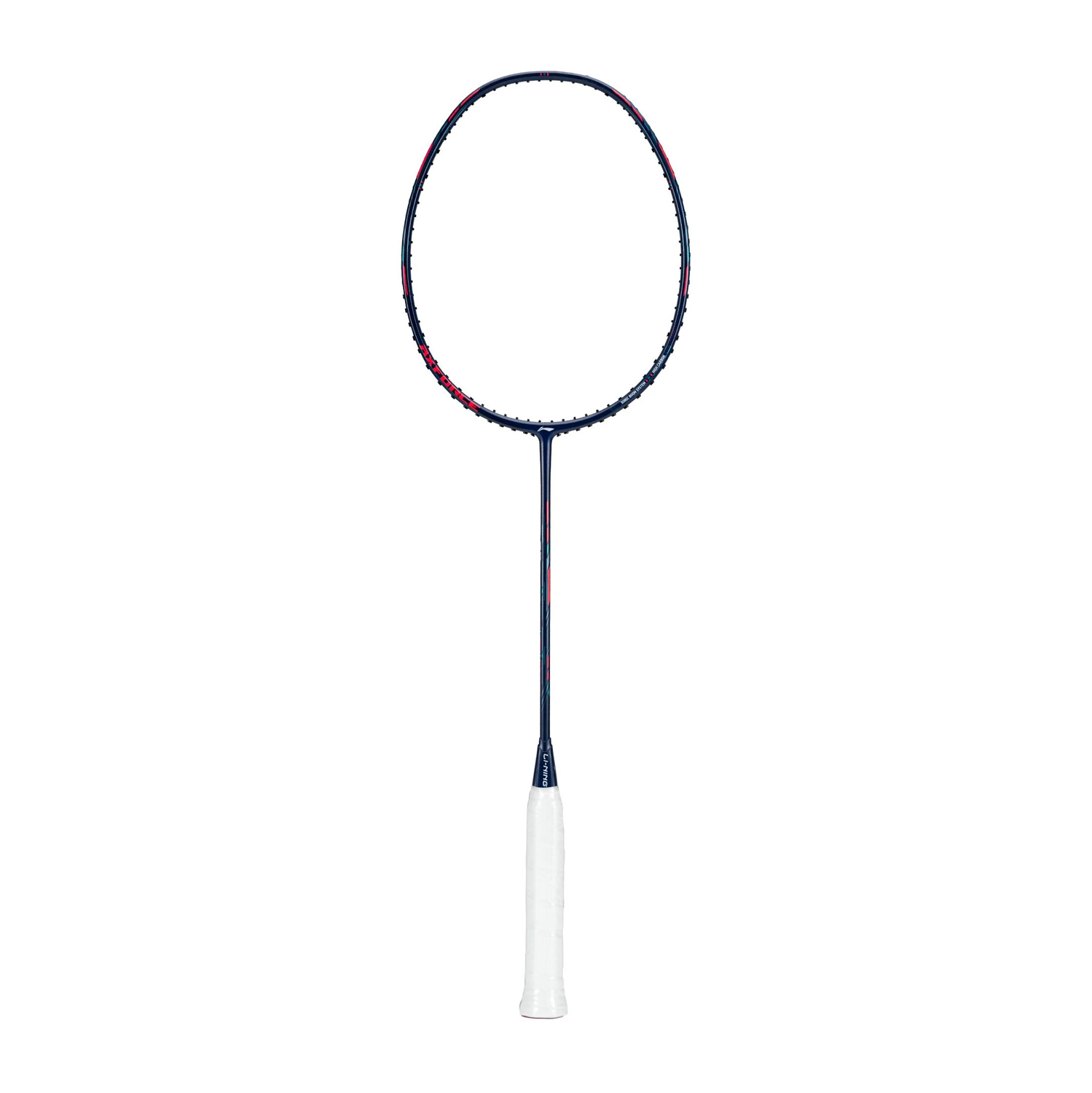





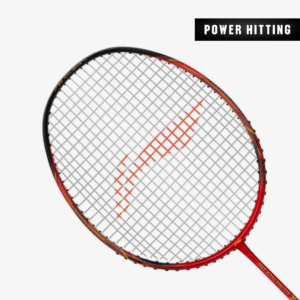
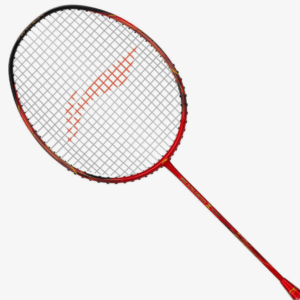




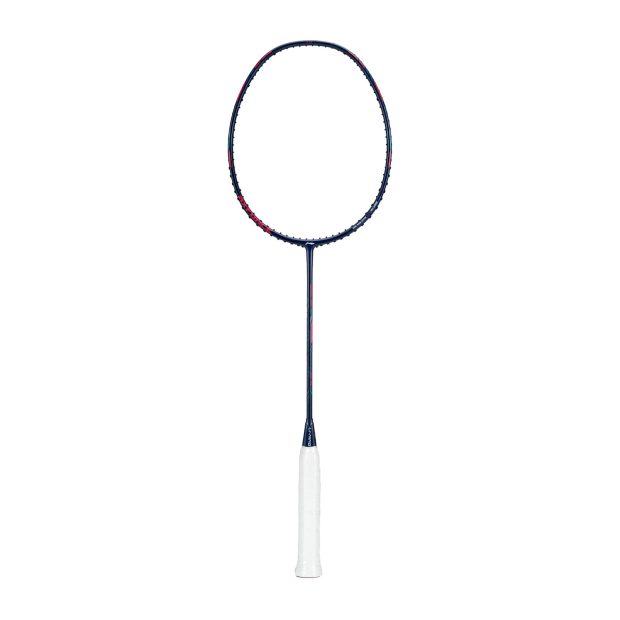
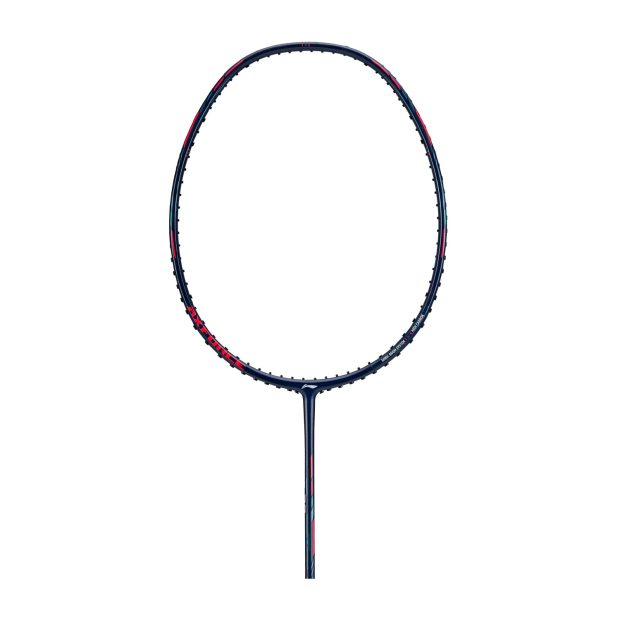
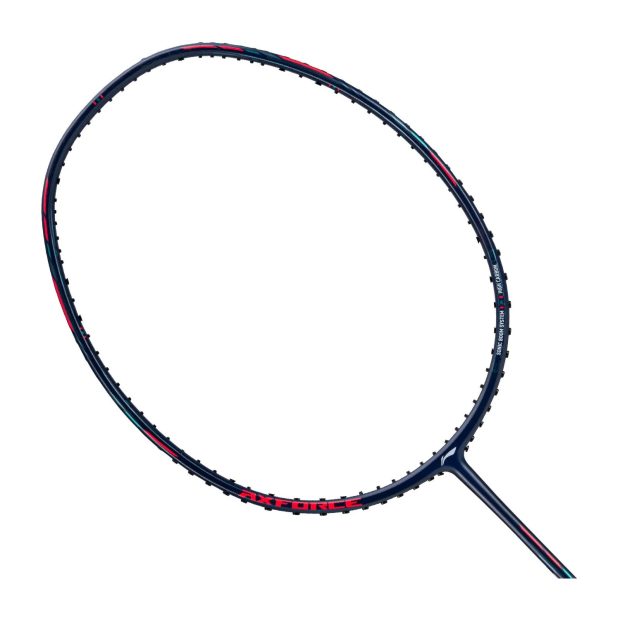
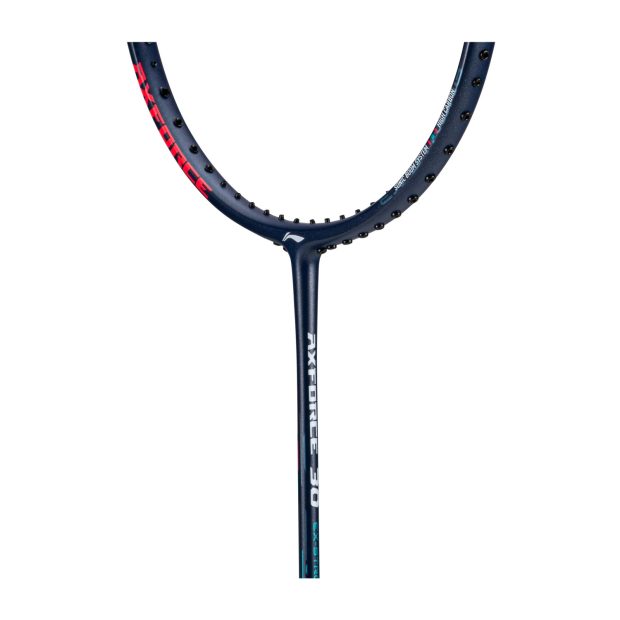
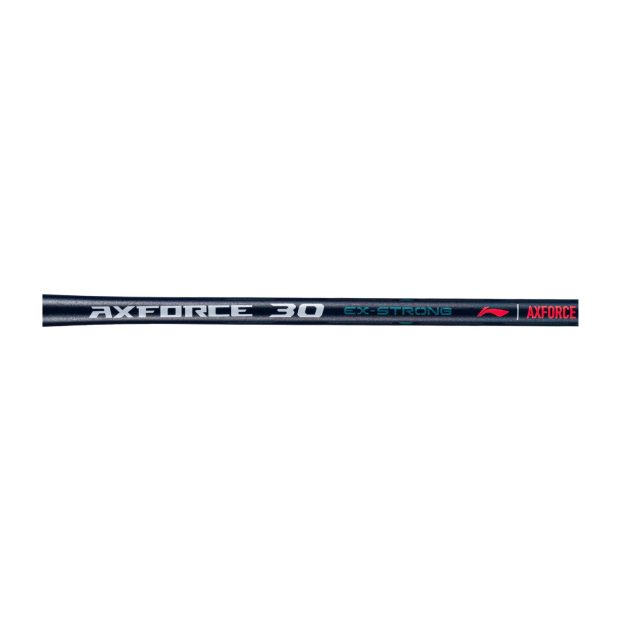
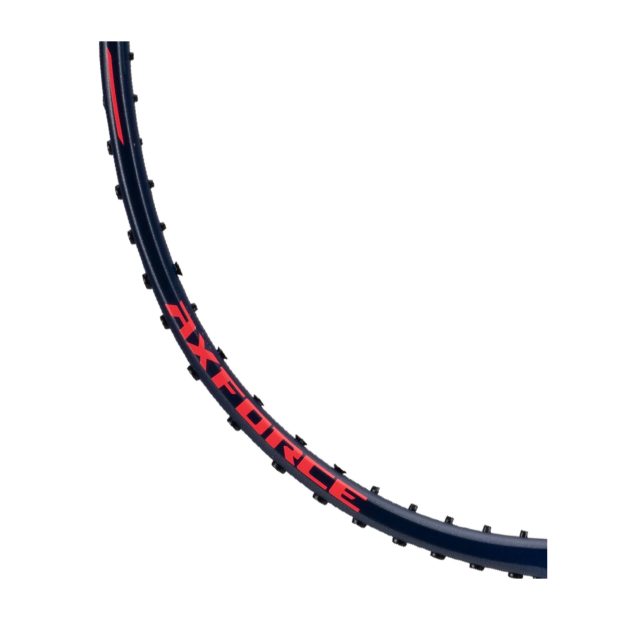
Li-Ning AxForce 30 Badminton Racket – Cool Ebony (4U)
Li-Ning AxForce 30 Badminton Racket EX-STRONG 4U is the newest addition to Li-Ning’s AxForce attacking series — a racket built around a single, memorable idea: power you can hear.
₹8,990.00 Original price was: ₹8,990.00.₹5,992.00Current price is: ₹5,992.00.
Estimated Delivery Time: 2 - 4 Days (Delivery subject to pincode)
Estimated Delivery Time: 2 - 4 Days (Delivery subject to pincode)
Watch this video before Buying
Frequently Bought Together
Specification
Description
FAQ's
Specification
Description
God of Sports Expert Verdict on Li-Ning AxForce 30 Badminton Racket:
- AxForce 30 EX-STRONG 4U occupies a specific and well-defined niche: it is for the intermediate player who is developing their attacking game and wants a racket that rewards offensive intent. The flexible shaft is central to this. A flexible shaft bends more during the swing, storing energy, and snapping back through impact to add force to the shuttle — a mechanical slingshot effect that helps players generate smash power even when their swing mechanics are still developing. This makes a flexible-shaft attacking racket a more forgiving power tool than a stiff-shaft alternative: a stiff shaft demands near-perfect timing to deliver its full power, while a flexible shaft is more accommodating of imperfect contact timing, still generating good pace on shots that weren’t hit perfectly.
- The Sonic Boom System enhances this experience by making every shot feel more impactful than it is. The audible crack of a good smash with the AxForce 30 provides real-time feedback that coaches rarely give explicitly — you know immediately whether you hit through the shuttle cleanly, because a clean hit sounds different from a mistimed one. For developing players, this is genuinely useful proprioceptive feedback, not just a marketing trick.
- The Dynamic Optimum Frame extends the effective sweet spot upward in the string bed compared to an isometric or oval frame, meaning off-centre hits in the upper portion of the frame still generate useful pace rather than producing a dull, weak return. For attacking players whose mechanics are still refining, a larger effective sweet spot directly translates to fewer wasted attack opportunities from slightly mistimed smashes.
- At 35 lbs max tension, the AxForce 30 4U accepts a stringing tension range that suits intermediate players well. At 24–28 lbs it will feel forgiving and powerful; at 28–32 lbs the string bed tightens for better control and a crisper response on attacking shots. The 33–35 lbs range is available for players with good mechanics who want maximum string-bed snap, but we’d recommend building up gradually rather than going straight to maximum tension.
Technologies used in Li-Ning AxForce 30 Badminton Racket:
- Sonic Boom System — Audible Power Feedback on Every Shot : The Sonic Boom System is Li-Ning’s most distinctive proprietary technology in the AxForce series, and it is genuinely different from competitor brands’ marketing claims in that it is perceptible and measurable during play — not just a label. The system works by optimising the air pressure dynamics around the frame and string bed at the moment of impact, specifically engineering the frame geometry and stringing architecture to produce a sharper, louder, more resonant contact sound when the shuttle strikes the string bed cleanly. The principle is rooted in acoustics: the sound of impact is a function of the pressure wave generated when a taut string bed rapidly decelerates a fast-moving object. By optimising the frame stiffness, string-bed geometry, and grommet configuration to allow maximum string resonance at the point of clean contact, the Sonic Boom System produces a distinctively crisp crack on well-struck smashes and drives. The practical implication extends beyond aesthetics. The audible feedback of a well-struck shot versus a mistimed or off-centre shot is acoustically distinct: a clean hit through the sweet spot produces the characteristic boom; a mis-hit produces a duller, flatter sound. This provides real-time shot quality feedback during play — a player can begin calibrating their timing and contact point through auditory cues without conscious analytical effort, accelerating the development of good attack mechanics.
- Flexible Shaft — Stored Energy Release for Intermediate Attackers : Li-Ning AxForce 30 Badminton Racket EX-STRONG’s flexible shaft is a deliberate design choice that positions it as a power-accessible tool for players still developing their attacking technique. To understand why, it helps to understand shaft flex as a spectrum: at one end, stiff shafts (like those in the AxForce 90 and 100) transfer force directly and immediately, with minimal shaft deformation during the swing — they are maximally efficient for players whose swing mechanics generate high head speed through precise, powerful technique, but unforgiving when timing is even slightly off. At the flexible end of the spectrum, the shaft bends during the downswing, storing kinetic energy from the player’s arm and shoulder movement in the elastic deformation of the carbon shaft. As the swing reaches impact, the shaft snaps back toward its original shape, adding stored elastic energy to the shuttle as a secondary force pulse — the mechanical equivalent of a slingshot or a diving board spring. This means that even players who generate moderate swing speed can produce respectable smash pace, because the shaft’s energy contribution supplements whatever the player’s arm generates. The tradeoff is response accuracy: a flexible shaft has a slightly slower, less immediate feel at contact, and at very high string tensions the flex can reduce precision on touch shots and net exchanges. For an intermediate attacker whose priority is developing powerful smash habits, this is an excellent tradeoff — power is gained, and the control refinement comes later as technique improves.
- High Carbon Construction — Durability and Structural Integrity at Tension : The AxForce 30 EX-STRONG is built from High Carbon material — Li-Ning’s designation for the carbon fibre composite used in this tier of the AxForce series. Carbon fibre is used in badminton rackets because it combines a high strength-to-weight ratio with useful elastic properties: it is stiff enough to transfer force efficiently, but not so brittle that it fractures under the repeated flexural stresses of badminton play. At the 4U weight class and 35 lbs maximum tension, the frame must be both light and structurally robust — the carbon construction achieves this. High Carbon in this context refers to a commercial-grade carbon fibre composite as distinct from the higher-modulus variants (High Resilient Carbon, High Modulus Graphite, or the premium UHM/Aerospace-grade materials used in the AxForce 90 Max and AxForce 100 series). The practical implication for the intermediate player is straightforward: the AxForce 30 will withstand the mechanical demands of regular training and competitive club play, handle string tensions up to 35 lbs without structural compromise, and maintain its frame geometry over hundreds of playing hours without delamination or warping. For a player in the intermediate tier who may have experienced budget rackets failing at the frame after a few months of regular use, the High Carbon construction represents a meaningful durability step up.
- Dynamic Optimum Frame — Enlarged Sweet Spot for More Useful Attacking Area : The Dynamic Optimum Frame is Li-Ning’s frame geometry design used across the AxForce series, and it addresses one of the most practically important variables in attacking play: sweet spot size and position. Traditional oval and isometric racket frames have their widest string-bed area in the centre of the head, with the sweet spot — the region of the string bed that transfers maximum force to the shuttle — concentrated in a roughly central zone. The Dynamic Optimum Frame modifies the frame geometry to shift and extend the sweet spot upward toward the top of the frame, while also widening the effective hitting area across more of the upper string bed. The reasoning is specific to attacking play: smashes and overhead clears are almost always struck with the shuttle at the top portion of the frame, not the centre. By ensuring the maximum power zone of the string bed aligns with where attacking shots are actually struck, the Dynamic Optimum Frame produces better outcomes on the shots that matter most to an attacking player. Off-centre hits in the upper frame region — which in a conventional frame would produce weak, slow returns — generate meaningfully better pace with the Dynamic Optimum Frame. This is not just a sweet-spot enlargement; it is a repositioning of the sweet spot to where attacking players actually use it.
- 35 lbs Max Tension — Headroom for High-Performance Stringing : AxForce 30 EX-STRONG 4U supports a maximum string tension of 35 lbs — meaningfully higher than the 26–27 lbs maximum found in entry-level rackets and comparable to the tension ceiling of many mid-range rackets from competitor brands. This matters because string tension is one of the most significant controllable variables in badminton racket performance: lower tensions (22–26 lbs) produce a trampoline-like rebound effect — the shuttle sinks deeper into the string bed and launches off with high power but reduced directional precision; higher tensions (28–35 lbs) create a tighter, more responsive string bed that snaps the shuttle away sharply with better directional accuracy and a crisper contact feel. At 35 lbs, the AxForce 30 4U can be strung for players who want both the flexible shaft’s power-amplifying characteristic and a tight, precise string bed that gives control and clear shot definition. The combination of a flexible shaft (which contributes energy at impact) and a tight string bed (which provides precision at contact) is a well-established configuration for intermediate attacking players: the shaft handles the power contribution, and the string bed handles the control. Intermediate players should start at 24–28 lbs and increase gradually as their technique develops — do not string at maximum tension unless your mechanics are reliable, as high tension reduces forgiveness on mis-hits.
Li-Ning AxForce 30 Badminton Racket in the Li-Ning AxForce Series Ladder:
| Model | Level | Material | Shaft | Max Tension | Key Upgrade Over Axforce 30 |
|---|---|---|---|---|---|
| AxForce 20 | Entry–Beginner | High Carbon | Flexible (6.8mm) | 26–27 lbs | — |
| AxForce 30 EX-STRONG (this page) | Intermediate | High Carbon | Flexible | 35 lbs | Higher tension ceiling, Sonic Boom, 2025 model |
| AxForce 50 | Intermediate–Advanced | High Resilient Carbon | Medium Flex | ~30 lbs | Higher-grade carbon, improved midsection |
| AxForce 60 | Advanced | High Resilient Carbon | Medium–Stiff | ~30 lbs | Wing Stabiliser, tighter construction |
| AxForce 70 | Advanced | High Resilient Carbon | Stiff | ~32 lbs | TB Nano, UHB shaft, Wing Stabiliser |
| AxForce 90 / 90 Max | Professional | TB Nano / UHM Carbon | Extra Stiff | 35+ lbs | Full professional tech stack, Li Shi Feng endorsed |
| AxForce 100 | Professional Flagship | Premium UHM Carbon | Extra Stiff | 35 lbs | Highest-specification AxForce construction |
Is Li-Ning AxForce 30 Badminton Racket Right for You?
- Intermediate Attacking Players Building Their Smash Game : AxForce 30’s flexible shaft is precisely right for intermediate players who are actively developing their rear-court attack. The shaft’s energy-release mechanism supplements the player’s own power generation, meaning smashes feel heavy and fast even before technique is fully polished. The Sonic Boom System provides immediate feedback on shot quality, and the Dynamic Optimum Frame’s extended upper-frame sweet spot reduces the cost of slightly off-centre attacking contact. If you are at an intermediate level and playing 2–4 times per week with an attacking mentality, the AxForce 30 EX-STRONG 4U is built for your game.
- Club Doubles Players Who Play From the Rear Court : In doubles, the rear-court player’s primary responsibility is the smash. The AxForce 30 EX-STRONG 4U’s head-heavy balance and flexible shaft combination is well configured for the overhead attacking shots that dominate the rear-court role in doubles play. The 4U weight class provides enough mass for powerful smashes without being so heavy that net coverage is compromised when required. For intermediate doubles players cementing a rear-court attacking role, this is a practical and well-suited choice.
- Players Upgrading from Budget Entry-Level Rackets : The AxForce 30 EX-STRONG represents a significant genuine upgrade from this level: real carbon construction, defined and consistent shaft flex, a 35 lbs tension capability, and a frame geometry engineered for attacking performance. The improvement in smash quality and shot feel from making this upgrade will be immediately apparent.
FAQ's
Shop Online
Shop 24/7 with your smartphone
Shipping Worldwide
Free Shipping All Over India
Pay on Delivery
You're in safe hands
Frequently Bought Together
Product Details
Specification
Description
FAQ's
Specification
| Weight Class | 4U (80–84g) |
| Grip Size | G5 |
| Balance | Head-Heavy |
| Shaft Flex | Flexible |
| Frame Material | High Carbon (Carbon Fibre) |
| Frame Shape | Dynamic Optimum Frame |
| Max String Tension | 35 lbs |
| Level | Intermediate |
Description
God of Sports Expert Verdict on Li-Ning AxForce 30 Badminton Racket:
- AxForce 30 EX-STRONG 4U occupies a specific and well-defined niche: it is for the intermediate player who is developing their attacking game and wants a racket that rewards offensive intent. The flexible shaft is central to this. A flexible shaft bends more during the swing, storing energy, and snapping back through impact to add force to the shuttle — a mechanical slingshot effect that helps players generate smash power even when their swing mechanics are still developing. This makes a flexible-shaft attacking racket a more forgiving power tool than a stiff-shaft alternative: a stiff shaft demands near-perfect timing to deliver its full power, while a flexible shaft is more accommodating of imperfect contact timing, still generating good pace on shots that weren’t hit perfectly.
- The Sonic Boom System enhances this experience by making every shot feel more impactful than it is. The audible crack of a good smash with the AxForce 30 provides real-time feedback that coaches rarely give explicitly — you know immediately whether you hit through the shuttle cleanly, because a clean hit sounds different from a mistimed one. For developing players, this is genuinely useful proprioceptive feedback, not just a marketing trick.
- The Dynamic Optimum Frame extends the effective sweet spot upward in the string bed compared to an isometric or oval frame, meaning off-centre hits in the upper portion of the frame still generate useful pace rather than producing a dull, weak return. For attacking players whose mechanics are still refining, a larger effective sweet spot directly translates to fewer wasted attack opportunities from slightly mistimed smashes.
- At 35 lbs max tension, the AxForce 30 4U accepts a stringing tension range that suits intermediate players well. At 24–28 lbs it will feel forgiving and powerful; at 28–32 lbs the string bed tightens for better control and a crisper response on attacking shots. The 33–35 lbs range is available for players with good mechanics who want maximum string-bed snap, but we’d recommend building up gradually rather than going straight to maximum tension.
Technologies used in Li-Ning AxForce 30 Badminton Racket:
- Sonic Boom System — Audible Power Feedback on Every Shot : The Sonic Boom System is Li-Ning’s most distinctive proprietary technology in the AxForce series, and it is genuinely different from competitor brands’ marketing claims in that it is perceptible and measurable during play — not just a label. The system works by optimising the air pressure dynamics around the frame and string bed at the moment of impact, specifically engineering the frame geometry and stringing architecture to produce a sharper, louder, more resonant contact sound when the shuttle strikes the string bed cleanly. The principle is rooted in acoustics: the sound of impact is a function of the pressure wave generated when a taut string bed rapidly decelerates a fast-moving object. By optimising the frame stiffness, string-bed geometry, and grommet configuration to allow maximum string resonance at the point of clean contact, the Sonic Boom System produces a distinctively crisp crack on well-struck smashes and drives. The practical implication extends beyond aesthetics. The audible feedback of a well-struck shot versus a mistimed or off-centre shot is acoustically distinct: a clean hit through the sweet spot produces the characteristic boom; a mis-hit produces a duller, flatter sound. This provides real-time shot quality feedback during play — a player can begin calibrating their timing and contact point through auditory cues without conscious analytical effort, accelerating the development of good attack mechanics.
- Flexible Shaft — Stored Energy Release for Intermediate Attackers : Li-Ning AxForce 30 Badminton Racket EX-STRONG’s flexible shaft is a deliberate design choice that positions it as a power-accessible tool for players still developing their attacking technique. To understand why, it helps to understand shaft flex as a spectrum: at one end, stiff shafts (like those in the AxForce 90 and 100) transfer force directly and immediately, with minimal shaft deformation during the swing — they are maximally efficient for players whose swing mechanics generate high head speed through precise, powerful technique, but unforgiving when timing is even slightly off. At the flexible end of the spectrum, the shaft bends during the downswing, storing kinetic energy from the player’s arm and shoulder movement in the elastic deformation of the carbon shaft. As the swing reaches impact, the shaft snaps back toward its original shape, adding stored elastic energy to the shuttle as a secondary force pulse — the mechanical equivalent of a slingshot or a diving board spring. This means that even players who generate moderate swing speed can produce respectable smash pace, because the shaft’s energy contribution supplements whatever the player’s arm generates. The tradeoff is response accuracy: a flexible shaft has a slightly slower, less immediate feel at contact, and at very high string tensions the flex can reduce precision on touch shots and net exchanges. For an intermediate attacker whose priority is developing powerful smash habits, this is an excellent tradeoff — power is gained, and the control refinement comes later as technique improves.
- High Carbon Construction — Durability and Structural Integrity at Tension : The AxForce 30 EX-STRONG is built from High Carbon material — Li-Ning’s designation for the carbon fibre composite used in this tier of the AxForce series. Carbon fibre is used in badminton rackets because it combines a high strength-to-weight ratio with useful elastic properties: it is stiff enough to transfer force efficiently, but not so brittle that it fractures under the repeated flexural stresses of badminton play. At the 4U weight class and 35 lbs maximum tension, the frame must be both light and structurally robust — the carbon construction achieves this. High Carbon in this context refers to a commercial-grade carbon fibre composite as distinct from the higher-modulus variants (High Resilient Carbon, High Modulus Graphite, or the premium UHM/Aerospace-grade materials used in the AxForce 90 Max and AxForce 100 series). The practical implication for the intermediate player is straightforward: the AxForce 30 will withstand the mechanical demands of regular training and competitive club play, handle string tensions up to 35 lbs without structural compromise, and maintain its frame geometry over hundreds of playing hours without delamination or warping. For a player in the intermediate tier who may have experienced budget rackets failing at the frame after a few months of regular use, the High Carbon construction represents a meaningful durability step up.
- Dynamic Optimum Frame — Enlarged Sweet Spot for More Useful Attacking Area : The Dynamic Optimum Frame is Li-Ning’s frame geometry design used across the AxForce series, and it addresses one of the most practically important variables in attacking play: sweet spot size and position. Traditional oval and isometric racket frames have their widest string-bed area in the centre of the head, with the sweet spot — the region of the string bed that transfers maximum force to the shuttle — concentrated in a roughly central zone. The Dynamic Optimum Frame modifies the frame geometry to shift and extend the sweet spot upward toward the top of the frame, while also widening the effective hitting area across more of the upper string bed. The reasoning is specific to attacking play: smashes and overhead clears are almost always struck with the shuttle at the top portion of the frame, not the centre. By ensuring the maximum power zone of the string bed aligns with where attacking shots are actually struck, the Dynamic Optimum Frame produces better outcomes on the shots that matter most to an attacking player. Off-centre hits in the upper frame region — which in a conventional frame would produce weak, slow returns — generate meaningfully better pace with the Dynamic Optimum Frame. This is not just a sweet-spot enlargement; it is a repositioning of the sweet spot to where attacking players actually use it.
- 35 lbs Max Tension — Headroom for High-Performance Stringing : AxForce 30 EX-STRONG 4U supports a maximum string tension of 35 lbs — meaningfully higher than the 26–27 lbs maximum found in entry-level rackets and comparable to the tension ceiling of many mid-range rackets from competitor brands. This matters because string tension is one of the most significant controllable variables in badminton racket performance: lower tensions (22–26 lbs) produce a trampoline-like rebound effect — the shuttle sinks deeper into the string bed and launches off with high power but reduced directional precision; higher tensions (28–35 lbs) create a tighter, more responsive string bed that snaps the shuttle away sharply with better directional accuracy and a crisper contact feel. At 35 lbs, the AxForce 30 4U can be strung for players who want both the flexible shaft’s power-amplifying characteristic and a tight, precise string bed that gives control and clear shot definition. The combination of a flexible shaft (which contributes energy at impact) and a tight string bed (which provides precision at contact) is a well-established configuration for intermediate attacking players: the shaft handles the power contribution, and the string bed handles the control. Intermediate players should start at 24–28 lbs and increase gradually as their technique develops — do not string at maximum tension unless your mechanics are reliable, as high tension reduces forgiveness on mis-hits.
Li-Ning AxForce 30 Badminton Racket in the Li-Ning AxForce Series Ladder:
| Model | Level | Material | Shaft | Max Tension | Key Upgrade Over Axforce 30 |
|---|---|---|---|---|---|
| AxForce 20 | Entry–Beginner | High Carbon | Flexible (6.8mm) | 26–27 lbs | — |
| AxForce 30 EX-STRONG (this page) | Intermediate | High Carbon | Flexible | 35 lbs | Higher tension ceiling, Sonic Boom, 2025 model |
| AxForce 50 | Intermediate–Advanced | High Resilient Carbon | Medium Flex | ~30 lbs | Higher-grade carbon, improved midsection |
| AxForce 60 | Advanced | High Resilient Carbon | Medium–Stiff | ~30 lbs | Wing Stabiliser, tighter construction |
| AxForce 70 | Advanced | High Resilient Carbon | Stiff | ~32 lbs | TB Nano, UHB shaft, Wing Stabiliser |
| AxForce 90 / 90 Max | Professional | TB Nano / UHM Carbon | Extra Stiff | 35+ lbs | Full professional tech stack, Li Shi Feng endorsed |
| AxForce 100 | Professional Flagship | Premium UHM Carbon | Extra Stiff | 35 lbs | Highest-specification AxForce construction |
Is Li-Ning AxForce 30 Badminton Racket Right for You?
- Intermediate Attacking Players Building Their Smash Game : AxForce 30’s flexible shaft is precisely right for intermediate players who are actively developing their rear-court attack. The shaft’s energy-release mechanism supplements the player’s own power generation, meaning smashes feel heavy and fast even before technique is fully polished. The Sonic Boom System provides immediate feedback on shot quality, and the Dynamic Optimum Frame’s extended upper-frame sweet spot reduces the cost of slightly off-centre attacking contact. If you are at an intermediate level and playing 2–4 times per week with an attacking mentality, the AxForce 30 EX-STRONG 4U is built for your game.
- Club Doubles Players Who Play From the Rear Court : In doubles, the rear-court player’s primary responsibility is the smash. The AxForce 30 EX-STRONG 4U’s head-heavy balance and flexible shaft combination is well configured for the overhead attacking shots that dominate the rear-court role in doubles play. The 4U weight class provides enough mass for powerful smashes without being so heavy that net coverage is compromised when required. For intermediate doubles players cementing a rear-court attacking role, this is a practical and well-suited choice.
- Players Upgrading from Budget Entry-Level Rackets : The AxForce 30 EX-STRONG represents a significant genuine upgrade from this level: real carbon construction, defined and consistent shaft flex, a 35 lbs tension capability, and a frame geometry engineered for attacking performance. The improvement in smash quality and shot feel from making this upgrade will be immediately apparent.
FAQ's
Yes, it makes a perceptible difference — this is not purely a marketing feature. The Sonic Boom System is engineered into the frame geometry and string-bed architecture of the AxForce 30 to maximise the acoustic output of a well-struck shot. The result is a distinctively loud, sharp crack on clean contact, particularly on smashes and aggressive drives. Beyond the satisfying sound, this provides real feedback on shot quality: you develop an ear for the difference between a cleanly struck smash and an off-centre one within a session or two of playing with the racket. It is a genuine training aid as well as an experiential feature.
For most intermediate attacking players: start at 26–28 lbs with a durable multifilament or mid-range monofilament string. As your technique develops, you can progressively increase toward 28–32 lbs for tighter control and sharper attack definition. The maximum 35 lbs is available for experienced players who want maximum string-bed response — do not jump straight to 33+ lbs. For string selection, Li-Ning’s own string range (No. 5 for balanced performance, No. 7 for durability) is a sensible starting point. Our team offers custom stringing on request.
The AxForce 30 EX-STRONG 4U works in both formats, but its character is particularly well-suited to doubles — specifically the rear-court attacking role where smash power is the primary weapon. In singles, a flexible-shaft head-heavy racket can feel tiring to manoeuvre over long rallies and large court coverage. If you predominantly play singles, consider whether the lighter 5U EX-LIGHT variant or a medium-flex all-round racket might serve the full range of singles demands better than the 4U EX-STRONG.
The AxForce 30 is more specifically configured for attacking play than the Arcsaber 7 Pro, which is designed as a balanced all-court racket. If you play aggressively and prioritise smash power, the AxForce 30’s flexible shaft and head-heavy balance will feel more naturally suited to your game. The Astrox 55 is also an attacking racket with a more medium flex — the AxForce 30’s softer flex is more forgiving for developing attackers, while the Astrox 55 is slightly more demanding but offers better control. The right choice depends on your technique level and playing style — contact our team for personalised advice.
| Weight Class | 4U (80–84g) |
| Grip Size | G5 |
| Balance | Head-Heavy |
| Shaft Flex | Flexible |
| Frame Material | High Carbon (Carbon Fibre) |
| Frame Shape | Dynamic Optimum Frame |
| Max String Tension | 35 lbs |
| Level | Intermediate |
God of Sports Expert Verdict on Li-Ning AxForce 30 Badminton Racket:
- AxForce 30 EX-STRONG 4U occupies a specific and well-defined niche: it is for the intermediate player who is developing their attacking game and wants a racket that rewards offensive intent. The flexible shaft is central to this. A flexible shaft bends more during the swing, storing energy, and snapping back through impact to add force to the shuttle — a mechanical slingshot effect that helps players generate smash power even when their swing mechanics are still developing. This makes a flexible-shaft attacking racket a more forgiving power tool than a stiff-shaft alternative: a stiff shaft demands near-perfect timing to deliver its full power, while a flexible shaft is more accommodating of imperfect contact timing, still generating good pace on shots that weren’t hit perfectly.
- The Sonic Boom System enhances this experience by making every shot feel more impactful than it is. The audible crack of a good smash with the AxForce 30 provides real-time feedback that coaches rarely give explicitly — you know immediately whether you hit through the shuttle cleanly, because a clean hit sounds different from a mistimed one. For developing players, this is genuinely useful proprioceptive feedback, not just a marketing trick.
- The Dynamic Optimum Frame extends the effective sweet spot upward in the string bed compared to an isometric or oval frame, meaning off-centre hits in the upper portion of the frame still generate useful pace rather than producing a dull, weak return. For attacking players whose mechanics are still refining, a larger effective sweet spot directly translates to fewer wasted attack opportunities from slightly mistimed smashes.
- At 35 lbs max tension, the AxForce 30 4U accepts a stringing tension range that suits intermediate players well. At 24–28 lbs it will feel forgiving and powerful; at 28–32 lbs the string bed tightens for better control and a crisper response on attacking shots. The 33–35 lbs range is available for players with good mechanics who want maximum string-bed snap, but we’d recommend building up gradually rather than going straight to maximum tension.
Technologies used in Li-Ning AxForce 30 Badminton Racket:
- Sonic Boom System — Audible Power Feedback on Every Shot : The Sonic Boom System is Li-Ning’s most distinctive proprietary technology in the AxForce series, and it is genuinely different from competitor brands’ marketing claims in that it is perceptible and measurable during play — not just a label. The system works by optimising the air pressure dynamics around the frame and string bed at the moment of impact, specifically engineering the frame geometry and stringing architecture to produce a sharper, louder, more resonant contact sound when the shuttle strikes the string bed cleanly. The principle is rooted in acoustics: the sound of impact is a function of the pressure wave generated when a taut string bed rapidly decelerates a fast-moving object. By optimising the frame stiffness, string-bed geometry, and grommet configuration to allow maximum string resonance at the point of clean contact, the Sonic Boom System produces a distinctively crisp crack on well-struck smashes and drives. The practical implication extends beyond aesthetics. The audible feedback of a well-struck shot versus a mistimed or off-centre shot is acoustically distinct: a clean hit through the sweet spot produces the characteristic boom; a mis-hit produces a duller, flatter sound. This provides real-time shot quality feedback during play — a player can begin calibrating their timing and contact point through auditory cues without conscious analytical effort, accelerating the development of good attack mechanics.
- Flexible Shaft — Stored Energy Release for Intermediate Attackers : Li-Ning AxForce 30 Badminton Racket EX-STRONG’s flexible shaft is a deliberate design choice that positions it as a power-accessible tool for players still developing their attacking technique. To understand why, it helps to understand shaft flex as a spectrum: at one end, stiff shafts (like those in the AxForce 90 and 100) transfer force directly and immediately, with minimal shaft deformation during the swing — they are maximally efficient for players whose swing mechanics generate high head speed through precise, powerful technique, but unforgiving when timing is even slightly off. At the flexible end of the spectrum, the shaft bends during the downswing, storing kinetic energy from the player’s arm and shoulder movement in the elastic deformation of the carbon shaft. As the swing reaches impact, the shaft snaps back toward its original shape, adding stored elastic energy to the shuttle as a secondary force pulse — the mechanical equivalent of a slingshot or a diving board spring. This means that even players who generate moderate swing speed can produce respectable smash pace, because the shaft’s energy contribution supplements whatever the player’s arm generates. The tradeoff is response accuracy: a flexible shaft has a slightly slower, less immediate feel at contact, and at very high string tensions the flex can reduce precision on touch shots and net exchanges. For an intermediate attacker whose priority is developing powerful smash habits, this is an excellent tradeoff — power is gained, and the control refinement comes later as technique improves.
- High Carbon Construction — Durability and Structural Integrity at Tension : The AxForce 30 EX-STRONG is built from High Carbon material — Li-Ning’s designation for the carbon fibre composite used in this tier of the AxForce series. Carbon fibre is used in badminton rackets because it combines a high strength-to-weight ratio with useful elastic properties: it is stiff enough to transfer force efficiently, but not so brittle that it fractures under the repeated flexural stresses of badminton play. At the 4U weight class and 35 lbs maximum tension, the frame must be both light and structurally robust — the carbon construction achieves this. High Carbon in this context refers to a commercial-grade carbon fibre composite as distinct from the higher-modulus variants (High Resilient Carbon, High Modulus Graphite, or the premium UHM/Aerospace-grade materials used in the AxForce 90 Max and AxForce 100 series). The practical implication for the intermediate player is straightforward: the AxForce 30 will withstand the mechanical demands of regular training and competitive club play, handle string tensions up to 35 lbs without structural compromise, and maintain its frame geometry over hundreds of playing hours without delamination or warping. For a player in the intermediate tier who may have experienced budget rackets failing at the frame after a few months of regular use, the High Carbon construction represents a meaningful durability step up.
- Dynamic Optimum Frame — Enlarged Sweet Spot for More Useful Attacking Area : The Dynamic Optimum Frame is Li-Ning’s frame geometry design used across the AxForce series, and it addresses one of the most practically important variables in attacking play: sweet spot size and position. Traditional oval and isometric racket frames have their widest string-bed area in the centre of the head, with the sweet spot — the region of the string bed that transfers maximum force to the shuttle — concentrated in a roughly central zone. The Dynamic Optimum Frame modifies the frame geometry to shift and extend the sweet spot upward toward the top of the frame, while also widening the effective hitting area across more of the upper string bed. The reasoning is specific to attacking play: smashes and overhead clears are almost always struck with the shuttle at the top portion of the frame, not the centre. By ensuring the maximum power zone of the string bed aligns with where attacking shots are actually struck, the Dynamic Optimum Frame produces better outcomes on the shots that matter most to an attacking player. Off-centre hits in the upper frame region — which in a conventional frame would produce weak, slow returns — generate meaningfully better pace with the Dynamic Optimum Frame. This is not just a sweet-spot enlargement; it is a repositioning of the sweet spot to where attacking players actually use it.
- 35 lbs Max Tension — Headroom for High-Performance Stringing : AxForce 30 EX-STRONG 4U supports a maximum string tension of 35 lbs — meaningfully higher than the 26–27 lbs maximum found in entry-level rackets and comparable to the tension ceiling of many mid-range rackets from competitor brands. This matters because string tension is one of the most significant controllable variables in badminton racket performance: lower tensions (22–26 lbs) produce a trampoline-like rebound effect — the shuttle sinks deeper into the string bed and launches off with high power but reduced directional precision; higher tensions (28–35 lbs) create a tighter, more responsive string bed that snaps the shuttle away sharply with better directional accuracy and a crisper contact feel. At 35 lbs, the AxForce 30 4U can be strung for players who want both the flexible shaft’s power-amplifying characteristic and a tight, precise string bed that gives control and clear shot definition. The combination of a flexible shaft (which contributes energy at impact) and a tight string bed (which provides precision at contact) is a well-established configuration for intermediate attacking players: the shaft handles the power contribution, and the string bed handles the control. Intermediate players should start at 24–28 lbs and increase gradually as their technique develops — do not string at maximum tension unless your mechanics are reliable, as high tension reduces forgiveness on mis-hits.
Li-Ning AxForce 30 Badminton Racket in the Li-Ning AxForce Series Ladder:
| Model | Level | Material | Shaft | Max Tension | Key Upgrade Over Axforce 30 |
|---|---|---|---|---|---|
| AxForce 20 | Entry–Beginner | High Carbon | Flexible (6.8mm) | 26–27 lbs | — |
| AxForce 30 EX-STRONG (this page) | Intermediate | High Carbon | Flexible | 35 lbs | Higher tension ceiling, Sonic Boom, 2025 model |
| AxForce 50 | Intermediate–Advanced | High Resilient Carbon | Medium Flex | ~30 lbs | Higher-grade carbon, improved midsection |
| AxForce 60 | Advanced | High Resilient Carbon | Medium–Stiff | ~30 lbs | Wing Stabiliser, tighter construction |
| AxForce 70 | Advanced | High Resilient Carbon | Stiff | ~32 lbs | TB Nano, UHB shaft, Wing Stabiliser |
| AxForce 90 / 90 Max | Professional | TB Nano / UHM Carbon | Extra Stiff | 35+ lbs | Full professional tech stack, Li Shi Feng endorsed |
| AxForce 100 | Professional Flagship | Premium UHM Carbon | Extra Stiff | 35 lbs | Highest-specification AxForce construction |
Is Li-Ning AxForce 30 Badminton Racket Right for You?
- Intermediate Attacking Players Building Their Smash Game : AxForce 30’s flexible shaft is precisely right for intermediate players who are actively developing their rear-court attack. The shaft’s energy-release mechanism supplements the player’s own power generation, meaning smashes feel heavy and fast even before technique is fully polished. The Sonic Boom System provides immediate feedback on shot quality, and the Dynamic Optimum Frame’s extended upper-frame sweet spot reduces the cost of slightly off-centre attacking contact. If you are at an intermediate level and playing 2–4 times per week with an attacking mentality, the AxForce 30 EX-STRONG 4U is built for your game.
- Club Doubles Players Who Play From the Rear Court : In doubles, the rear-court player’s primary responsibility is the smash. The AxForce 30 EX-STRONG 4U’s head-heavy balance and flexible shaft combination is well configured for the overhead attacking shots that dominate the rear-court role in doubles play. The 4U weight class provides enough mass for powerful smashes without being so heavy that net coverage is compromised when required. For intermediate doubles players cementing a rear-court attacking role, this is a practical and well-suited choice.
- Players Upgrading from Budget Entry-Level Rackets : The AxForce 30 EX-STRONG represents a significant genuine upgrade from this level: real carbon construction, defined and consistent shaft flex, a 35 lbs tension capability, and a frame geometry engineered for attacking performance. The improvement in smash quality and shot feel from making this upgrade will be immediately apparent.
Yes, it makes a perceptible difference — this is not purely a marketing feature. The Sonic Boom System is engineered into the frame geometry and string-bed architecture of the AxForce 30 to maximise the acoustic output of a well-struck shot. The result is a distinctively loud, sharp crack on clean contact, particularly on smashes and aggressive drives. Beyond the satisfying sound, this provides real feedback on shot quality: you develop an ear for the difference between a cleanly struck smash and an off-centre one within a session or two of playing with the racket. It is a genuine training aid as well as an experiential feature.
For most intermediate attacking players: start at 26–28 lbs with a durable multifilament or mid-range monofilament string. As your technique develops, you can progressively increase toward 28–32 lbs for tighter control and sharper attack definition. The maximum 35 lbs is available for experienced players who want maximum string-bed response — do not jump straight to 33+ lbs. For string selection, Li-Ning’s own string range (No. 5 for balanced performance, No. 7 for durability) is a sensible starting point. Our team offers custom stringing on request.
The AxForce 30 EX-STRONG 4U works in both formats, but its character is particularly well-suited to doubles — specifically the rear-court attacking role where smash power is the primary weapon. In singles, a flexible-shaft head-heavy racket can feel tiring to manoeuvre over long rallies and large court coverage. If you predominantly play singles, consider whether the lighter 5U EX-LIGHT variant or a medium-flex all-round racket might serve the full range of singles demands better than the 4U EX-STRONG.
The AxForce 30 is more specifically configured for attacking play than the Arcsaber 7 Pro, which is designed as a balanced all-court racket. If you play aggressively and prioritise smash power, the AxForce 30’s flexible shaft and head-heavy balance will feel more naturally suited to your game. The Astrox 55 is also an attacking racket with a more medium flex — the AxForce 30’s softer flex is more forgiving for developing attackers, while the Astrox 55 is slightly more demanding but offers better control. The right choice depends on your technique level and playing style — contact our team for personalised advice.
Customer Reviews
Products from same brand
JOOLA Primo Pickleballs (Pack of 100)
Joola Tyson McGuffin Magnus 3S Pickleball Paddle (16 mm)
Joola Hyperion 3S Dual Pickleball Paddle (16mm)
Similar Products
YONEX Astrox 88 S Play Badminton Racket (Emerald Blue)
Li-Ning 3D CALIBAR X Boost (Red/Black) Badminton Racket
Victor VG2 Ace Badminton Shoes (White)
Yonex Astrox 3DG HF Badminton Racket
Yonex Nanoflare 1000 Tour Badminton Racket
Yonex Arcsaber 11 Play Badminton Racket
HEAD Octane Pro Badminton Racket
Yonex Astrox 1 DG Badminton Racket
Recently Viewed
God's Advice

Best Pickleball Balls in India 2026
By
Sports Analyst
February 27, 2026

How Padel Is Growing in India: A New Era of Racket Sports
By
Sports Analyst
January 9, 2026
Announcing GOS Open – Indore Edition: Everything You Need to Know
By
Sports Analyst
January 9, 2026
Local Tournaments & Why They Matter for India’s Padel Community
By
Sports Analyst
January 9, 2026