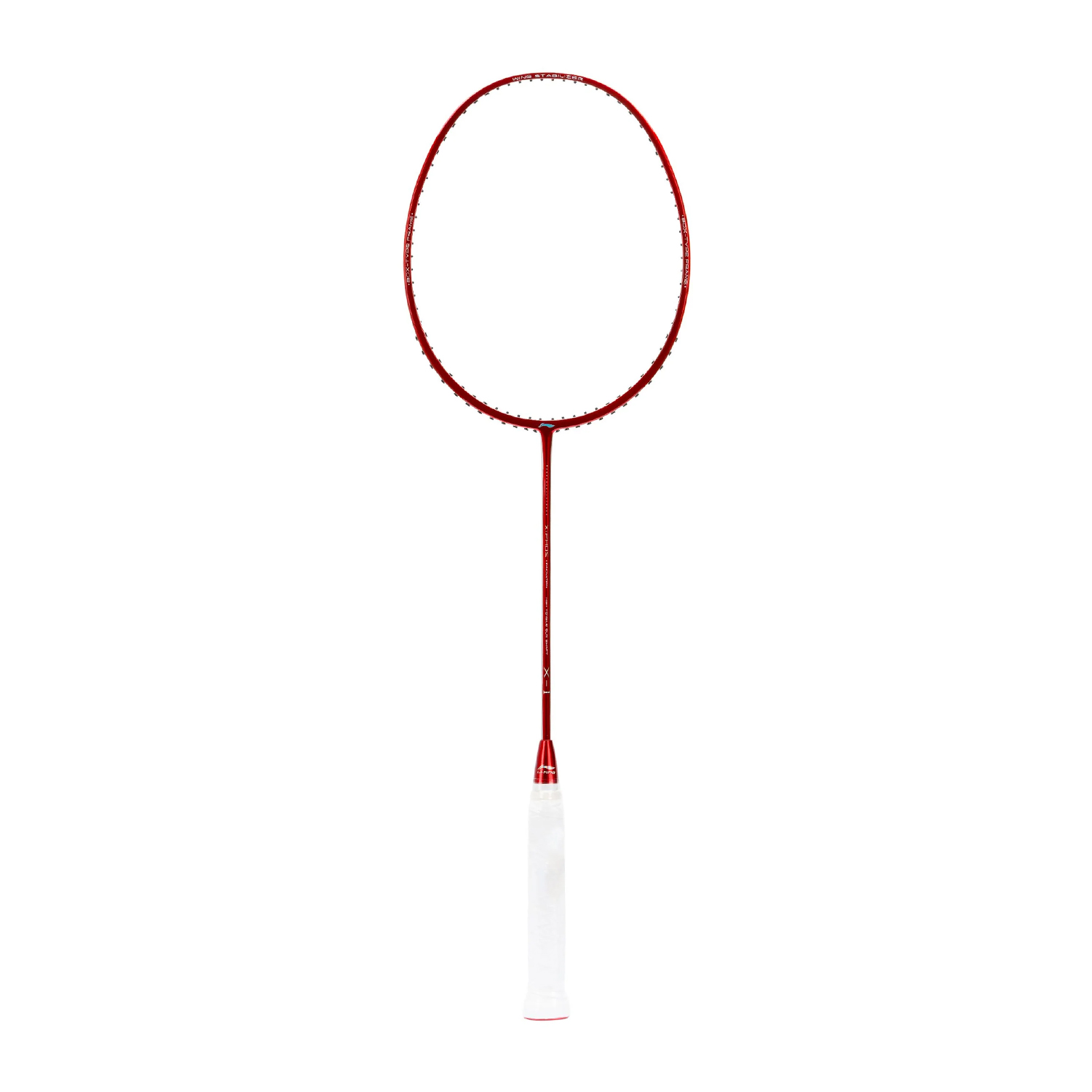




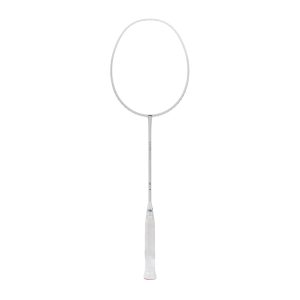
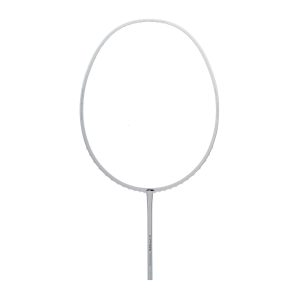
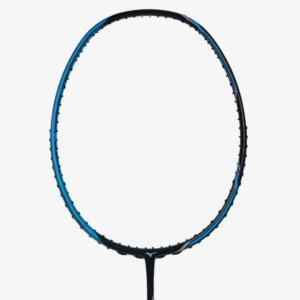


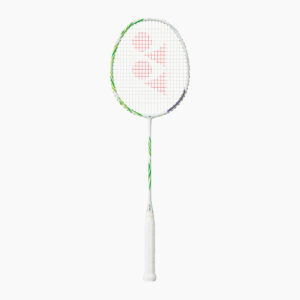
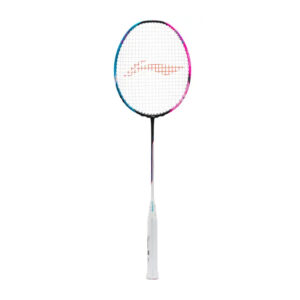
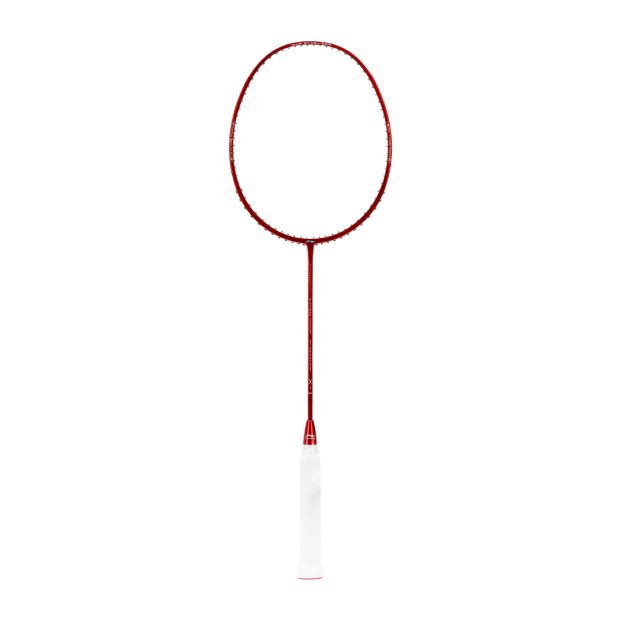
Li-Ning Xi-Phos X1 Badminton Racket (Red)
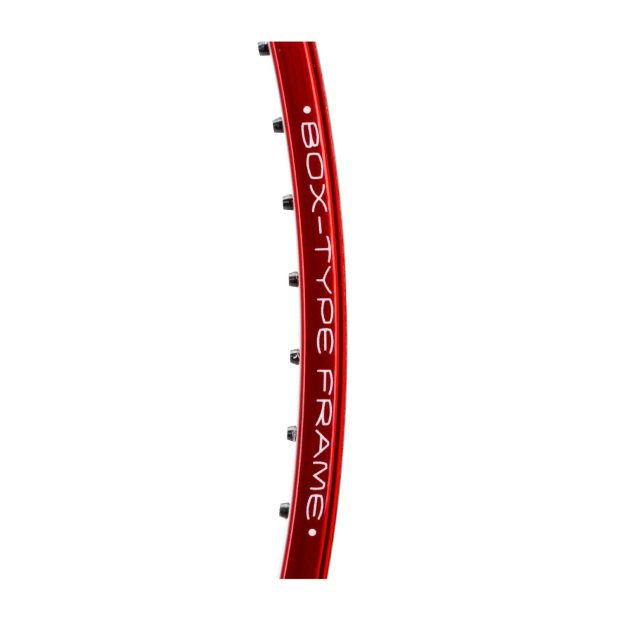
Li-Ning Xi-Phos X1 Badminton Racket is the kind of racket that earns loyalty through performance rather than marketing. Part of Li-Ning’s Pro Master Series, it is built around an all-round control philosophy — even balance, a Box-Type Frame designed for stability and precision, and a flexible shaft that makes it accessible without sacrificing the sophisticated feel that advanced players expect
₹16,990.00 Original price was: ₹16,990.00.₹10,443.00Current price is: ₹10,443.00.
Estimated Delivery Time: 2 - 4 Days (Delivery subject to pincode)
Estimated Delivery Time: 2 - 4 Days (Delivery subject to pincode)
Watch this video before Buying

Frequently Bought Together
Specification
Description
FAQ's
Specification
Description
God of Sports Expert Verdict on Li-Ning Xi-Phos X1 Badminton Racket:
- The Li-Ning Xi-Phos X1 occupies a specific space in the Indian badminton market that is underserved: it is an advanced all-round control racket that does not compromise on construction quality, technology stack, or playing feel, at a price that makes it accessible to serious club and competitive players who cannot justify or do not need a ₹15,000+ premium frame.
- The Box-Type Frame is the Xi-Phos X1’s signature characteristic, and it is one that takes a session or two to fully appreciate if you are coming from a modern aerodynamic frame. The first thing most players notice is the stability on off-centre hits. With an aerodynamic frame, a shuttle struck near the frame edge produces a noticeable torque — the frame twists slightly, the shot goes where it shouldn’t, and you feel the mistiming in your arm. The Box-Type Frame, combined with the Stabilised Torsion Angle, dramatically reduces this torsional response. Off-centre hits still aren’t as clean as sweet-spot hits, but they land with far more consistency and accuracy. For a player trying to maintain high-quality shot placement under pressure, in long rallies when fatigue affects timing, this torsional stability is a meaningful performance advantage.
- The Wing Stabiliser and TB Nano technology work together on the vibration side of the equation. TB Nano’s tighter carbon-fibre-to-resin bond creates a denser, more homogeneous frame structure that generates less internal vibration at impact. The Wing Stabiliser’s aerodynamically shaped frame sections then damp the remaining vibration before it travels up the shaft to the hand. The result is a clean, firm contact feel without the sharp sting of harsh vibration that less sophisticated frames transmit. For players who experience arm fatigue or discomfort during long training sessions, this vibration management is practically valuable.
- The 7.0mm High Tensile Slim Shaft is slim enough to be aerodynamically efficient on the swing — the thin profile creates less air resistance than a conventional thicker shaft — while the flexible flex characteristic keeps the shaft accessible for players across a range of swing speeds. The combination of a stiff Box-Type Frame (which provides contact stability) and a flexible shaft (which provides swing forgiveness) is the Xi-Phos X1’s central engineering tension, and Li-Ning has balanced it well: the frame gives you precision, and the shaft gives you power without demanding perfect timing.
Technologies used in Li-Ning Xi-Phos X1 Badminton Racket:
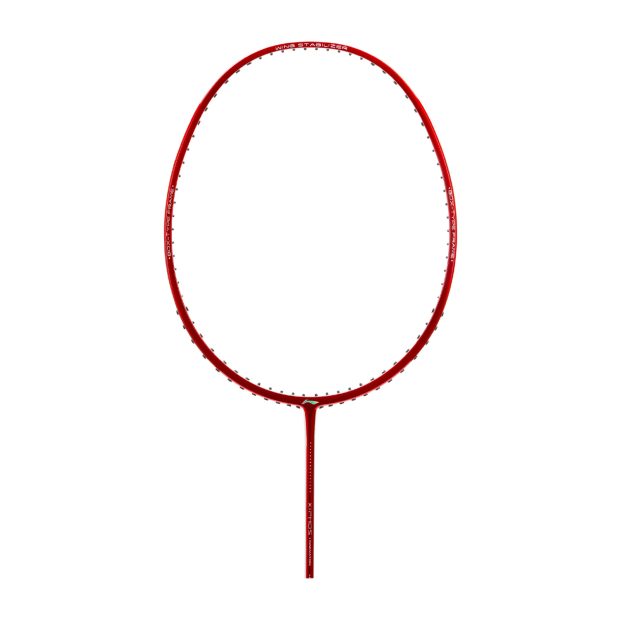
- Box-Type Frame — Torsional Stability for Precision Under Pressure The Box-Type Frame is the Xi-Phos X1’s defining engineering choice, and it sets this racket apart from the vast majority of modern badminton rackets — including most of Li-Ning’s own range — which use aerodynamic oval or T-anchor frame cross-sections. To understand what makes the Box-Type Frame different, you need to understand frame torsion. When a shuttle strikes the string bed off-centre — not perfectly through the sweet spot — the impact force creates a rotational moment that tries to twist the frame around its shaft axis. In an aerodynamic frame, the thin edge profile provides relatively little resistance to this torsional force, which is why off-centre hits feel unstable and send the shuttle in unintended directions. The Box-Type Frame’s flattened, wider cross-section profile significantly increases the frame’s second moment of area in torsion — in plain terms, it makes the frame substantially stiffer in rotation. This torsional rigidity means that even when the shuttle strikes away from the sweet spot, the frame resists twisting, the string bed maintains its plane, and the shot exits with far more directional accuracy than the same off-centre hit on an aerodynamic frame would produce. The practical game implication is significant: advanced players can aim for extreme court angles with greater confidence, knowing the racket will hold its line even on imperfect contact. The Box-Type Frame also produces the characteristic dense, planted contact feel that Li-Ning’s Multi Control category is known for — a solid, precise sensation that many advanced players find more satisfying and informative than the lighter, crisper feel of an aerodynamic frame.
- TB Nano — Nanometer Carbon Bonding for 20% Greater Frame Strength TB Nano is Li-Ning’s proprietary nanometer manufacturing technology, and it is one of the most substantive material science innovations in the brand’s racket engineering portfolio. In standard carbon fibre composite manufacturing, carbon fibres are bonded with a resin matrix, but at microscopic scale the bond is imperfect — there are gaps and irregularities between fibre and resin that act as stress concentration points under load, limiting the composite’s maximum practical strength and increasing the risk of microcracking under repeated impact. TB Nano addresses this by incorporating nanometer-scale particles — specifically carbon nano-tube derived materials — into the resin matrix itself, filling the microscopic gaps between carbon fibre filaments with molecular precision. The result is a more homogeneous, more tightly bonded composite structure in which force is distributed more evenly across the entire fibre-resin matrix. Li-Ning’s material testing shows a 20% increase in composite strength compared to standard carbon fibre construction at equivalent weight — which means the TB Nano frame can be made slimmer (as in the Xi-Phos X1’s slim shaft) without sacrificing structural integrity, or can tolerate higher repeated loading without fatigue. For the playing experience, the denser, more uniform composite also reduces internal vibration at impact — the energy of contact is dissipated through the composite more evenly rather than generating local vibration nodes that travel up the shaft as felt sting.
- Wing Stabiliser — Aerodynamic Vibration Damping for Clean Recovery The Wing Stabiliser is a specific frame geometry feature placed at the inner corners of the racket frame — the junctions where the side frame members meet the throat — that serves two related functions: aerodynamic efficiency during the swing, and vibration damping after impact. The “wing” shape of the stabiliser is designed using aerodynamic engineering principles to manage air flow around the frame during the swing, reducing turbulence and drag at the critical high-velocity phase of the downswing. A cleaner, lower-drag swing profile means the frame reaches its peak velocity more easily, improving both swing speed and consistency. After impact, the Wing Stabiliser acts as a mechanical damping element at the frame’s highest-vibration junction points. When the frame is deformed by shuttle impact and then springs back, the Wing Stabiliser’s geometry dissipates energy at these corner junctions before it propagates up the shaft. This reduces both the duration and amplitude of post-impact vibration — meaning the frame returns to a stable, neutral position faster after each shot, and the residual vibration felt in the hand is minimised. For players executing rapid exchange sequences (net play, blocking, quick pushes), a faster frame recovery time directly enables quicker preparation for the next shot. For players sensitive to vibration or with history of arm discomfort, the vibration damping reduces cumulative mechanical stress on the wrist and elbow over a session.
- Stabilised Torsion Angle — Off-Centre Accuracy Through Frame Spring-Back The Stabilised Torsion Angle (STA) is a specific structural angle built into the Xi-Phos X1’s frame construction — a precise geometric relationship between frame members at the key stress points where torsional forces concentrate during off-centre impact. Its function is complementary to but distinct from the Box-Type Frame’s general torsional stiffness. While the Box-Type Frame provides resistance to initial torsional deformation (reducing how much the frame twists when struck off-centre), the Stabilised Torsion Angle works on the spring-back phase — how the frame returns to its original neutral position after deformation. By building this angle into the frame’s geometry, Li-Ning creates an elastic response that pulls the frame back to its correct orientation quickly and consistently after every shot, regardless of where on the string bed contact occurred. The practical effect is that shot-to-shot consistency is higher with STA than without: even when slightly mistimed contact produces some frame twist, the racket snaps back to true faster, meaning the next shot is set up from a more reliable starting position. STA also improves accuracy on shots hit near the edge of the sweet spot — the frame’s elastic spring-back adds a small corrective force that partially counteracts the torsional deviation, improving the shot’s directional accuracy compared to a frame that simply deforms and holds the twisted position until the player manually corrects it.
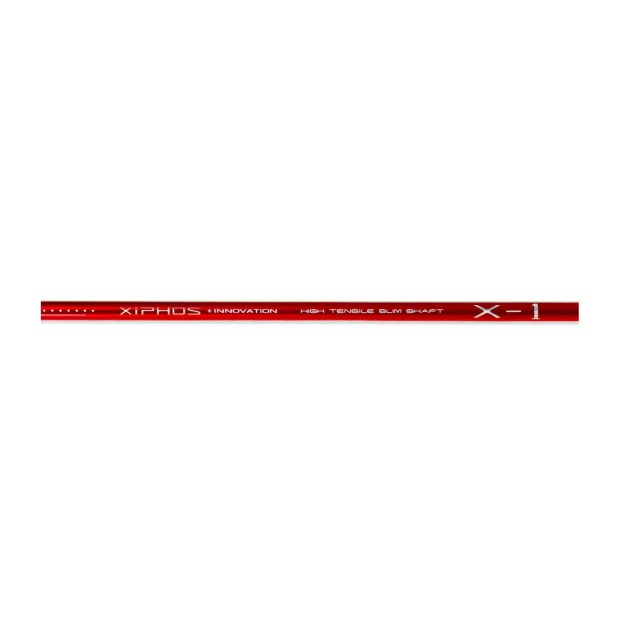
- High Tensile Slim Shaft (7.0mm) — Slim Aerodynamics with Flexible Power The Xi-Phos X1’s 7.0mm High Tensile Slim Shaft is thin even by modern standards — many contemporary rackets use 6.6–7.5mm shaft diameters, and the Xi-Phos X1 sits toward the slimmer end of that range. This thinness has two consequences. First, aerodynamic: a slimmer shaft creates less air resistance during the swing, allowing the racket to build swing speed with less physical effort. The shaft is frequently the highest-velocity part of the racket during the downswing (moving faster in linear terms than the frame due to its longer moment arm from the hand), so reducing its drag profile meaningfully reduces the total aerodynamic resistance of the full swing. Second, elastic: the shaft’s flexibility rating is “Flexible” — it bends more during the swing than a stiff shaft, storing kinetic energy and releasing it at impact in the classic slingshot mechanism. On a slim shaft, this flex behaviour is more pronounced than on a thicker shaft of equal material: the reduced cross-section means the shaft deforms more readily under swing loading. For advanced all-round players, this means the Xi-Phos X1’s shaft contributes meaningful power to clears and smashes without demanding a forceful, high-speed swing technique. The “High Tensile” designation refers to the tensile-modified carbon fibre material used in the shaft’s construction, which maintains elastic resilience through repeated flex cycles without progressive stiffening or fatigue — the shaft performs consistently across the racket’s lifespan.
The Li-Ning Xi-Phos X1 Badminton Racket Playing Character — What It Feels Like on Court
- Defence and retrieval: The even balance and flexible shaft make the Xi-Phos X1 quick to manoeuvre in defence. The Box-Type Frame’s torsional stability means that even rushed, off-centre defensive shots land with better direction accuracy than most attacking rackets — the frame holds its position even when you barely have time to set up properly. Blocking and driving return sharp, controlled exits with good placement.
- Net play: The Wing Stabiliser’s fast frame recovery and the even balance’s neutral swing bias combine to make net play one of the Xi-Phos X1’s strongest areas. Tight net shots, gentle pushes, and deceptive flicks all benefit from the frame’s stability and the fast recovery that allows rapid follow-through adjustments. Advanced players will find the net game the most immediately impressive area when first using this racket.
- Clears and lifts: The flexible shaft provides enough energy contribution that full-length rear-court clears are achievable without maximal swing effort — the shaft does meaningful work. Clears land deep and consistently. The balance at 295mm means you are not fighting head-heavy mass to get the frame up quickly for overhead shots.
- Smashing: This is where the Xi-Phos X1 honestly acknowledges its all-round character. It generates respectable smash power — the flexible shaft contributes, and the Box-Type Frame’s torsional stability means smashes on slightly imperfect contact still exit cleanly. However, if maximum smash power is your primary objective, a head-heavy attacking racket (AxForce 70/90, for example) will serve that purpose better. The Xi-Phos X1 smashes well and consistently; it does not smash with the same brute force as dedicated power rackets.
- Drop shots and deception: This is perhaps the Xi-Phos X1’s most distinctive strength. The Box-Type Frame’s stability means drop shots hit with deceptive technique — disguising a drop as a clear — land accurately even when the contact is deliberately restrained. The frame doesn’t punish soft contact with poor placement, which is what you need when playing deceptive touch shots.
Li-Ning Xi-Phos X1 Badminton Racket vs. Li-Ning’s Other Series — Where It Sits
| Series | Character | Frame | Balance | Best For |
|---|---|---|---|---|
| AxForce (20–100) | Offensive power | Aerodynamic / Dynamic Optimum | Head-heavy | Attacking players — smash power |
| Aeronaut (6000–9000) | Offensive speed + power | Aero-Tec Beam | Head-heavy | Attacking / all-round offensive |
| BladeX (700–800) | Speed + control | Aerodynamic | Even–head-light | Speed-oriented all-round players |
| Xi-Phos X1 | Precision control + all-round | Box-Type Frame | Even (295mm) | Control / technical all-round players |
| 3D Calibar (001–500) | Power + control hybrid | Aerodynamic / Calibar | Head-heavy–even | Advanced all-round power-control |
| Tectonic (7–9) | High-end speed + precision | Tectonic System | Even–head-light | Professional speed-control players |
Is Li-Ning Xi-Phos X1 Badminton Racket Right for You?
- Advanced All-Round Players Who Prioritise Placement Over Pure Power : The Xi-Phos X1 is the ideal choice for the advanced player whose game is built around shot quality rather than shot speed. If you win points through deceptive placement, tight angle play, accurate drops, and consistent pressure across all court areas, the Box-Type Frame’s torsional stability and the STA’s shot-to-shot consistency will make you measurably more accurate than a head-heavy attacking racket would. This is a racket that rewards technical intention — it amplifies good technique rather than trying to supply brute force that technique hasn’t earned yet.
- Singles Players Who Play Long, Tactical Rallies : Singles badminton is won primarily through tactical accuracy — making opponents move to difficult positions, varying shot selection, and maintaining quality over long rallies. The Xi-Phos X1’s even balance, flexible shaft (for accessibility across shot types), and Box-Type Frame stability are a good fit for this playing style. The 87g weight provides enough mass for stable rear-court shots without being heavy enough to restrict the arm speed needed for fast net coverage transitions that singles play demands.
- Players Who Have Experienced Arm Discomfort or Vibration Fatigue : The Xi-Phos X1’s combination of TB Nano’s vibration-reducing composite structure and the Wing Stabiliser’s post-impact damping makes it one of the lower-vibration frames in Li-Ning’s range. Players who experience wrist, elbow, or forearm discomfort during long sessions — often related to harsh impact vibration from frames without adequate vibration management — will find the Xi-Phos X1 noticeably gentler on the arm. This is practically significant for players who train frequently at high intensity.
- Players Moving Up from Their First Serious Racket Who Want a High-Ceiling All-Round Frame : The Xi-Phos X1’s Pro Master Series designation reflects a level of construction and technology specification that will remain appropriate as your game develops well into the advanced level. Unlike entry-to-intermediate rackets that you will outgrow in 12–18 months, the Xi-Phos X1’s TB Nano construction, Box-Type Frame, and Wing Stabiliser are genuinely high-specification features that reward and develop technical skill rather than masking technique gaps. It is a racket that will challenge you to play better rather than simply making every shot feel effortless.
FAQ's
Shop Online
Shop 24/7 with your smartphone
Shipping Worldwide
Free Shipping All Over India
Pay on Delivery
You're in safe hands
Frequently Bought Together
Product Details
Specification
Description
FAQ's
Specification
| Weight | 87g (avg) |
| Grip Size | G5 |
| Balance | Even Balance |
| Balance Point | 295mm |
| Shaft Flex | Flexible |
| Shaft Diameter | 7.0mm (High Tensile Slim Shaft) |
| Frame Material | Carbon Fibre (TB Nano construction) |
| Frame Shape | Box-Type Frame |
| Max String Tension | ≤30 lbs |
| Player Type | Balanced / All-Round |
Description
God of Sports Expert Verdict on Li-Ning Xi-Phos X1 Badminton Racket:
- The Li-Ning Xi-Phos X1 occupies a specific space in the Indian badminton market that is underserved: it is an advanced all-round control racket that does not compromise on construction quality, technology stack, or playing feel, at a price that makes it accessible to serious club and competitive players who cannot justify or do not need a ₹15,000+ premium frame.
- The Box-Type Frame is the Xi-Phos X1’s signature characteristic, and it is one that takes a session or two to fully appreciate if you are coming from a modern aerodynamic frame. The first thing most players notice is the stability on off-centre hits. With an aerodynamic frame, a shuttle struck near the frame edge produces a noticeable torque — the frame twists slightly, the shot goes where it shouldn’t, and you feel the mistiming in your arm. The Box-Type Frame, combined with the Stabilised Torsion Angle, dramatically reduces this torsional response. Off-centre hits still aren’t as clean as sweet-spot hits, but they land with far more consistency and accuracy. For a player trying to maintain high-quality shot placement under pressure, in long rallies when fatigue affects timing, this torsional stability is a meaningful performance advantage.
- The Wing Stabiliser and TB Nano technology work together on the vibration side of the equation. TB Nano’s tighter carbon-fibre-to-resin bond creates a denser, more homogeneous frame structure that generates less internal vibration at impact. The Wing Stabiliser’s aerodynamically shaped frame sections then damp the remaining vibration before it travels up the shaft to the hand. The result is a clean, firm contact feel without the sharp sting of harsh vibration that less sophisticated frames transmit. For players who experience arm fatigue or discomfort during long training sessions, this vibration management is practically valuable.
- The 7.0mm High Tensile Slim Shaft is slim enough to be aerodynamically efficient on the swing — the thin profile creates less air resistance than a conventional thicker shaft — while the flexible flex characteristic keeps the shaft accessible for players across a range of swing speeds. The combination of a stiff Box-Type Frame (which provides contact stability) and a flexible shaft (which provides swing forgiveness) is the Xi-Phos X1’s central engineering tension, and Li-Ning has balanced it well: the frame gives you precision, and the shaft gives you power without demanding perfect timing.
Technologies used in Li-Ning Xi-Phos X1 Badminton Racket:
- Box-Type Frame — Torsional Stability for Precision Under Pressure The Box-Type Frame is the Xi-Phos X1’s defining engineering choice, and it sets this racket apart from the vast majority of modern badminton rackets — including most of Li-Ning’s own range — which use aerodynamic oval or T-anchor frame cross-sections. To understand what makes the Box-Type Frame different, you need to understand frame torsion. When a shuttle strikes the string bed off-centre — not perfectly through the sweet spot — the impact force creates a rotational moment that tries to twist the frame around its shaft axis. In an aerodynamic frame, the thin edge profile provides relatively little resistance to this torsional force, which is why off-centre hits feel unstable and send the shuttle in unintended directions. The Box-Type Frame’s flattened, wider cross-section profile significantly increases the frame’s second moment of area in torsion — in plain terms, it makes the frame substantially stiffer in rotation. This torsional rigidity means that even when the shuttle strikes away from the sweet spot, the frame resists twisting, the string bed maintains its plane, and the shot exits with far more directional accuracy than the same off-centre hit on an aerodynamic frame would produce. The practical game implication is significant: advanced players can aim for extreme court angles with greater confidence, knowing the racket will hold its line even on imperfect contact. The Box-Type Frame also produces the characteristic dense, planted contact feel that Li-Ning’s Multi Control category is known for — a solid, precise sensation that many advanced players find more satisfying and informative than the lighter, crisper feel of an aerodynamic frame.
- TB Nano — Nanometer Carbon Bonding for 20% Greater Frame Strength TB Nano is Li-Ning’s proprietary nanometer manufacturing technology, and it is one of the most substantive material science innovations in the brand’s racket engineering portfolio. In standard carbon fibre composite manufacturing, carbon fibres are bonded with a resin matrix, but at microscopic scale the bond is imperfect — there are gaps and irregularities between fibre and resin that act as stress concentration points under load, limiting the composite’s maximum practical strength and increasing the risk of microcracking under repeated impact. TB Nano addresses this by incorporating nanometer-scale particles — specifically carbon nano-tube derived materials — into the resin matrix itself, filling the microscopic gaps between carbon fibre filaments with molecular precision. The result is a more homogeneous, more tightly bonded composite structure in which force is distributed more evenly across the entire fibre-resin matrix. Li-Ning’s material testing shows a 20% increase in composite strength compared to standard carbon fibre construction at equivalent weight — which means the TB Nano frame can be made slimmer (as in the Xi-Phos X1’s slim shaft) without sacrificing structural integrity, or can tolerate higher repeated loading without fatigue. For the playing experience, the denser, more uniform composite also reduces internal vibration at impact — the energy of contact is dissipated through the composite more evenly rather than generating local vibration nodes that travel up the shaft as felt sting.
- Wing Stabiliser — Aerodynamic Vibration Damping for Clean Recovery The Wing Stabiliser is a specific frame geometry feature placed at the inner corners of the racket frame — the junctions where the side frame members meet the throat — that serves two related functions: aerodynamic efficiency during the swing, and vibration damping after impact. The “wing” shape of the stabiliser is designed using aerodynamic engineering principles to manage air flow around the frame during the swing, reducing turbulence and drag at the critical high-velocity phase of the downswing. A cleaner, lower-drag swing profile means the frame reaches its peak velocity more easily, improving both swing speed and consistency. After impact, the Wing Stabiliser acts as a mechanical damping element at the frame’s highest-vibration junction points. When the frame is deformed by shuttle impact and then springs back, the Wing Stabiliser’s geometry dissipates energy at these corner junctions before it propagates up the shaft. This reduces both the duration and amplitude of post-impact vibration — meaning the frame returns to a stable, neutral position faster after each shot, and the residual vibration felt in the hand is minimised. For players executing rapid exchange sequences (net play, blocking, quick pushes), a faster frame recovery time directly enables quicker preparation for the next shot. For players sensitive to vibration or with history of arm discomfort, the vibration damping reduces cumulative mechanical stress on the wrist and elbow over a session.
- Stabilised Torsion Angle — Off-Centre Accuracy Through Frame Spring-Back The Stabilised Torsion Angle (STA) is a specific structural angle built into the Xi-Phos X1’s frame construction — a precise geometric relationship between frame members at the key stress points where torsional forces concentrate during off-centre impact. Its function is complementary to but distinct from the Box-Type Frame’s general torsional stiffness. While the Box-Type Frame provides resistance to initial torsional deformation (reducing how much the frame twists when struck off-centre), the Stabilised Torsion Angle works on the spring-back phase — how the frame returns to its original neutral position after deformation. By building this angle into the frame’s geometry, Li-Ning creates an elastic response that pulls the frame back to its correct orientation quickly and consistently after every shot, regardless of where on the string bed contact occurred. The practical effect is that shot-to-shot consistency is higher with STA than without: even when slightly mistimed contact produces some frame twist, the racket snaps back to true faster, meaning the next shot is set up from a more reliable starting position. STA also improves accuracy on shots hit near the edge of the sweet spot — the frame’s elastic spring-back adds a small corrective force that partially counteracts the torsional deviation, improving the shot’s directional accuracy compared to a frame that simply deforms and holds the twisted position until the player manually corrects it.
- High Tensile Slim Shaft (7.0mm) — Slim Aerodynamics with Flexible Power The Xi-Phos X1’s 7.0mm High Tensile Slim Shaft is thin even by modern standards — many contemporary rackets use 6.6–7.5mm shaft diameters, and the Xi-Phos X1 sits toward the slimmer end of that range. This thinness has two consequences. First, aerodynamic: a slimmer shaft creates less air resistance during the swing, allowing the racket to build swing speed with less physical effort. The shaft is frequently the highest-velocity part of the racket during the downswing (moving faster in linear terms than the frame due to its longer moment arm from the hand), so reducing its drag profile meaningfully reduces the total aerodynamic resistance of the full swing. Second, elastic: the shaft’s flexibility rating is “Flexible” — it bends more during the swing than a stiff shaft, storing kinetic energy and releasing it at impact in the classic slingshot mechanism. On a slim shaft, this flex behaviour is more pronounced than on a thicker shaft of equal material: the reduced cross-section means the shaft deforms more readily under swing loading. For advanced all-round players, this means the Xi-Phos X1’s shaft contributes meaningful power to clears and smashes without demanding a forceful, high-speed swing technique. The “High Tensile” designation refers to the tensile-modified carbon fibre material used in the shaft’s construction, which maintains elastic resilience through repeated flex cycles without progressive stiffening or fatigue — the shaft performs consistently across the racket’s lifespan.
The Li-Ning Xi-Phos X1 Badminton Racket Playing Character — What It Feels Like on Court
- Defence and retrieval: The even balance and flexible shaft make the Xi-Phos X1 quick to manoeuvre in defence. The Box-Type Frame’s torsional stability means that even rushed, off-centre defensive shots land with better direction accuracy than most attacking rackets — the frame holds its position even when you barely have time to set up properly. Blocking and driving return sharp, controlled exits with good placement.
- Net play: The Wing Stabiliser’s fast frame recovery and the even balance’s neutral swing bias combine to make net play one of the Xi-Phos X1’s strongest areas. Tight net shots, gentle pushes, and deceptive flicks all benefit from the frame’s stability and the fast recovery that allows rapid follow-through adjustments. Advanced players will find the net game the most immediately impressive area when first using this racket.
- Clears and lifts: The flexible shaft provides enough energy contribution that full-length rear-court clears are achievable without maximal swing effort — the shaft does meaningful work. Clears land deep and consistently. The balance at 295mm means you are not fighting head-heavy mass to get the frame up quickly for overhead shots.
- Smashing: This is where the Xi-Phos X1 honestly acknowledges its all-round character. It generates respectable smash power — the flexible shaft contributes, and the Box-Type Frame’s torsional stability means smashes on slightly imperfect contact still exit cleanly. However, if maximum smash power is your primary objective, a head-heavy attacking racket (AxForce 70/90, for example) will serve that purpose better. The Xi-Phos X1 smashes well and consistently; it does not smash with the same brute force as dedicated power rackets.
- Drop shots and deception: This is perhaps the Xi-Phos X1’s most distinctive strength. The Box-Type Frame’s stability means drop shots hit with deceptive technique — disguising a drop as a clear — land accurately even when the contact is deliberately restrained. The frame doesn’t punish soft contact with poor placement, which is what you need when playing deceptive touch shots.
Li-Ning Xi-Phos X1 Badminton Racket vs. Li-Ning’s Other Series — Where It Sits
| Series | Character | Frame | Balance | Best For |
|---|---|---|---|---|
| AxForce (20–100) | Offensive power | Aerodynamic / Dynamic Optimum | Head-heavy | Attacking players — smash power |
| Aeronaut (6000–9000) | Offensive speed + power | Aero-Tec Beam | Head-heavy | Attacking / all-round offensive |
| BladeX (700–800) | Speed + control | Aerodynamic | Even–head-light | Speed-oriented all-round players |
| Xi-Phos X1 | Precision control + all-round | Box-Type Frame | Even (295mm) | Control / technical all-round players |
| 3D Calibar (001–500) | Power + control hybrid | Aerodynamic / Calibar | Head-heavy–even | Advanced all-round power-control |
| Tectonic (7–9) | High-end speed + precision | Tectonic System | Even–head-light | Professional speed-control players |
Is Li-Ning Xi-Phos X1 Badminton Racket Right for You?
- Advanced All-Round Players Who Prioritise Placement Over Pure Power : The Xi-Phos X1 is the ideal choice for the advanced player whose game is built around shot quality rather than shot speed. If you win points through deceptive placement, tight angle play, accurate drops, and consistent pressure across all court areas, the Box-Type Frame’s torsional stability and the STA’s shot-to-shot consistency will make you measurably more accurate than a head-heavy attacking racket would. This is a racket that rewards technical intention — it amplifies good technique rather than trying to supply brute force that technique hasn’t earned yet.
- Singles Players Who Play Long, Tactical Rallies : Singles badminton is won primarily through tactical accuracy — making opponents move to difficult positions, varying shot selection, and maintaining quality over long rallies. The Xi-Phos X1’s even balance, flexible shaft (for accessibility across shot types), and Box-Type Frame stability are a good fit for this playing style. The 87g weight provides enough mass for stable rear-court shots without being heavy enough to restrict the arm speed needed for fast net coverage transitions that singles play demands.
- Players Who Have Experienced Arm Discomfort or Vibration Fatigue : The Xi-Phos X1’s combination of TB Nano’s vibration-reducing composite structure and the Wing Stabiliser’s post-impact damping makes it one of the lower-vibration frames in Li-Ning’s range. Players who experience wrist, elbow, or forearm discomfort during long sessions — often related to harsh impact vibration from frames without adequate vibration management — will find the Xi-Phos X1 noticeably gentler on the arm. This is practically significant for players who train frequently at high intensity.
- Players Moving Up from Their First Serious Racket Who Want a High-Ceiling All-Round Frame : The Xi-Phos X1’s Pro Master Series designation reflects a level of construction and technology specification that will remain appropriate as your game develops well into the advanced level. Unlike entry-to-intermediate rackets that you will outgrow in 12–18 months, the Xi-Phos X1’s TB Nano construction, Box-Type Frame, and Wing Stabiliser are genuinely high-specification features that reward and develop technical skill rather than masking technique gaps. It is a racket that will challenge you to play better rather than simply making every shot feel effortless.
FAQ's
| Weight | 87g (avg) |
| Grip Size | G5 |
| Balance | Even Balance |
| Balance Point | 295mm |
| Shaft Flex | Flexible |
| Shaft Diameter | 7.0mm (High Tensile Slim Shaft) |
| Frame Material | Carbon Fibre (TB Nano construction) |
| Frame Shape | Box-Type Frame |
| Max String Tension | ≤30 lbs |
| Player Type | Balanced / All-Round |
God of Sports Expert Verdict on Li-Ning Xi-Phos X1 Badminton Racket:
- The Li-Ning Xi-Phos X1 occupies a specific space in the Indian badminton market that is underserved: it is an advanced all-round control racket that does not compromise on construction quality, technology stack, or playing feel, at a price that makes it accessible to serious club and competitive players who cannot justify or do not need a ₹15,000+ premium frame.
- The Box-Type Frame is the Xi-Phos X1’s signature characteristic, and it is one that takes a session or two to fully appreciate if you are coming from a modern aerodynamic frame. The first thing most players notice is the stability on off-centre hits. With an aerodynamic frame, a shuttle struck near the frame edge produces a noticeable torque — the frame twists slightly, the shot goes where it shouldn’t, and you feel the mistiming in your arm. The Box-Type Frame, combined with the Stabilised Torsion Angle, dramatically reduces this torsional response. Off-centre hits still aren’t as clean as sweet-spot hits, but they land with far more consistency and accuracy. For a player trying to maintain high-quality shot placement under pressure, in long rallies when fatigue affects timing, this torsional stability is a meaningful performance advantage.
- The Wing Stabiliser and TB Nano technology work together on the vibration side of the equation. TB Nano’s tighter carbon-fibre-to-resin bond creates a denser, more homogeneous frame structure that generates less internal vibration at impact. The Wing Stabiliser’s aerodynamically shaped frame sections then damp the remaining vibration before it travels up the shaft to the hand. The result is a clean, firm contact feel without the sharp sting of harsh vibration that less sophisticated frames transmit. For players who experience arm fatigue or discomfort during long training sessions, this vibration management is practically valuable.
- The 7.0mm High Tensile Slim Shaft is slim enough to be aerodynamically efficient on the swing — the thin profile creates less air resistance than a conventional thicker shaft — while the flexible flex characteristic keeps the shaft accessible for players across a range of swing speeds. The combination of a stiff Box-Type Frame (which provides contact stability) and a flexible shaft (which provides swing forgiveness) is the Xi-Phos X1’s central engineering tension, and Li-Ning has balanced it well: the frame gives you precision, and the shaft gives you power without demanding perfect timing.
Technologies used in Li-Ning Xi-Phos X1 Badminton Racket:
- Box-Type Frame — Torsional Stability for Precision Under Pressure The Box-Type Frame is the Xi-Phos X1’s defining engineering choice, and it sets this racket apart from the vast majority of modern badminton rackets — including most of Li-Ning’s own range — which use aerodynamic oval or T-anchor frame cross-sections. To understand what makes the Box-Type Frame different, you need to understand frame torsion. When a shuttle strikes the string bed off-centre — not perfectly through the sweet spot — the impact force creates a rotational moment that tries to twist the frame around its shaft axis. In an aerodynamic frame, the thin edge profile provides relatively little resistance to this torsional force, which is why off-centre hits feel unstable and send the shuttle in unintended directions. The Box-Type Frame’s flattened, wider cross-section profile significantly increases the frame’s second moment of area in torsion — in plain terms, it makes the frame substantially stiffer in rotation. This torsional rigidity means that even when the shuttle strikes away from the sweet spot, the frame resists twisting, the string bed maintains its plane, and the shot exits with far more directional accuracy than the same off-centre hit on an aerodynamic frame would produce. The practical game implication is significant: advanced players can aim for extreme court angles with greater confidence, knowing the racket will hold its line even on imperfect contact. The Box-Type Frame also produces the characteristic dense, planted contact feel that Li-Ning’s Multi Control category is known for — a solid, precise sensation that many advanced players find more satisfying and informative than the lighter, crisper feel of an aerodynamic frame.
- TB Nano — Nanometer Carbon Bonding for 20% Greater Frame Strength TB Nano is Li-Ning’s proprietary nanometer manufacturing technology, and it is one of the most substantive material science innovations in the brand’s racket engineering portfolio. In standard carbon fibre composite manufacturing, carbon fibres are bonded with a resin matrix, but at microscopic scale the bond is imperfect — there are gaps and irregularities between fibre and resin that act as stress concentration points under load, limiting the composite’s maximum practical strength and increasing the risk of microcracking under repeated impact. TB Nano addresses this by incorporating nanometer-scale particles — specifically carbon nano-tube derived materials — into the resin matrix itself, filling the microscopic gaps between carbon fibre filaments with molecular precision. The result is a more homogeneous, more tightly bonded composite structure in which force is distributed more evenly across the entire fibre-resin matrix. Li-Ning’s material testing shows a 20% increase in composite strength compared to standard carbon fibre construction at equivalent weight — which means the TB Nano frame can be made slimmer (as in the Xi-Phos X1’s slim shaft) without sacrificing structural integrity, or can tolerate higher repeated loading without fatigue. For the playing experience, the denser, more uniform composite also reduces internal vibration at impact — the energy of contact is dissipated through the composite more evenly rather than generating local vibration nodes that travel up the shaft as felt sting.
- Wing Stabiliser — Aerodynamic Vibration Damping for Clean Recovery The Wing Stabiliser is a specific frame geometry feature placed at the inner corners of the racket frame — the junctions where the side frame members meet the throat — that serves two related functions: aerodynamic efficiency during the swing, and vibration damping after impact. The “wing” shape of the stabiliser is designed using aerodynamic engineering principles to manage air flow around the frame during the swing, reducing turbulence and drag at the critical high-velocity phase of the downswing. A cleaner, lower-drag swing profile means the frame reaches its peak velocity more easily, improving both swing speed and consistency. After impact, the Wing Stabiliser acts as a mechanical damping element at the frame’s highest-vibration junction points. When the frame is deformed by shuttle impact and then springs back, the Wing Stabiliser’s geometry dissipates energy at these corner junctions before it propagates up the shaft. This reduces both the duration and amplitude of post-impact vibration — meaning the frame returns to a stable, neutral position faster after each shot, and the residual vibration felt in the hand is minimised. For players executing rapid exchange sequences (net play, blocking, quick pushes), a faster frame recovery time directly enables quicker preparation for the next shot. For players sensitive to vibration or with history of arm discomfort, the vibration damping reduces cumulative mechanical stress on the wrist and elbow over a session.
- Stabilised Torsion Angle — Off-Centre Accuracy Through Frame Spring-Back The Stabilised Torsion Angle (STA) is a specific structural angle built into the Xi-Phos X1’s frame construction — a precise geometric relationship between frame members at the key stress points where torsional forces concentrate during off-centre impact. Its function is complementary to but distinct from the Box-Type Frame’s general torsional stiffness. While the Box-Type Frame provides resistance to initial torsional deformation (reducing how much the frame twists when struck off-centre), the Stabilised Torsion Angle works on the spring-back phase — how the frame returns to its original neutral position after deformation. By building this angle into the frame’s geometry, Li-Ning creates an elastic response that pulls the frame back to its correct orientation quickly and consistently after every shot, regardless of where on the string bed contact occurred. The practical effect is that shot-to-shot consistency is higher with STA than without: even when slightly mistimed contact produces some frame twist, the racket snaps back to true faster, meaning the next shot is set up from a more reliable starting position. STA also improves accuracy on shots hit near the edge of the sweet spot — the frame’s elastic spring-back adds a small corrective force that partially counteracts the torsional deviation, improving the shot’s directional accuracy compared to a frame that simply deforms and holds the twisted position until the player manually corrects it.
- High Tensile Slim Shaft (7.0mm) — Slim Aerodynamics with Flexible Power The Xi-Phos X1’s 7.0mm High Tensile Slim Shaft is thin even by modern standards — many contemporary rackets use 6.6–7.5mm shaft diameters, and the Xi-Phos X1 sits toward the slimmer end of that range. This thinness has two consequences. First, aerodynamic: a slimmer shaft creates less air resistance during the swing, allowing the racket to build swing speed with less physical effort. The shaft is frequently the highest-velocity part of the racket during the downswing (moving faster in linear terms than the frame due to its longer moment arm from the hand), so reducing its drag profile meaningfully reduces the total aerodynamic resistance of the full swing. Second, elastic: the shaft’s flexibility rating is “Flexible” — it bends more during the swing than a stiff shaft, storing kinetic energy and releasing it at impact in the classic slingshot mechanism. On a slim shaft, this flex behaviour is more pronounced than on a thicker shaft of equal material: the reduced cross-section means the shaft deforms more readily under swing loading. For advanced all-round players, this means the Xi-Phos X1’s shaft contributes meaningful power to clears and smashes without demanding a forceful, high-speed swing technique. The “High Tensile” designation refers to the tensile-modified carbon fibre material used in the shaft’s construction, which maintains elastic resilience through repeated flex cycles without progressive stiffening or fatigue — the shaft performs consistently across the racket’s lifespan.
The Li-Ning Xi-Phos X1 Badminton Racket Playing Character — What It Feels Like on Court
- Defence and retrieval: The even balance and flexible shaft make the Xi-Phos X1 quick to manoeuvre in defence. The Box-Type Frame’s torsional stability means that even rushed, off-centre defensive shots land with better direction accuracy than most attacking rackets — the frame holds its position even when you barely have time to set up properly. Blocking and driving return sharp, controlled exits with good placement.
- Net play: The Wing Stabiliser’s fast frame recovery and the even balance’s neutral swing bias combine to make net play one of the Xi-Phos X1’s strongest areas. Tight net shots, gentle pushes, and deceptive flicks all benefit from the frame’s stability and the fast recovery that allows rapid follow-through adjustments. Advanced players will find the net game the most immediately impressive area when first using this racket.
- Clears and lifts: The flexible shaft provides enough energy contribution that full-length rear-court clears are achievable without maximal swing effort — the shaft does meaningful work. Clears land deep and consistently. The balance at 295mm means you are not fighting head-heavy mass to get the frame up quickly for overhead shots.
- Smashing: This is where the Xi-Phos X1 honestly acknowledges its all-round character. It generates respectable smash power — the flexible shaft contributes, and the Box-Type Frame’s torsional stability means smashes on slightly imperfect contact still exit cleanly. However, if maximum smash power is your primary objective, a head-heavy attacking racket (AxForce 70/90, for example) will serve that purpose better. The Xi-Phos X1 smashes well and consistently; it does not smash with the same brute force as dedicated power rackets.
- Drop shots and deception: This is perhaps the Xi-Phos X1’s most distinctive strength. The Box-Type Frame’s stability means drop shots hit with deceptive technique — disguising a drop as a clear — land accurately even when the contact is deliberately restrained. The frame doesn’t punish soft contact with poor placement, which is what you need when playing deceptive touch shots.
Li-Ning Xi-Phos X1 Badminton Racket vs. Li-Ning’s Other Series — Where It Sits
| Series | Character | Frame | Balance | Best For |
|---|---|---|---|---|
| AxForce (20–100) | Offensive power | Aerodynamic / Dynamic Optimum | Head-heavy | Attacking players — smash power |
| Aeronaut (6000–9000) | Offensive speed + power | Aero-Tec Beam | Head-heavy | Attacking / all-round offensive |
| BladeX (700–800) | Speed + control | Aerodynamic | Even–head-light | Speed-oriented all-round players |
| Xi-Phos X1 | Precision control + all-round | Box-Type Frame | Even (295mm) | Control / technical all-round players |
| 3D Calibar (001–500) | Power + control hybrid | Aerodynamic / Calibar | Head-heavy–even | Advanced all-round power-control |
| Tectonic (7–9) | High-end speed + precision | Tectonic System | Even–head-light | Professional speed-control players |
Is Li-Ning Xi-Phos X1 Badminton Racket Right for You?
- Advanced All-Round Players Who Prioritise Placement Over Pure Power : The Xi-Phos X1 is the ideal choice for the advanced player whose game is built around shot quality rather than shot speed. If you win points through deceptive placement, tight angle play, accurate drops, and consistent pressure across all court areas, the Box-Type Frame’s torsional stability and the STA’s shot-to-shot consistency will make you measurably more accurate than a head-heavy attacking racket would. This is a racket that rewards technical intention — it amplifies good technique rather than trying to supply brute force that technique hasn’t earned yet.
- Singles Players Who Play Long, Tactical Rallies : Singles badminton is won primarily through tactical accuracy — making opponents move to difficult positions, varying shot selection, and maintaining quality over long rallies. The Xi-Phos X1’s even balance, flexible shaft (for accessibility across shot types), and Box-Type Frame stability are a good fit for this playing style. The 87g weight provides enough mass for stable rear-court shots without being heavy enough to restrict the arm speed needed for fast net coverage transitions that singles play demands.
- Players Who Have Experienced Arm Discomfort or Vibration Fatigue : The Xi-Phos X1’s combination of TB Nano’s vibration-reducing composite structure and the Wing Stabiliser’s post-impact damping makes it one of the lower-vibration frames in Li-Ning’s range. Players who experience wrist, elbow, or forearm discomfort during long sessions — often related to harsh impact vibration from frames without adequate vibration management — will find the Xi-Phos X1 noticeably gentler on the arm. This is practically significant for players who train frequently at high intensity.
- Players Moving Up from Their First Serious Racket Who Want a High-Ceiling All-Round Frame : The Xi-Phos X1’s Pro Master Series designation reflects a level of construction and technology specification that will remain appropriate as your game develops well into the advanced level. Unlike entry-to-intermediate rackets that you will outgrow in 12–18 months, the Xi-Phos X1’s TB Nano construction, Box-Type Frame, and Wing Stabiliser are genuinely high-specification features that reward and develop technical skill rather than masking technique gaps. It is a racket that will challenge you to play better rather than simply making every shot feel effortless.
Customer Reviews
Products from same brand
JOOLA Graf Pro 16mm Pickleball Paddle
Joola Hyperion Pro IV Pickleball Paddle Asian Colorway (16mm)
Joola Ben Johns Hyperion 3S Pickleball Paddle (14 mm)
Joola Tyson McGuffin Magnus 3S Pickleball Paddle (16 mm)
Similar Products
Yonex Power Cushion SHB Strider Flow Badminton Shoes (White/Sky Blue)
NOX Pro Overgrip (Yellow)
Li-Ning Xi-Phos X1 Badminton Racket (Silver)
Asics Upcourt 5 Badminton Shoes (Red/Black)
Yonex Astrox 100 Game VA Badminton Racket - Viktor Axelsen Edition
Li-Ning Ultra Fly (Blue) Badminton Shoes
Li-Ning Halbertec 8000 - 3U Badminton Racket
Recently Viewed
God's Advice
Best Badminton Racquet for Beginners in India 2026
By
Sports Analyst
March 24, 2026


Best Pickleball Balls in India 2026
By
Sports Analyst
February 27, 2026

How Padel Is Growing in India: A New Era of Racket Sports
By
Sports Analyst
January 9, 2026

Announcing GOS Open – Indore Edition: Everything You Need to Know
By
Sports Analyst
January 9, 2026

Local Tournaments & Why They Matter for India’s Padel Community
By
Sports Analyst
January 9, 2026