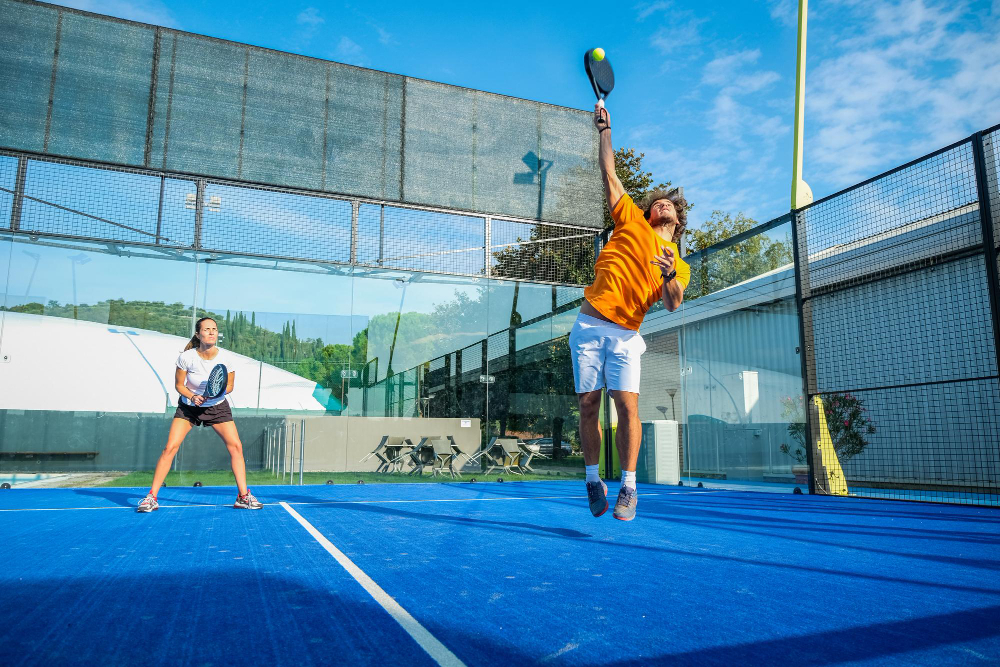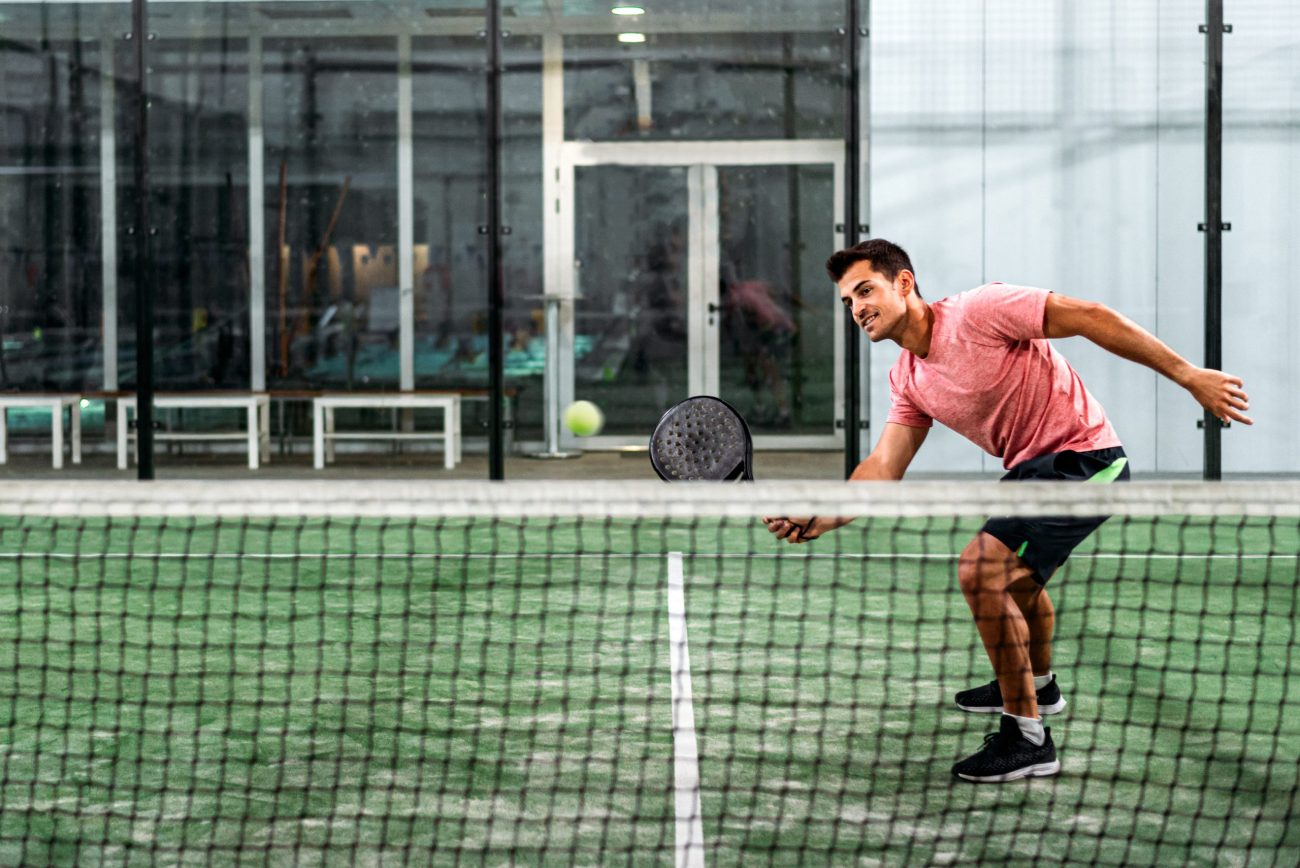
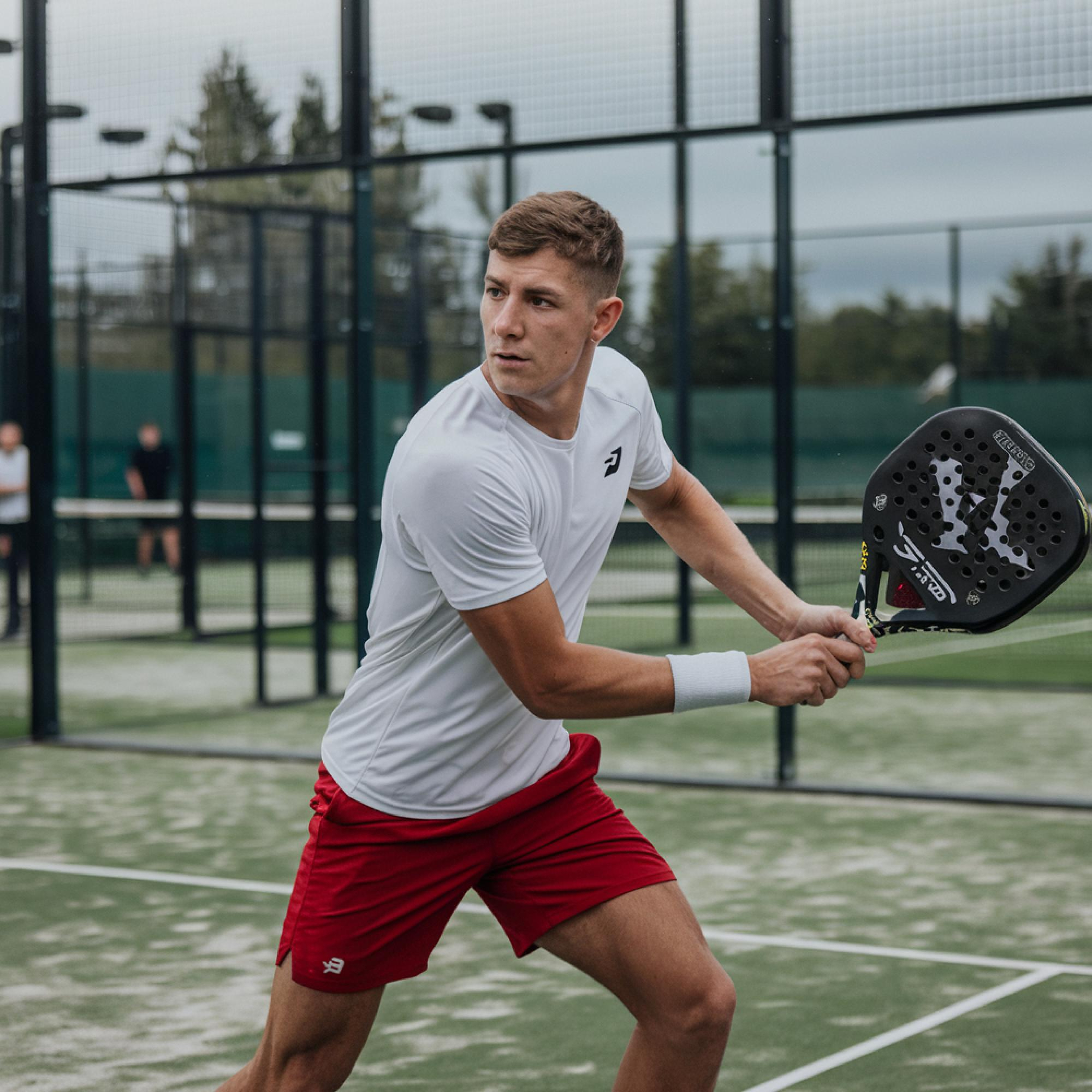
If you’ve walked past a sports club recently, chances are you’ve seen players swinging rackets in what looks like tennis, squash, or even badminton. But if the court is smaller, surrounded by glass walls, or the rackets look like solid paddles, you might be watching padel or pickleball—two sports rising fast alongside the long-established game of tennis.
For new players, it’s easy to get confused. How are these three sports different? Which one is easier to learn? And which one should you try first? This guide breaks down the key differences between padel, tennis, and pickleball, so you know exactly what sets them apart.
1. Court Size & Design
- Tennis:
- Largest court of the three.
- A singles tennis court measures 23.77m x 8.23m, doubles stretches to 10.97m.
- No walls—once the ball bounces out, the rally ends.
- Padel:
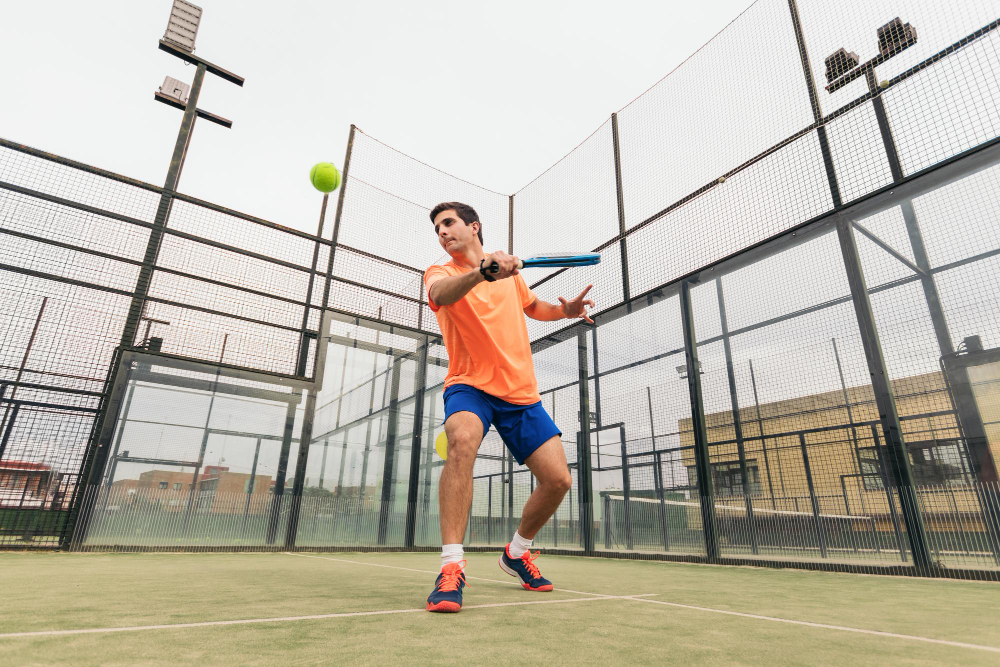
- Much smaller, 20m x 10m.
- Enclosed with glass and mesh walls. The ball remains in play if it bounces off walls, making rallies longer and more strategic.
- Always doubles, so four players share the space.
- Pickleball:
- Smallest court: 13.41m x 6.1m, similar to badminton doubles.
- No walls. Instead, there’s a unique “non-volley zone” (the kitchen) near the net, where smashes aren’t allowed.
👉 Key Difference: Tennis courts demand stamina and ground coverage, padel courts demand teamwork and smart use of walls, and pickleball courts favor quick reflexes and control.
2. Rackets & Equipment
- Tennis:
- Uses strung rackets (graphite or composite).
- Racket length ~27 inches, weight 260–320 g.
- Balls are pressurized felt-coated.
- Padel:
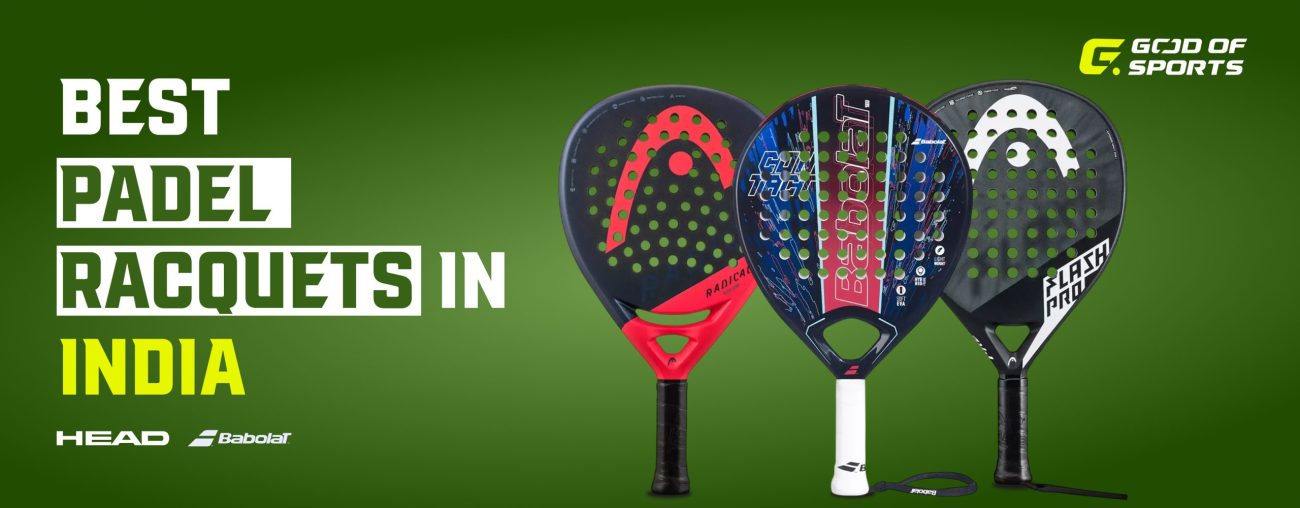
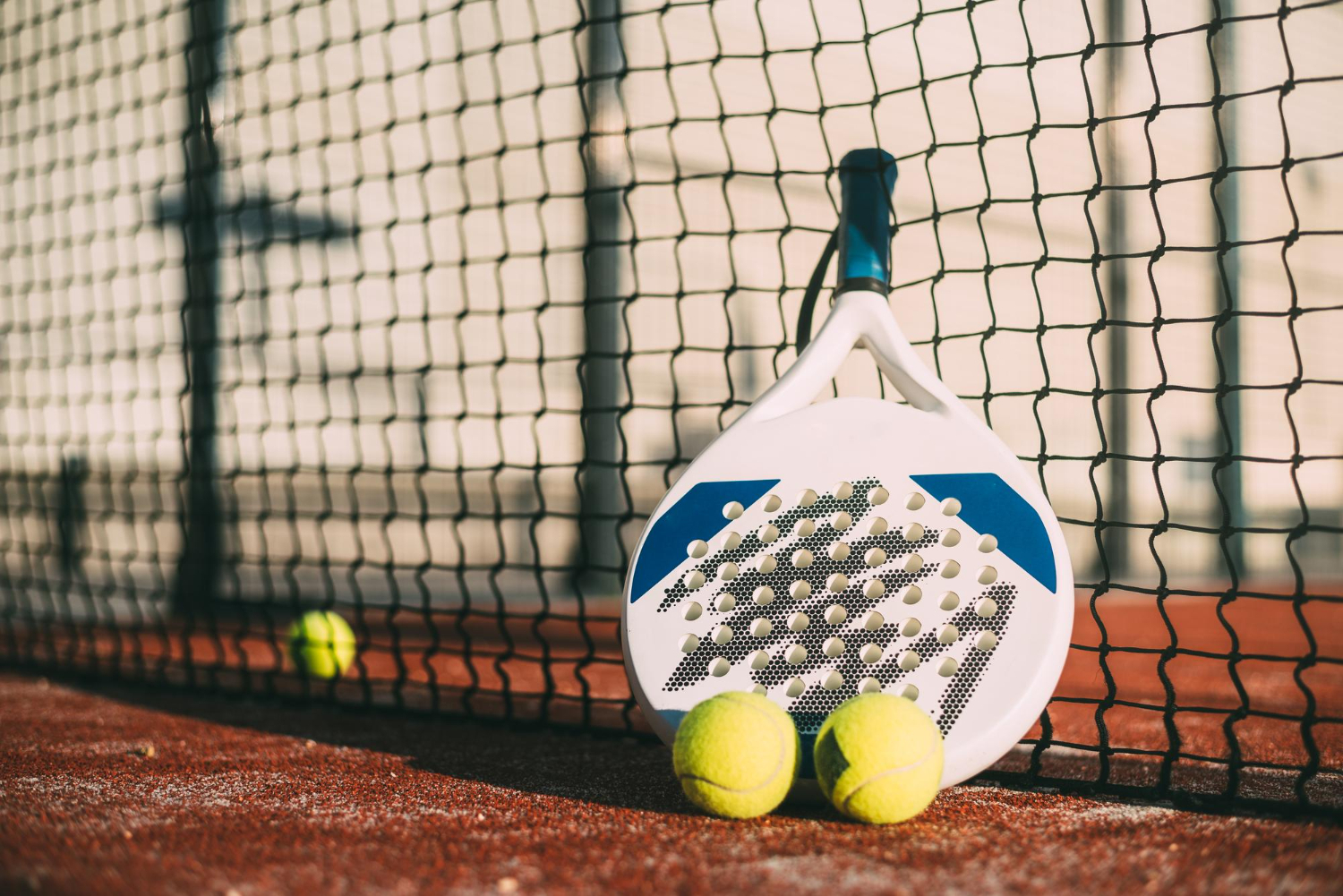
- Uses solid rackets with perforations, no strings.
- Smaller than tennis rackets, typically 45 cm long, 355–375 g.
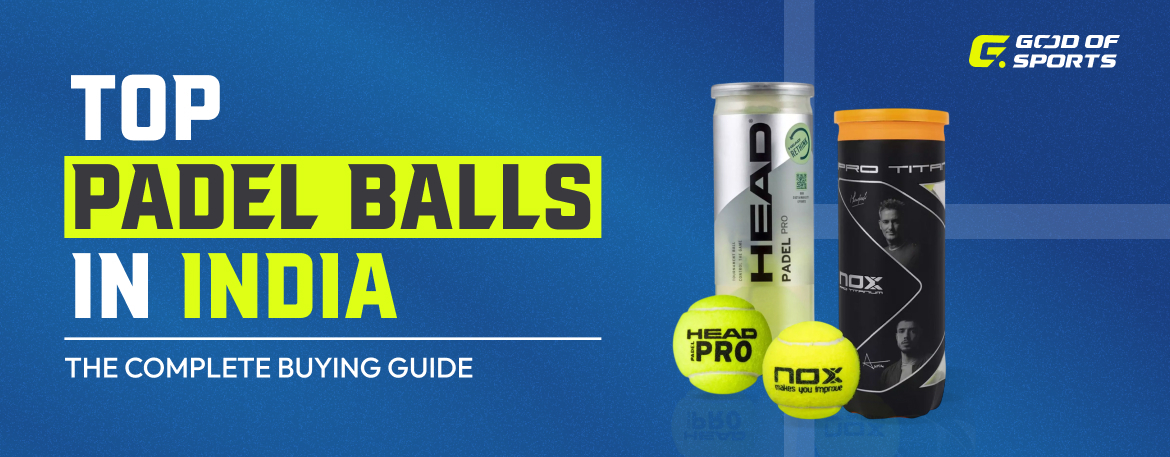
- Balls look similar to tennis balls but with slightly lower pressure for a slower bounce.
- Pickleball:
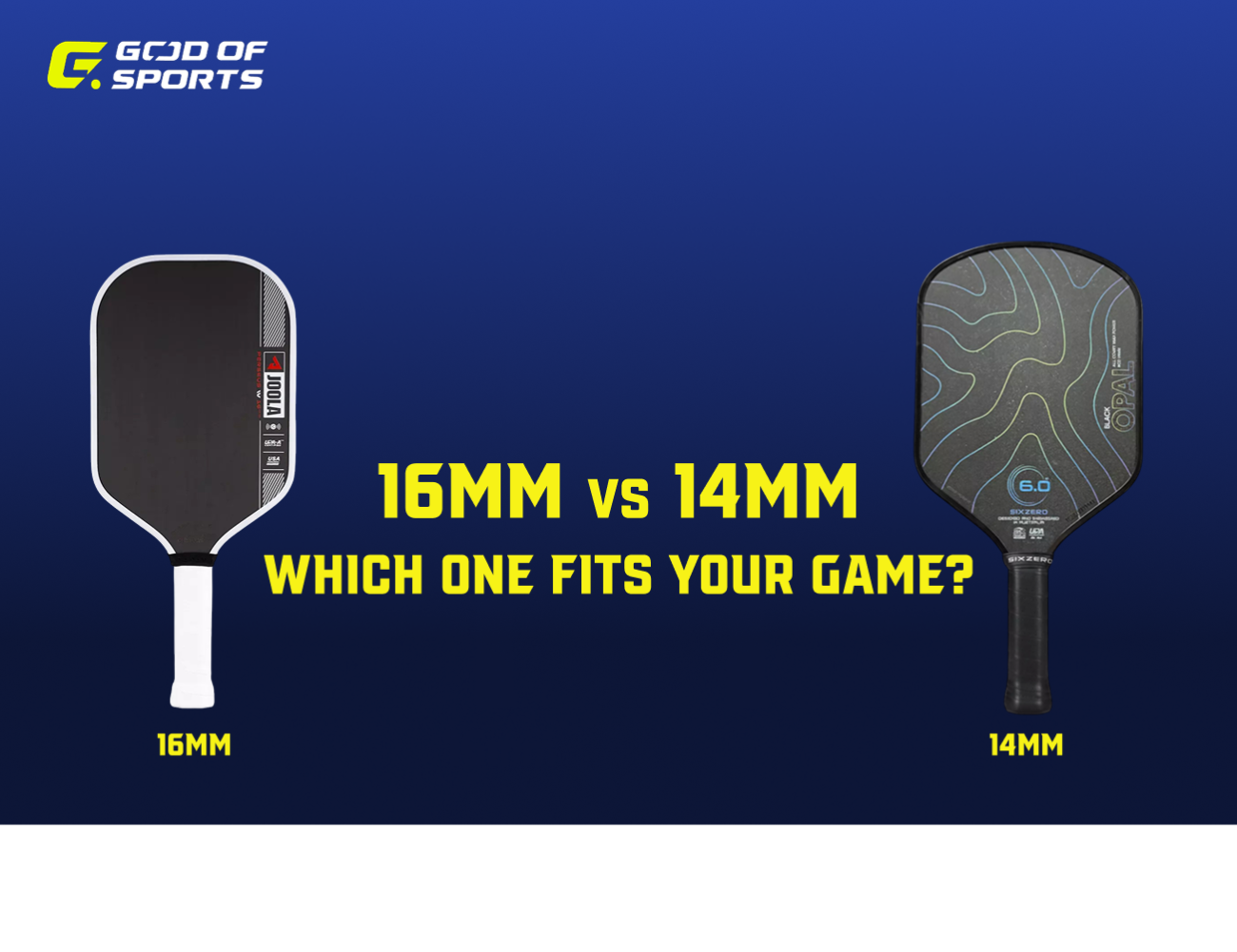
- Uses paddles (solid composite or graphite) with no strings.
- Larger surface than padel rackets but lighter.
- The ball is plastic with holes, like a wiffle ball.
👉 Key Difference: Tennis rackets are powerful, padel rackets focus on control, and pickleball paddles prioritize maneuverability.
3. Rules & Scoring
- Tennis:
- Overhand serves.
- Scoring: 15, 30, 40, deuce, game.
- Matches are best of 3 or 5 sets.
- Padel:
- Underhand serves, ball must bounce once before crossing.
- Scoring system is the same as tennis (15, 30, 40).
- Played only in doubles.
- Walls are in play, which changes strategy drastically.
- Pickleball:
- Underhand serves only.
- Unique scoring: Games usually go to 11 points, win by 2.
- Only the serving side can score.
- Singles or doubles allowed.
👉 Key Difference: Tennis and padel share scoring but differ in serve style and court dynamics. Pickleball has its own scoring method—simpler but tactical.
4. Playing Style & Strategy
- Tennis:
- Emphasizes power, speed, and endurance.
- Singles matches are highly physical, doubles rely on volleys and teamwork.
- Padel:
- Strategy > strength.
- Walls keep rallies going, so placement, lobs, and teamwork are more valuable than pure power.
- Serves are less dominant, meaning longer rallies and less “one-shot” points.
- Pickleball:
- Control is king.
- “Dinking” (soft shots in the kitchen) and placement matter more than smashing.
- Rallies are fast but often played at a slower pace near the net.
👉 Key Difference: Tennis rewards explosive athletes, padel rewards patient tacticians, and pickleball rewards soft hands and placement skills.
5. Accessibility for Beginners
- Tennis:
- Steep learning curve—mastering serves, timing, and footwork takes months.
- Physically demanding.
- Padel:
- Easier to pick up. Underhand serves are simple, rallies last longer, and teamwork reduces pressure.
- Growing rapidly among beginners of all ages.
- Pickleball:
- Easiest of the three. The smaller court, lightweight paddles, and simple scoring make it beginner-friendly.
- Popular with older players due to lower physical strain.
👉 Key Difference: Tennis is the toughest to learn, padel strikes a balance, and pickleball is the most beginner-friendly.
6. Global Popularity & Growth
- Tennis:
- Centuries-old, Olympic sport, global Grand Slam circuit (Wimbledon, US Open, etc.).
- Millions of players worldwide.
- Padel:
- Fastest-growing racket sport.
- Over 50,000 courts worldwide and expanding into the US, Middle East, and India.
- Professional circuits like Premier Padel are gaining traction.
- Pickleball:
- Growing rapidly, especially in the US and Canada.
- Pickleball courts have doubled in North America over the past five years.
- Backed by celebrity investors and associations like USA Pickleball.
👉 Key Difference: Tennis has tradition, padel has momentum, and pickleball has explosive growth in North America.
Comparison Table – Padel vs Tennis vs Pickleball
| Feature | Tennis | Padel | Pickleball |
| Court Size | 23.77 x 8.23 m (singles) | 20 x 10 m | 13.41 x 6.1 m |
| Walls | Not in play | In play (glass/mesh) | Not in play |
| Serve | Overhand | Underhand, bounce required | Underhand only |
| Scoring | 15–30–40, sets | 15–30–40, sets | Games to 11, win by 2 |
| Format | Singles & Doubles | Doubles only | Singles & Doubles |
| Racket | Strung racquet | Solid, perforated racket | Paddle (solid) |
| Ball | Pressurized felt ball | Tennis-like, lower pressure | Plastic wiffle ball |
| Style | Power & endurance | Strategy & teamwork | Control & placement |
Which One Should You Play?
- Choose Tennis if… you want a physically demanding, world-class sport with a rich tradition.
- Choose Padel if… you want a social, fast-growing sport that mixes fun, teamwork, and strategy.
- Choose Pickleball if… you want an easy-to-learn, low-impact game perfect for social play and all ages.
Final Thoughts
Tennis, padel, and pickleball may look similar, but each offers a unique playing experience. Tennis is the powerhouse of tradition and athleticism, padel is the rising star of strategy and teamwork, and pickleball is the friendly, accessible newcomer.
No matter which one you choose, all three promise fun, fitness, and a community of players. And if you’re lucky, you might just fall in love with more than one.