
 Type – Feather
 Speed – Speed 77




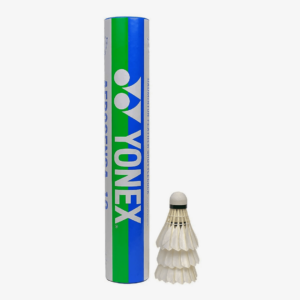



RSL Tourney No. 4 Badminton Feather Shuttlecock (Pack of 10)
RSL Tourney No. 4 Badminton Feather Shuttlecock is one of the most popular feather shuttlecocks in the world, built with genuine feather flight and feel that makes high-volume use practical.
₹54,750.00 Original price was: ₹54,750.00.₹33,543.00Current price is: ₹33,543.00.
Estimated Delivery Time: 2 - 4 Days (Delivery subject to pincode)

Estimated Delivery Time: 2 - 4 Days (Delivery subject to pincode)
GOS's Opinion

4.5
Watch this video before Buying
 Type – Feather
- Speed – Speed 77


GOS’s Opinion
Excellent for competitive club or league games. Impressive feather resilience and flight control. You can rely on its predictable behavior even during smashes and clears.
Overall
4.5
Durability: (4.5/5)

Stability: (4.5/5)
Consistency: (4.5/5)
Speed: (4.5/5)
- Type – Feather
- Speed – Speed 77
Frequently Bought Together
Frequently bought together
Specification
Description
FAQ's
Specification
Description
God of Sports Expert Verdict on RSL Tourney No. 4 Badminton Feather Shuttlecock:
- RSL manufactures more shuttlecocks than any other company in the world, and the No. 4 is one of its best-selling models globally. That popularity is earned through a simple formula: duck feather construction that produces genuine feather flight characteristics — the steep arc, near-vertical descent, and responsive contact feel that nylon cannot replicate — at a price point that makes it practical to use in volume. For Indian clubs, academies, and schools that go through dozens of shuttles per week, the No. 4 is the economic foundation of their training programmes. It is not the shuttle you pull out for the final of a state championship. It is the shuttle you rely on for the other 364 days of the year — practice sessions, drills, coaching feeds, inter-school matches, and the club doubles sessions where proper feather feel matters but tube cost per hour also matters. The No. 4 delivers on both counts consistently, and that is why it has remained one of the most sold feather shuttles in the market for years.
- Flight — Stable, Predictable, Genuinely Feather : RSL Tourney No. 4 Badminton Feather Shuttlecock flies like a feather shuttle should — which sounds obvious but is the most important thing to say about it. The steep arc of a full clear, the near-vertical drop at the net, the way a drop shot decelerates and falls almost straight down — these are feather characteristics that duck feather at this quality level reproduces reliably. At RSL Tourney No. 4 Badminton Feather Shuttlecock price and feather grade, there is natural variation between shuttles within a tube. But the flight is stable and accurate enough that players at intermediate and club level will find it entirely satisfying for the vast majority of training and recreational competitive play. The sandwich cork base contributes meaningfully to flight stability. Sandwich cork — a multi-layer composite construction — distributes the impact of each strike across the base more evenly than single-layer alternatives, reducing the erratic head-wobble that can occur when a shuttle’s base deforms asymmetrically after repeated hitting. For coaches hitting basket feeds for extended sessions, this stability matters: consistent base integrity means consistent flight off the coach’s feed.
- Feel — Proper Feather Contact, Not Nylon : The fundamental reason clubs use feather shuttles rather than nylon — even for training — is the contact feel. A feather shuttle compresses slightly on the string bed at impact, producing a brief dwell that gives players control feedback and allows techniques like spinning net shots, deceptive drops, and sliced clears to work as intended. Nylon shuttles, for all their durability advantages, do not replicate this. RSL Tourney No. 4 Badminton Feather Shuttlecock, even at its training-grade specification, delivers authentic feather contact feel. Players learning the game on feather develop better touch earlier; players refining advanced techniques need feather to practice them properly. RSL Tourney No. 4 Badminton Feather Shuttlecock gives this at a price that makes it practical to use for every session rather than saving feather only for matches.
- Durability — Honest Expectations for Training Use : At the No. 4’s feather grade, each shuttle is designed to last one solid game of competitive doubles (21 points at intermediate level) or 1–2 games at recreational intensity. Independent testing confirms this: “at least one intense doubles game played by intermediate players” per shuttle. At coaching basket-feed intensity — where individual shuttles are hit dozens of times in drills rather than across rally play — the effective lifespan is shorter. This is entirely normal and expected for a duck feather shuttle at this price tier, and it is why the No. 4 is sold in tubes of 12: a tube covers a meaningful training session at realistic replacement rates.
- RSL Tourney No. 4 Badminton Feather Shuttlecock is the right shuttle for every Indian school, academy, and club that needs genuine feather performance at a volume-friendly price. It is the training workhorse that the No. 1 and Supreme are not designed to be — and for most of the badminton that happens in India every day, it is exactly the right tool. Step up to the RSL Tourney No. 1 when competitive club match quality is the priority; come back to the No. 4 for everything else.
What Makes RSL Tourney No. 4 Badminton Feather Shuttlecock Different:
- Duck Feather — Genuine Feather Feel at a Training Price : The RSL Tourney No. 4 uses duck feather rather than goose feather. Duck feather has a naturally thinner vane and lower oil content than goose feather, making it less resistant to splitting under hard hitting — which is why the No. 4 is positioned as a training shuttle rather than a competitive match shuttle. However, duck feather at good quality selection still produces the fundamental flight characteristics that define feather badminton: the parabolic arc on clears, the steep descent on drops, and the authentic dwell on contact that players need to develop and maintain their technique. RSL’s automated feather processing plant classifies its feather inventory into quality tiers before allocation to each Tourney number — No. 4 feathers meet a defined standard within RSL’s process, ensuring they are genuinely fit for purpose rather than simply whatever was left over after higher grades were filled.
- Sandwich Cork Base — Better Stability Than Single-Layer Cork : The sandwich cork construction — multiple compressed cork layers bonded together — gives the No. 4’s base better impact distribution than single-layer cork composites typically used in economy shuttles. Each strike compresses the base, and the sandwich structure’s layered design absorbs and disperses this force more evenly, helping the base maintain its shape across repeated hits. This contributes to the consistent flight stability that the No. 4 is known for in club and training environments. The sandwich cork base also provides a reliable, predictable feel on contact that, while not as premium as the high-density cork composite of the Supreme, is noticeably better than the soft, spongy feel of lower-quality bases.
RSL Tourney No. 4 Badminton Feather Shuttlecock vs other Badminton Shuttlecock:
| Shuttle | Feather | Cork | BWF | Best For |
|---|---|---|---|---|
| RSL Tourney No. 4 (this shuttle) | Duck feather | Sandwich cork | — | RSL’s most popular globally. Excellent volume value for club training, academies, schools. Stable flight, genuine feather feel, strong price per shuttle. India’s club training standard. |
| Yonex Aerosensa AS2 | Duck feather | Natural cork | — | Yonex’s entry-level Aerosensa — duck feather, natural cork base, consistent flight stability. A step up in brand premium over the No. 4. Good for clubs and players in the Yonex ecosystem wanting genuine Aerosensa quality at a moderate price. |
| Li-Ning A2 (Speed 77) | Duck feather | Natural cork | — | Li-Ning’s club-level shuttle. Duck feather, natural cork base, Speed 77. Solid flight and durability for club and training use. Good choice for players who prefer the Li-Ning brand. |
| Victor Champion No. 1 | Grade A Duck feather | Composite cork | — | Victor’s top-of-range duck feather shuttle. Grade A duck feather, composite cork base, Speed 77. A step above the No. 4 in feather grade — competitive club standard within Victor’s range. Higher per-tube cost than the No. 4. |
| RSL Tourney No. 1 | Duck/Goose feather | Cork composite | — | Step up from No. 4 within RSL. Better flight consistency and durability. The right choice for competitive club match nights when performance over volume is the priority. |
| RSL Tourney Supreme | Grade A Goose | High-density cork | ✓ BWF | RSL’s premium competitive shuttle. Twice-tested, BWF Approved. For advanced club and tournament play. Significantly higher per-tube cost — justified for match quality, not training volume. |
Is This Shuttle Right for You?
- Badminton academies, schools and coaching programmes : The No. 4 is the natural choice for any programme that needs feather shuttles in volume. The price makes large-batch ordering practical, the flight quality is sufficient for skill development at all levels up to intermediate, and the RSL brand guarantees a baseline manufacturing standard that economy alternatives cannot match. The 10-tube bulk pack at GOS is the practical purchasing format for programmes running regular sessions.
- Club players who want genuine feather feel for training : Players who compete with No. 1 or Supreme shuttles on match nights benefit from training with feather rather than nylon — the touch, control, and technique development on feather transfers directly to match play. The No. 4 gives authentic feather training at a cost that makes using it for every session, not just matches, financially sensible.
- Beginner to intermediate players developing their game on feather : Players who are ready to transition from nylon to feather — typically after developing consistent stroke mechanics — will find the No. 4 the ideal first feather shuttle. It is forgiving enough that occasional mishits do not destroy the shuttle immediately, and the flight quality is genuine enough to properly develop feather-specific technique.
How to Increase Durability of Badminton Feather Shuttlecock — Essential for Longer-Lasting Shuttle:
Feather shuttlecocks must be conditioned before use. Dry air makes feathers brittle, dramatically shortening their lifespan. Here is what to do:- Before first use: Open both ends of the tube and store upright in a humid location — a bathroom, near a humidifier, or loosely wrapped in a slightly damp cloth — for 24–48 hours. This restores natural moisture to the goose feathers, making them more flexible and meaningfully more resistant to cracking and splitting under hard hitting.
- Between sessions: Always replace both tube caps and store away from direct air conditioning, sunlight, and artificial heat. A dedicated shuttlecock humidifier placed inside the tube is the most reliable ongoing solution — particularly valuable through dry North Indian winters.
- India context: Coastal cities (Mumbai, Chennai, Kochi) have naturally high ambient humidity that suits feather shuttles well. Inland and northern cities — especially Delhi, Jaipur, and Ahmedabad in winter — can have very dry air that makes pre-conditioning especially important. A properly conditioned tube will measurably outlast an unconditioned one. This single habit delivers some of the best cost-per-shuttle value of anything a badminton player can do.
Badminton Shuttlecock Speed Selection Guide — Which Speed for Your Indian Venue?
Speed is the single most important selection decision for feather shuttlecocks. A shuttle at the wrong speed will consistently fall short of (too fast) or overshoot (too slow) the back tramline on full clears, regardless of skill level. Speed depends on altitude and temperature — both affect air density and therefore shuttle travel speed.| Speed | Shuttle Speed | When to Use It | Indian Context |
|---|---|---|---|
| 75 | Slowest | Extreme heat or very high altitude — conditions where even Speed 76 still flies too fast. | Rarely needed in India. Hot outdoor play at sea level in extreme summer, or very high-altitude venues above ~2,000m. |
| 76 | Slow | Hot conditions. Less-dense warm air makes the shuttle fly faster — a slower shuttle corrects for this. Used across hot tropical Asia in summer. | Summer months (April–June) in non-AC or warm halls. Hot coastal conditions. Outdoor evening play. China uses Speed 76 in summer months for the same reason. |
| 77 | Medium (standard) | Normal sea-level temperature (~22–30°C). The global standard for most indoor badminton at typical playing conditions. | Mumbai, Bangalore, Chennai, Hyderabad, Pune, Kolkata — most air-conditioned indoor courts year-round. Delhi in October–November and February–March. |
| 78 | Fast | Cool to cold conditions. Denser air slows the shuttle — a faster shuttle compensates and ensures clears reach the baseline properly. | North India winter mornings (Delhi, Chandigarh, Amritsar) in December–January. Hill station venues: Shimla, Mussoorie, Ooty (~900–1,500m). Cold indoor halls. |
| 79 | Fastest | Very cold conditions or very high altitude where even Speed 78 falls short. | Rarely needed in India. Deep winter in high Himalayan venues (Darjeeling, Gangtok, above 1,500m) or very cold North Indian outdoor play. |
- RSL Tourney No. 1 Shuttlecock — competitive club, step up from No. 4 for match nights
- RSL Tourney Supreme Shuttlecock — RSL’s best, goose feather, BWF Approved, for advanced play
- RSL Tourney No. 3 Shuttlecock — bridge between No. 1 and No. 4, competitive training
- RSL Shuttlecock at God of Sports
- Badminton Shuttlecock at God of Sports
- Badminton at God of Sports — Badminton Racket, Shoes, Strings and accessories
FAQ's
Shop Online
Shop 24/7 with your smartphone
Shipping Worldwide
Free Shipping All Over India
Pay on Delivery
You're in safe hands
Frequently Bought Together
Frequently bought together
GOS's Opinion
Overall
4.5
Excellent for competitive club or league games. Impressive feather resilience and flight control. You can rely on its predictable behavior even during smashes and clears.
Durability: (4.5/5)
Stability: (4.5/5)
Consistency: (4.5/5)
Speed: (4.5/5)
Product Details
Specification
Description
FAQ's
Specification
| Feather Type | Premium Duck feather |
| Feather Count | 16 feathers per shuttle |
| Cork Base | Sandwich cork (multi-layer composite) |
| Speed | 77 |
| Weight | 4.9–5.0g per shuttle |
| Tube Contents | 12 shuttles per tube |
| Step Up To | RSL Supreme for advanced competitive |
Description
God of Sports Expert Verdict on RSL Tourney No. 4 Badminton Feather Shuttlecock:
- RSL manufactures more shuttlecocks than any other company in the world, and the No. 4 is one of its best-selling models globally. That popularity is earned through a simple formula: duck feather construction that produces genuine feather flight characteristics — the steep arc, near-vertical descent, and responsive contact feel that nylon cannot replicate — at a price point that makes it practical to use in volume. For Indian clubs, academies, and schools that go through dozens of shuttles per week, the No. 4 is the economic foundation of their training programmes. It is not the shuttle you pull out for the final of a state championship. It is the shuttle you rely on for the other 364 days of the year — practice sessions, drills, coaching feeds, inter-school matches, and the club doubles sessions where proper feather feel matters but tube cost per hour also matters. The No. 4 delivers on both counts consistently, and that is why it has remained one of the most sold feather shuttles in the market for years.
- Flight — Stable, Predictable, Genuinely Feather : RSL Tourney No. 4 Badminton Feather Shuttlecock flies like a feather shuttle should — which sounds obvious but is the most important thing to say about it. The steep arc of a full clear, the near-vertical drop at the net, the way a drop shot decelerates and falls almost straight down — these are feather characteristics that duck feather at this quality level reproduces reliably. At RSL Tourney No. 4 Badminton Feather Shuttlecock price and feather grade, there is natural variation between shuttles within a tube. But the flight is stable and accurate enough that players at intermediate and club level will find it entirely satisfying for the vast majority of training and recreational competitive play. The sandwich cork base contributes meaningfully to flight stability. Sandwich cork — a multi-layer composite construction — distributes the impact of each strike across the base more evenly than single-layer alternatives, reducing the erratic head-wobble that can occur when a shuttle’s base deforms asymmetrically after repeated hitting. For coaches hitting basket feeds for extended sessions, this stability matters: consistent base integrity means consistent flight off the coach’s feed.
- Feel — Proper Feather Contact, Not Nylon : The fundamental reason clubs use feather shuttles rather than nylon — even for training — is the contact feel. A feather shuttle compresses slightly on the string bed at impact, producing a brief dwell that gives players control feedback and allows techniques like spinning net shots, deceptive drops, and sliced clears to work as intended. Nylon shuttles, for all their durability advantages, do not replicate this. RSL Tourney No. 4 Badminton Feather Shuttlecock, even at its training-grade specification, delivers authentic feather contact feel. Players learning the game on feather develop better touch earlier; players refining advanced techniques need feather to practice them properly. RSL Tourney No. 4 Badminton Feather Shuttlecock gives this at a price that makes it practical to use for every session rather than saving feather only for matches.
- Durability — Honest Expectations for Training Use : At the No. 4’s feather grade, each shuttle is designed to last one solid game of competitive doubles (21 points at intermediate level) or 1–2 games at recreational intensity. Independent testing confirms this: “at least one intense doubles game played by intermediate players” per shuttle. At coaching basket-feed intensity — where individual shuttles are hit dozens of times in drills rather than across rally play — the effective lifespan is shorter. This is entirely normal and expected for a duck feather shuttle at this price tier, and it is why the No. 4 is sold in tubes of 12: a tube covers a meaningful training session at realistic replacement rates.
- RSL Tourney No. 4 Badminton Feather Shuttlecock is the right shuttle for every Indian school, academy, and club that needs genuine feather performance at a volume-friendly price. It is the training workhorse that the No. 1 and Supreme are not designed to be — and for most of the badminton that happens in India every day, it is exactly the right tool. Step up to the RSL Tourney No. 1 when competitive club match quality is the priority; come back to the No. 4 for everything else.
What Makes RSL Tourney No. 4 Badminton Feather Shuttlecock Different:
- Duck Feather — Genuine Feather Feel at a Training Price : The RSL Tourney No. 4 uses duck feather rather than goose feather. Duck feather has a naturally thinner vane and lower oil content than goose feather, making it less resistant to splitting under hard hitting — which is why the No. 4 is positioned as a training shuttle rather than a competitive match shuttle. However, duck feather at good quality selection still produces the fundamental flight characteristics that define feather badminton: the parabolic arc on clears, the steep descent on drops, and the authentic dwell on contact that players need to develop and maintain their technique. RSL’s automated feather processing plant classifies its feather inventory into quality tiers before allocation to each Tourney number — No. 4 feathers meet a defined standard within RSL’s process, ensuring they are genuinely fit for purpose rather than simply whatever was left over after higher grades were filled.
- Sandwich Cork Base — Better Stability Than Single-Layer Cork : The sandwich cork construction — multiple compressed cork layers bonded together — gives the No. 4’s base better impact distribution than single-layer cork composites typically used in economy shuttles. Each strike compresses the base, and the sandwich structure’s layered design absorbs and disperses this force more evenly, helping the base maintain its shape across repeated hits. This contributes to the consistent flight stability that the No. 4 is known for in club and training environments. The sandwich cork base also provides a reliable, predictable feel on contact that, while not as premium as the high-density cork composite of the Supreme, is noticeably better than the soft, spongy feel of lower-quality bases.
RSL Tourney No. 4 Badminton Feather Shuttlecock vs other Badminton Shuttlecock:
| Shuttle | Feather | Cork | BWF | Best For |
|---|---|---|---|---|
| RSL Tourney No. 4 (this shuttle) | Duck feather | Sandwich cork | — | RSL’s most popular globally. Excellent volume value for club training, academies, schools. Stable flight, genuine feather feel, strong price per shuttle. India’s club training standard. |
| Yonex Aerosensa AS2 | Duck feather | Natural cork | — | Yonex’s entry-level Aerosensa — duck feather, natural cork base, consistent flight stability. A step up in brand premium over the No. 4. Good for clubs and players in the Yonex ecosystem wanting genuine Aerosensa quality at a moderate price. |
| Li-Ning A2 (Speed 77) | Duck feather | Natural cork | — | Li-Ning’s club-level shuttle. Duck feather, natural cork base, Speed 77. Solid flight and durability for club and training use. Good choice for players who prefer the Li-Ning brand. |
| Victor Champion No. 1 | Grade A Duck feather | Composite cork | — | Victor’s top-of-range duck feather shuttle. Grade A duck feather, composite cork base, Speed 77. A step above the No. 4 in feather grade — competitive club standard within Victor’s range. Higher per-tube cost than the No. 4. |
| RSL Tourney No. 1 | Duck/Goose feather | Cork composite | — | Step up from No. 4 within RSL. Better flight consistency and durability. The right choice for competitive club match nights when performance over volume is the priority. |
| RSL Tourney Supreme | Grade A Goose | High-density cork | ✓ BWF | RSL’s premium competitive shuttle. Twice-tested, BWF Approved. For advanced club and tournament play. Significantly higher per-tube cost — justified for match quality, not training volume. |
Is This Shuttle Right for You?
- Badminton academies, schools and coaching programmes : The No. 4 is the natural choice for any programme that needs feather shuttles in volume. The price makes large-batch ordering practical, the flight quality is sufficient for skill development at all levels up to intermediate, and the RSL brand guarantees a baseline manufacturing standard that economy alternatives cannot match. The 10-tube bulk pack at GOS is the practical purchasing format for programmes running regular sessions.
- Club players who want genuine feather feel for training : Players who compete with No. 1 or Supreme shuttles on match nights benefit from training with feather rather than nylon — the touch, control, and technique development on feather transfers directly to match play. The No. 4 gives authentic feather training at a cost that makes using it for every session, not just matches, financially sensible.
- Beginner to intermediate players developing their game on feather : Players who are ready to transition from nylon to feather — typically after developing consistent stroke mechanics — will find the No. 4 the ideal first feather shuttle. It is forgiving enough that occasional mishits do not destroy the shuttle immediately, and the flight quality is genuine enough to properly develop feather-specific technique.
How to Increase Durability of Badminton Feather Shuttlecock — Essential for Longer-Lasting Shuttle:
Feather shuttlecocks must be conditioned before use. Dry air makes feathers brittle, dramatically shortening their lifespan. Here is what to do:- Before first use: Open both ends of the tube and store upright in a humid location — a bathroom, near a humidifier, or loosely wrapped in a slightly damp cloth — for 24–48 hours. This restores natural moisture to the goose feathers, making them more flexible and meaningfully more resistant to cracking and splitting under hard hitting.
- Between sessions: Always replace both tube caps and store away from direct air conditioning, sunlight, and artificial heat. A dedicated shuttlecock humidifier placed inside the tube is the most reliable ongoing solution — particularly valuable through dry North Indian winters.
- India context: Coastal cities (Mumbai, Chennai, Kochi) have naturally high ambient humidity that suits feather shuttles well. Inland and northern cities — especially Delhi, Jaipur, and Ahmedabad in winter — can have very dry air that makes pre-conditioning especially important. A properly conditioned tube will measurably outlast an unconditioned one. This single habit delivers some of the best cost-per-shuttle value of anything a badminton player can do.
Badminton Shuttlecock Speed Selection Guide — Which Speed for Your Indian Venue?
Speed is the single most important selection decision for feather shuttlecocks. A shuttle at the wrong speed will consistently fall short of (too fast) or overshoot (too slow) the back tramline on full clears, regardless of skill level. Speed depends on altitude and temperature — both affect air density and therefore shuttle travel speed.| Speed | Shuttle Speed | When to Use It | Indian Context |
|---|---|---|---|
| 75 | Slowest | Extreme heat or very high altitude — conditions where even Speed 76 still flies too fast. | Rarely needed in India. Hot outdoor play at sea level in extreme summer, or very high-altitude venues above ~2,000m. |
| 76 | Slow | Hot conditions. Less-dense warm air makes the shuttle fly faster — a slower shuttle corrects for this. Used across hot tropical Asia in summer. | Summer months (April–June) in non-AC or warm halls. Hot coastal conditions. Outdoor evening play. China uses Speed 76 in summer months for the same reason. |
| 77 | Medium (standard) | Normal sea-level temperature (~22–30°C). The global standard for most indoor badminton at typical playing conditions. | Mumbai, Bangalore, Chennai, Hyderabad, Pune, Kolkata — most air-conditioned indoor courts year-round. Delhi in October–November and February–March. |
| 78 | Fast | Cool to cold conditions. Denser air slows the shuttle — a faster shuttle compensates and ensures clears reach the baseline properly. | North India winter mornings (Delhi, Chandigarh, Amritsar) in December–January. Hill station venues: Shimla, Mussoorie, Ooty (~900–1,500m). Cold indoor halls. |
| 79 | Fastest | Very cold conditions or very high altitude where even Speed 78 falls short. | Rarely needed in India. Deep winter in high Himalayan venues (Darjeeling, Gangtok, above 1,500m) or very cold North Indian outdoor play. |
- RSL Tourney No. 1 Shuttlecock — competitive club, step up from No. 4 for match nights
- RSL Tourney Supreme Shuttlecock — RSL’s best, goose feather, BWF Approved, for advanced play
- RSL Tourney No. 3 Shuttlecock — bridge between No. 1 and No. 4, competitive training
- RSL Shuttlecock at God of Sports
- Badminton Shuttlecock at God of Sports
- Badminton at God of Sports — Badminton Racket, Shoes, Strings and accessories
FAQ's
The RSL Tourney No. 4 uses duck feather — confirmed across multiple independent retail sources including the Amazon India product listing and Flipkart specifications. Duck feather is lighter and less resistant to splitting than goose feather under hard hitting, which is why the No. 4 is positioned as a training and club practice shuttle rather than a competitive match shuttle. Within the RSL range, the No. 1 and Supreme use higher-grade feathers for competitive play.
Each tube contains 12 shuttlecocks. At intermediate doubles intensity, each shuttle lasts approximately one full game (21 points). A tube of 12 therefore covers roughly one full evening of club training (4–6 games rotating players). At coaching basket-feed intensity where individual shuttles are hit repeatedly in drills, consumption will be higher. Proper tube conditioning before use — humidifying for 24–48 hours — extends individual shuttle lifespan noticeably.
The No. 4 is designed for club training, academy use, school programmes, and recreational competitive play — not serious competitive club matches or tournaments. For competitive match nights at advanced club level, the RSL Tourney No. 1 provides better flight consistency and durability. The No. 4’s strengths are volume value and genuine feather feel for training use, not match-grade performance.
Both use feather and sandwich/composite cork construction, but the No. 1 uses higher-grade feathers with better selection and matching across the 16-feather skirt. This produces more consistent flight shuttle-to-shuttle within a tube, better durability under competitive intensity, and a more refined contact feel. The No. 4 is more economical per tube and is the right choice for training volume. The No. 1 is the right choice when match quality matters. Many Indian clubs use No. 4 for training sessions and No. 1 for match nights — a practical strategy that optimises both performance and cost.
| Feather Type | Premium Duck feather |
| Feather Count | 16 feathers per shuttle |
| Cork Base | Sandwich cork (multi-layer composite) |
| Speed | 77 |
| Weight | 4.9–5.0g per shuttle |
| Tube Contents | 12 shuttles per tube |
| Step Up To | RSL Supreme for advanced competitive |
God of Sports Expert Verdict on RSL Tourney No. 4 Badminton Feather Shuttlecock:
- RSL manufactures more shuttlecocks than any other company in the world, and the No. 4 is one of its best-selling models globally. That popularity is earned through a simple formula: duck feather construction that produces genuine feather flight characteristics — the steep arc, near-vertical descent, and responsive contact feel that nylon cannot replicate — at a price point that makes it practical to use in volume. For Indian clubs, academies, and schools that go through dozens of shuttles per week, the No. 4 is the economic foundation of their training programmes. It is not the shuttle you pull out for the final of a state championship. It is the shuttle you rely on for the other 364 days of the year — practice sessions, drills, coaching feeds, inter-school matches, and the club doubles sessions where proper feather feel matters but tube cost per hour also matters. The No. 4 delivers on both counts consistently, and that is why it has remained one of the most sold feather shuttles in the market for years.
- Flight — Stable, Predictable, Genuinely Feather : RSL Tourney No. 4 Badminton Feather Shuttlecock flies like a feather shuttle should — which sounds obvious but is the most important thing to say about it. The steep arc of a full clear, the near-vertical drop at the net, the way a drop shot decelerates and falls almost straight down — these are feather characteristics that duck feather at this quality level reproduces reliably. At RSL Tourney No. 4 Badminton Feather Shuttlecock price and feather grade, there is natural variation between shuttles within a tube. But the flight is stable and accurate enough that players at intermediate and club level will find it entirely satisfying for the vast majority of training and recreational competitive play. The sandwich cork base contributes meaningfully to flight stability. Sandwich cork — a multi-layer composite construction — distributes the impact of each strike across the base more evenly than single-layer alternatives, reducing the erratic head-wobble that can occur when a shuttle’s base deforms asymmetrically after repeated hitting. For coaches hitting basket feeds for extended sessions, this stability matters: consistent base integrity means consistent flight off the coach’s feed.
- Feel — Proper Feather Contact, Not Nylon : The fundamental reason clubs use feather shuttles rather than nylon — even for training — is the contact feel. A feather shuttle compresses slightly on the string bed at impact, producing a brief dwell that gives players control feedback and allows techniques like spinning net shots, deceptive drops, and sliced clears to work as intended. Nylon shuttles, for all their durability advantages, do not replicate this. RSL Tourney No. 4 Badminton Feather Shuttlecock, even at its training-grade specification, delivers authentic feather contact feel. Players learning the game on feather develop better touch earlier; players refining advanced techniques need feather to practice them properly. RSL Tourney No. 4 Badminton Feather Shuttlecock gives this at a price that makes it practical to use for every session rather than saving feather only for matches.
- Durability — Honest Expectations for Training Use : At the No. 4’s feather grade, each shuttle is designed to last one solid game of competitive doubles (21 points at intermediate level) or 1–2 games at recreational intensity. Independent testing confirms this: “at least one intense doubles game played by intermediate players” per shuttle. At coaching basket-feed intensity — where individual shuttles are hit dozens of times in drills rather than across rally play — the effective lifespan is shorter. This is entirely normal and expected for a duck feather shuttle at this price tier, and it is why the No. 4 is sold in tubes of 12: a tube covers a meaningful training session at realistic replacement rates.
- RSL Tourney No. 4 Badminton Feather Shuttlecock is the right shuttle for every Indian school, academy, and club that needs genuine feather performance at a volume-friendly price. It is the training workhorse that the No. 1 and Supreme are not designed to be — and for most of the badminton that happens in India every day, it is exactly the right tool. Step up to the RSL Tourney No. 1 when competitive club match quality is the priority; come back to the No. 4 for everything else.
What Makes RSL Tourney No. 4 Badminton Feather Shuttlecock Different:
- Duck Feather — Genuine Feather Feel at a Training Price : The RSL Tourney No. 4 uses duck feather rather than goose feather. Duck feather has a naturally thinner vane and lower oil content than goose feather, making it less resistant to splitting under hard hitting — which is why the No. 4 is positioned as a training shuttle rather than a competitive match shuttle. However, duck feather at good quality selection still produces the fundamental flight characteristics that define feather badminton: the parabolic arc on clears, the steep descent on drops, and the authentic dwell on contact that players need to develop and maintain their technique. RSL’s automated feather processing plant classifies its feather inventory into quality tiers before allocation to each Tourney number — No. 4 feathers meet a defined standard within RSL’s process, ensuring they are genuinely fit for purpose rather than simply whatever was left over after higher grades were filled.
- Sandwich Cork Base — Better Stability Than Single-Layer Cork : The sandwich cork construction — multiple compressed cork layers bonded together — gives the No. 4’s base better impact distribution than single-layer cork composites typically used in economy shuttles. Each strike compresses the base, and the sandwich structure’s layered design absorbs and disperses this force more evenly, helping the base maintain its shape across repeated hits. This contributes to the consistent flight stability that the No. 4 is known for in club and training environments. The sandwich cork base also provides a reliable, predictable feel on contact that, while not as premium as the high-density cork composite of the Supreme, is noticeably better than the soft, spongy feel of lower-quality bases.
RSL Tourney No. 4 Badminton Feather Shuttlecock vs other Badminton Shuttlecock:
| Shuttle | Feather | Cork | BWF | Best For |
|---|---|---|---|---|
| RSL Tourney No. 4 (this shuttle) | Duck feather | Sandwich cork | — | RSL’s most popular globally. Excellent volume value for club training, academies, schools. Stable flight, genuine feather feel, strong price per shuttle. India’s club training standard. |
| Yonex Aerosensa AS2 | Duck feather | Natural cork | — | Yonex’s entry-level Aerosensa — duck feather, natural cork base, consistent flight stability. A step up in brand premium over the No. 4. Good for clubs and players in the Yonex ecosystem wanting genuine Aerosensa quality at a moderate price. |
| Li-Ning A2 (Speed 77) | Duck feather | Natural cork | — | Li-Ning’s club-level shuttle. Duck feather, natural cork base, Speed 77. Solid flight and durability for club and training use. Good choice for players who prefer the Li-Ning brand. |
| Victor Champion No. 1 | Grade A Duck feather | Composite cork | — | Victor’s top-of-range duck feather shuttle. Grade A duck feather, composite cork base, Speed 77. A step above the No. 4 in feather grade — competitive club standard within Victor’s range. Higher per-tube cost than the No. 4. |
| RSL Tourney No. 1 | Duck/Goose feather | Cork composite | — | Step up from No. 4 within RSL. Better flight consistency and durability. The right choice for competitive club match nights when performance over volume is the priority. |
| RSL Tourney Supreme | Grade A Goose | High-density cork | ✓ BWF | RSL’s premium competitive shuttle. Twice-tested, BWF Approved. For advanced club and tournament play. Significantly higher per-tube cost — justified for match quality, not training volume. |
Is This Shuttle Right for You?
- Badminton academies, schools and coaching programmes : The No. 4 is the natural choice for any programme that needs feather shuttles in volume. The price makes large-batch ordering practical, the flight quality is sufficient for skill development at all levels up to intermediate, and the RSL brand guarantees a baseline manufacturing standard that economy alternatives cannot match. The 10-tube bulk pack at GOS is the practical purchasing format for programmes running regular sessions.
- Club players who want genuine feather feel for training : Players who compete with No. 1 or Supreme shuttles on match nights benefit from training with feather rather than nylon — the touch, control, and technique development on feather transfers directly to match play. The No. 4 gives authentic feather training at a cost that makes using it for every session, not just matches, financially sensible.
- Beginner to intermediate players developing their game on feather : Players who are ready to transition from nylon to feather — typically after developing consistent stroke mechanics — will find the No. 4 the ideal first feather shuttle. It is forgiving enough that occasional mishits do not destroy the shuttle immediately, and the flight quality is genuine enough to properly develop feather-specific technique.
How to Increase Durability of Badminton Feather Shuttlecock — Essential for Longer-Lasting Shuttle:
Feather shuttlecocks must be conditioned before use. Dry air makes feathers brittle, dramatically shortening their lifespan. Here is what to do:- Before first use: Open both ends of the tube and store upright in a humid location — a bathroom, near a humidifier, or loosely wrapped in a slightly damp cloth — for 24–48 hours. This restores natural moisture to the goose feathers, making them more flexible and meaningfully more resistant to cracking and splitting under hard hitting.
- Between sessions: Always replace both tube caps and store away from direct air conditioning, sunlight, and artificial heat. A dedicated shuttlecock humidifier placed inside the tube is the most reliable ongoing solution — particularly valuable through dry North Indian winters.
- India context: Coastal cities (Mumbai, Chennai, Kochi) have naturally high ambient humidity that suits feather shuttles well. Inland and northern cities — especially Delhi, Jaipur, and Ahmedabad in winter — can have very dry air that makes pre-conditioning especially important. A properly conditioned tube will measurably outlast an unconditioned one. This single habit delivers some of the best cost-per-shuttle value of anything a badminton player can do.
Badminton Shuttlecock Speed Selection Guide — Which Speed for Your Indian Venue?
Speed is the single most important selection decision for feather shuttlecocks. A shuttle at the wrong speed will consistently fall short of (too fast) or overshoot (too slow) the back tramline on full clears, regardless of skill level. Speed depends on altitude and temperature — both affect air density and therefore shuttle travel speed.| Speed | Shuttle Speed | When to Use It | Indian Context |
|---|---|---|---|
| 75 | Slowest | Extreme heat or very high altitude — conditions where even Speed 76 still flies too fast. | Rarely needed in India. Hot outdoor play at sea level in extreme summer, or very high-altitude venues above ~2,000m. |
| 76 | Slow | Hot conditions. Less-dense warm air makes the shuttle fly faster — a slower shuttle corrects for this. Used across hot tropical Asia in summer. | Summer months (April–June) in non-AC or warm halls. Hot coastal conditions. Outdoor evening play. China uses Speed 76 in summer months for the same reason. |
| 77 | Medium (standard) | Normal sea-level temperature (~22–30°C). The global standard for most indoor badminton at typical playing conditions. | Mumbai, Bangalore, Chennai, Hyderabad, Pune, Kolkata — most air-conditioned indoor courts year-round. Delhi in October–November and February–March. |
| 78 | Fast | Cool to cold conditions. Denser air slows the shuttle — a faster shuttle compensates and ensures clears reach the baseline properly. | North India winter mornings (Delhi, Chandigarh, Amritsar) in December–January. Hill station venues: Shimla, Mussoorie, Ooty (~900–1,500m). Cold indoor halls. |
| 79 | Fastest | Very cold conditions or very high altitude where even Speed 78 falls short. | Rarely needed in India. Deep winter in high Himalayan venues (Darjeeling, Gangtok, above 1,500m) or very cold North Indian outdoor play. |
- RSL Tourney No. 1 Shuttlecock — competitive club, step up from No. 4 for match nights
- RSL Tourney Supreme Shuttlecock — RSL’s best, goose feather, BWF Approved, for advanced play
- RSL Tourney No. 3 Shuttlecock — bridge between No. 1 and No. 4, competitive training
- RSL Shuttlecock at God of Sports
- Badminton Shuttlecock at God of Sports
- Badminton at God of Sports — Badminton Racket, Shoes, Strings and accessories
The RSL Tourney No. 4 uses duck feather — confirmed across multiple independent retail sources including the Amazon India product listing and Flipkart specifications. Duck feather is lighter and less resistant to splitting than goose feather under hard hitting, which is why the No. 4 is positioned as a training and club practice shuttle rather than a competitive match shuttle. Within the RSL range, the No. 1 and Supreme use higher-grade feathers for competitive play.
Each tube contains 12 shuttlecocks. At intermediate doubles intensity, each shuttle lasts approximately one full game (21 points). A tube of 12 therefore covers roughly one full evening of club training (4–6 games rotating players). At coaching basket-feed intensity where individual shuttles are hit repeatedly in drills, consumption will be higher. Proper tube conditioning before use — humidifying for 24–48 hours — extends individual shuttle lifespan noticeably.
The No. 4 is designed for club training, academy use, school programmes, and recreational competitive play — not serious competitive club matches or tournaments. For competitive match nights at advanced club level, the RSL Tourney No. 1 provides better flight consistency and durability. The No. 4’s strengths are volume value and genuine feather feel for training use, not match-grade performance.
Both use feather and sandwich/composite cork construction, but the No. 1 uses higher-grade feathers with better selection and matching across the 16-feather skirt. This produces more consistent flight shuttle-to-shuttle within a tube, better durability under competitive intensity, and a more refined contact feel. The No. 4 is more economical per tube and is the right choice for training volume. The No. 1 is the right choice when match quality matters. Many Indian clubs use No. 4 for training sessions and No. 1 for match nights — a practical strategy that optimises both performance and cost.
Customer Reviews
Products from same brand
JOOLA Seneca CDS 16 Pickleball Paddle
JOOLA Tyson McGuffin Magnus CAS Pickleball Paddle (14 mm)
Joola Hyperion Pro IV Pickleball Paddle Asian Colorway (16mm)
JOOLA Primo Pickleballs (Pack of 50)
Similar Products
YONEX Tokyo Ultima Badminton Shoes for Men (Wheat Charcoal/Brown)
Katana Ghost Iced Edition Badminton Racket
YONEX Aerosensa 10 AS10 Badminton Shuttlecock
YONEX Aerosensa 2 (AS2) Feather Badminton Shuttlecock
Asics Gel CourtMov+ Badminton Shoes (Electric Red/Drive Blue)
Asics Gel Rocket 10 (Azure/Deep Ocean) Badminton Shoes
Recently Viewed
God's Advice
Best Badminton Racquet for Beginners in India 2026
By
Sports Analyst
March 24, 2026

Best Pickleball Balls in India 2026
By
Sports Analyst
February 27, 2026
How Padel Is Growing in India: A New Era of Racket Sports
By
Sports Analyst
January 9, 2026
Announcing GOS Open – Indore Edition: Everything You Need to Know
By
Sports Analyst
January 9, 2026
Local Tournaments & Why They Matter for India’s Padel Community
By
Sports Analyst
January 9, 2026