


Babolat Technical Veron Padel Racquet 2.6 (2026)
The Babolat Technical Veron Padel Racquet 2.6 (2026) is a diamond-shaped attacking racquet with a Carbon Flex face and Black EVA core, built for advanced attackers who want power with a forgiving feel.


Estimated Delivery Time: 3 - 6 Days (Delivery subject to pincode)
GOS's Opinion
Know MoreView Specification
 Shape - Diamond
 Beam Thickness - 38 mm
 Core Composition - Black EVA
 Surface Composition - Carbon Flex
 Texture Type - Rough (3D Spin)
 Weight - 360 g

GOS's Opinion
We rate the Technical Veron 2.6 as one of the most usable attacking diamonds in Babolat's 2026 range. The Carbon Flex face and Black EVA core give real overhead power with a softer, more forgiving feel than full carbon, and the Dynamic Stability System keeps the frame steady on smashes. It is head-heavy at 360 grams and gives away some defence, so it suits left-side attackers with good technique who want power without a harsh, stiff frame.

Product Details
| Feature | Details |
|---|---|
| Brand | Babolat |
| Shape | Diamond |
| Face Material | Carbon Flex (carbon and fiberglass weave) |
| Surface Texture | Rough finish with 3D Spin raised pattern |
| Core | Black EVA (elastic foam) |
| Frame | Carbon |
| Beam Thickness | 38 mm |
| Weight | 360 g (±10 g) |
| Balance | 270 mm (head-heavy) |
| Key Technologies | Carbon Flex, Black EVA, Dynamic Stability System, Vibrabsorb System² powered by SMAC, 3D Spin, Holes Pattern System |
| Pro Player | Non-signature |
| Skill Level | Advanced |
| Playing Style | Attack / Power |
God of Sports Expert Verdict on the Babolat Technical Veron Padel Racquet 2.6 (2026):
Babolat Technical Veron Padel Racquet 2.6 (2026) is Babolat's 2026 diamond-shaped attacking racquet from the Technical Striker line, pairing a Carbon Flex face with a Black EVA core for real overhead power with a more forgiving feel than full carbon.
- Who it is for: Advanced players and strong intermediates, mostly on the left side, who like to attack from the net and finish points overhead but find stiff full-carbon racquets too harsh.
- What it does best: Accessible power. The diamond head and 270 mm balance put mass behind smashes and viboras, while the carbon and fiberglass face holds the ball long enough to place it.
- The honest caveat: It is head-heavy at 360 grams, so it is slower to bring round in fast net exchanges and less forgiving than a round racquet when you defend low off the glass. Players chasing maximum ball speed will find more pop in a stiffer full-carbon diamond.
Technology used in Babolat Technical Veron Padel Racquet 2.6 (2026):
- Carbon Flex — A weave of carbon and fiberglass on the hitting surface. Carbon brings explosive response while fiberglass adds flex and easier power. On court: strong overheads without the hard, boardy feel of a full-carbon face, and more tolerance on shots struck away from the centre.
- Black EVA — Babolat's more elastic foam core, designed to soften impact and return energy. On court: contact feels cushioned on blocks and lobs, while the ball still leaves the face quickly when you swing through it.
- Dynamic Stability System — Babolat's design for the heart of the racquet, built around a central reinforced bar that adds rigidity to the frame. On court: less twisting on impact, so smashes feel solid and volleys go where you aim them.
- Vibrabsorb System² powered by SMAC — A combination of elastomers integrated into the carbon fibres in the core and handle to absorb vibration. On court: less shock reaches the wrist and elbow, which matters on a head-heavy racquet swung this hard.
- 3D Spin — Raised patterns on a rough face that grip the ball at contact. On court: more bite on viboras, kick smashes and slice volleys.
- Holes Pattern System — A hole layout designed around the diamond head to make better use of the force of impact. On court: cleaner, more precise contact on attacking shots.
Performance Analysis of Babolat Technical Veron Padel Racquet 2.6 (2026):
Smashes and Viboras (3.7/5) : This is the main job of the Technical Veron 2.6. The diamond head and 270 mm balance put weight high in the frame, so a full overhead swing drives the ball hard and flat. The Carbon Flex face is less explosive than a stiff full-carbon face, which means the very fastest smashes still need a fast arm, but the extra dwell time makes viboras and kick smashes easier to shape. The Dynamic Stability System keeps the frame steady on overheads struck slightly off centre. On fast outdoor AG courts in Indian heat, well-struck smashes get out of the court more easily.
Bandeja and Lobs (3.5/5) : Bandejas and lobs are solid rather than special. The Black EVA core gives a little cushion, so you can feel the ball on slower shots, but the head-heavy diamond wants to push the ball long when you only mean to place it. Most players manage depth well after a few sessions. Lobs from the back of the court need a shorter, more controlled swing than with a round racquet. On humid evenings, when the ball feels heavier, the extra mass helps keep bandejas deep.
Volleys and Blocks (3.6/5) : At the net the racquet volleys with weight and authority. Punch volleys and put-aways come off the face with pace, and the stable frame holds firm when you block a hard drive. The trade-off is speed of hand. At 360 grams with a high balance, quick reflex exchanges at close range need early preparation, and slower hands will feel the head lag. Taking the ball in front of you makes the most of it.
Defense and Wall Play (3.5/5) : Defence is where every diamond gives something away, and the Technical Veron 2.6 is no exception. The sweet spot sits higher in the head, so low balls dug out of the corner or off the back glass are less forgiving than with a round frame. The Carbon Flex face and Black EVA core do soften contact, which helps you lift the ball high and deep rather than framing it. On sand-filled AG courts where the ball skids low off the wall, bend your knees and use a compact swing. It defends well enough for a left-side attacker but is not built to live at the back.
Is Babolat Technical Veron Padel Racquet 2.6 (2026) Right for You?
- Babolat Technical Veron Padel Racquet 2.6 (2026) IS your racquet if you:
- Play on the left side and want to finish points with smashes and viboras
- Have solid technique and generate your own swing speed
- Find full-carbon diamond racquets too stiff or harsh on the arm
- Want a frame that stays stable on volleys and overheads
- Are moving up from a teardrop or round racquet and want more power from the overhead
- Consider carefully if you:
- Play mostly on the right side and spend long rallies defending
- Have slower hands at the net, since 360 grams with a high balance can feel heavy
- Have an active elbow or shoulder problem, where a lighter, lower-balanced racquet may suit you better
- Babolat Technical Veron Padel Racquet 2.6 (2026) is NOT for you if you:
- Are a beginner still learning the basic strokes
- Want maximum control and a large, low sweet spot
- Want the firmest, fastest full-carbon response for pure power
Babolat Veron — Which Model is Right for Your Level?
| Model | Shape | Face | Power | Control | Best For | Level |
|---|---|---|---|---|---|---|
| Babolat Technical Veron Padel Racquet 2.6 (2026) — This racquet | Diamond | Carbon Flex | ★★★ | ★★★ | Left-side attack with a comfortable face | Advanced |
| Babolat Technical Veron Juan Lebron 3.0 2026 Padel Racquet | Diamond | Carbon Flex | ★★★ | ★★★ | Juan Lebrón's signature attacking racquet | Advanced |
| Babolat Air Veron Padel Racquet 2.6 (2026) | Teardrop | Carbon Flex | ★★★ | ★★★★★ | All-court play with a lighter 355 gram build | Intermediate / Advanced |
| Babolat Counter Veron Padel Racquet 2.6 (2026) | Round | Carbon Flex | ★★★ | ★★★★★ | Defence, counter-attack and comfort | Intermediate / Advanced |
Cross-Brand Comparison — Technical Veron 2.6 vs Diamond Power Racquets
| Racquet | Brand | Shape | Face | Core | Best For |
|---|---|---|---|---|---|
| Babolat Technical Veron Padel Racquet 2.6 (2026) — This racquet | Babolat | Diamond | Carbon Flex (carbon and fiberglass) | Black EVA | Diamond power with a forgiving feel |
| Adidas Metalbone Carbon Padel Racquet 2026 | Adidas | Diamond | Carbon Aluminized 6K | EVA Soft Performance | Stable attack with an aluminised carbon face |
| HEAD Coello Pro Padel Racquet 2026 | HEAD | Diamond | Carbon Hybrid (carbon and fiberglass) | Power Foam | Heavy, head-heavy left-side attack |
| NOX AT10 Luxury Genius Attack 12K ALUM XTREM Padel Racquet 2026 | NOX | Diamond | 12K aluminised carbon | Multilayer Black EVA | Explosive attack with adjustable weights |
Technical Veron 2.6 vs Adidas Metalbone Carbon Padel Racquet 2026 : Both are head-heavy diamonds built for left-side attack in a similar weight range. The Metalbone Carbon uses an aluminised 6K carbon face and the Octagonal Structure frame, so it feels firmer and hits a heavier ball once your timing is grooved. The Babolat uses a Carbon Flex face that mixes carbon with fiberglass, so it is more forgiving on off-centre hits and gentler through contact. Choose the Technical Veron 2.6 if you want diamond power with an easier, more comfortable feel. Choose the Metalbone Carbon if your overhead is reliable and you want a crisper, stiffer response.
Technical Veron 2.6 vs HEAD Coello Pro Padel Racquet 2026 : These two are closest in face construction, since both combine carbon and fiberglass on a diamond head. The Coello Pro is heavier at around 370 grams with a balance of about 272 mm and a reactive Power Foam core, aimed at expert players with a fast swing. The Babolat is a little lighter at 360 grams with a 270 mm balance, so it is easier to swing through a long match. Choose the Technical Veron 2.6 if you want attacking power that a strong intermediate or advanced arm can use every week. Choose the Coello Pro if you play at a high level and want maximum mass behind every overhead.
Technical Veron 2.6 vs NOX AT10 Luxury Genius Attack 12K ALUM XTREM Padel Racquet 2026 : The NOX is the stiffer, more explosive option, with a 12K aluminised carbon face, a multilayer Black EVA core and removable weights to tune the balance. It rewards fast, precise swings with a lot of ball speed but feels firmer at contact. The Babolat gives up a little top-end pace in exchange for a softer, more tolerant response. Choose the Technical Veron 2.6 if comfort and consistency matter as much as raw power. Choose the AT10 Genius Attack if you want a firm, high-performance carbon frame you can customise.
Also Available at God of Sports — Related Padel Products:
- Adidas Padel Racquets
- Babolat Padel Racquets
- NOX Padel Racquets
- HEAD Padel Racquets
- Padel Accessories : Overgrips, Protector Tape, Wrist Straps and More
- Padel Racquets in India
- Shop the Full Padel Collection at God of Sports
What is the price of the Babolat Technical Veron Padel Racquet 2.6 (2026) in India?
The current God of Sports price for the Babolat Technical Veron Padel Racquet 2.6 (2026) is shown at the top of this product page, and it is updated whenever there is a sale. Every order ships free across India, and Pay on Delivery is available, so you can pay when the racquet reaches your door. If you are deciding between this and another Babolat model, the GOS team can help you pick the right racquet for your level and playing side before you order.
Is the Technical Veron 2.6 suitable for Indian artificial grass padel courts?
Yes, and it suits Indian conditions well for attacking players. Most clubs in India play on sand-filled artificial grass, often outdoors in serious heat, where the ball travels fast and comes off the glass low. Heat makes the ball livelier, so the diamond head's power helps smashes get out of the court, while the Carbon Flex face keeps enough control that bandejas do not fly long. The one adjustment is defence. Low balls off the back glass need a compact swing, because the sweet spot sits higher in the head.
What level of player is the Technical Veron 2.6 for?
It is best for advanced players and strong intermediates who already rally consistently and want more power from the overhead. Babolat classes it as a Technical Striker racquet, built for players who use technique and timing to attack. At 360 grams with a 270 mm head-heavy balance it needs a well-grooved swing, so beginners usually progress faster with a lighter teardrop or round racquet, such as the Air Veron 2.6 or Counter Veron 2.6, before stepping up.
Is the Technical Veron 2.6 good for players with tennis elbow or arm pain?
It is one of the more arm-friendly diamond racquets, but it is not a soft racquet. The Carbon Flex face mixes fiberglass into the carbon, so it flexes more than a full-carbon face, and Vibrabsorb System 2 places elastomers in the core and handle to cut vibration. Against that, the 360 gram weight and head-heavy 270 mm balance load the wrist and elbow on every swing. Healthy players will find it comfortable. Anyone with an active elbow injury should consider a lighter round or teardrop racquet until fully recovered.
What is the Dynamic Stability System on the Technical Veron 2.6?
The Dynamic Stability System is Babolat's design for the heart of the racquet, built around a central reinforced bar. Babolat says it improves stability, adds power and increases control by giving the frame more rigidity at the moment of impact. On court, the racquet twists less when you strike the ball away from the centre, so smashes feel solid and volleys hold their line. It is one reason a Carbon Flex face, which is softer than full carbon, can still deliver a firm, powerful overhead.
What accessories do I need with this racquet for Indian conditions?
Three accessories make the biggest difference. An overgrip, because sweat and humidity make the stock grip slippery quickly, so change it every 8 to 10 hours of play. Protector tape on the frame, because glass, walls and floor scrapes chip the edge of a diamond head over time. And a thermo racquet bag, because a car parked in Indian summer heat can soften the EVA core and shorten the racquet's life. All three are inexpensive compared with replacing a racquet early.
Should I choose the Technical Veron 2.6 or the Veron Juan Lebron 3.0 2026?
Both share the same attacking recipe, so choose on design and comfort. Babolat lists the same diamond shape, Carbon Flex face, Black EVA core, 360 gram weight, 38 mm beam and 270 mm balance for both, along with the Dynamic Stability System. The Juan Lebrón version carries his signature design. On the Technical Veron, Babolat also lists Vibrabsorb System 2 for vibration damping. If arm comfort is a priority, the Technical Veron is the sensible pick. If you want the signature look, the Juan Lebrón version plays the same way.


Similar Products




Recently Viewed
God's Advice
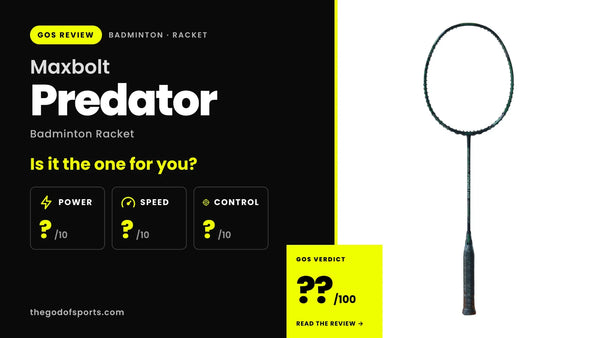 Maxbolt Predator Badminton Racket Review — Your First Proper Attacking Racket
By GOS TeamOctober 22, 2026
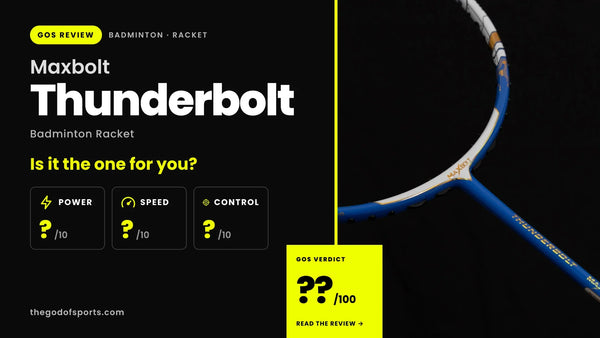 Maxbolt Thunderbolt Badminton Racket Review — Smash-First Badminton at an Entry Price
By GOS TeamOctober 22, 2026
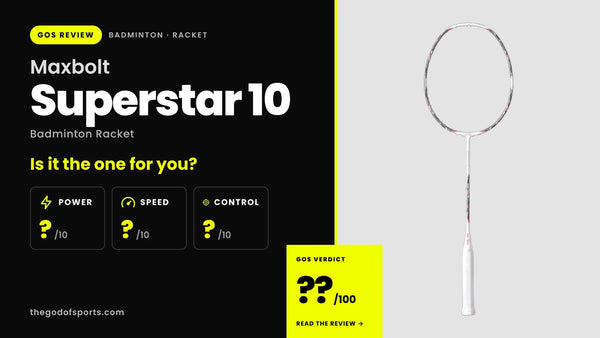 Maxbolt Superstar 10 Badminton Racket Review — The 3U Superstar for Precise Power
By GOS TeamOctober 22, 2026
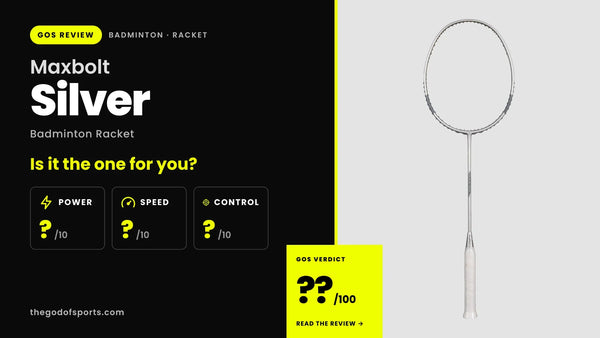 Maxbolt Silver Badminton Racket Review — Ultra-Light Speed for Long Doubles Sessions
By GOS TeamOctober 21, 2026
 Maxbolt Gallant Force Badminton Racket Review — Gallant Power in a More Forgiving Frame
By GOS TeamOctober 21, 2026
 Maxbolt Gallant Sakiko Badminton Racket Review — The Accessible Way Into Gallant Attack
By GOS TeamOctober 21, 2026
 Maxbolt Gallant Speed Slim Badminton Racket Review — The Speed Racket of the Gallant Family
By GOS TeamOctober 21, 2026
 Maxbolt Gallant Tour Badminton Racket Review — Maxbolt's All-Out Attacking Flagship
By GOS TeamOctober 21, 2026
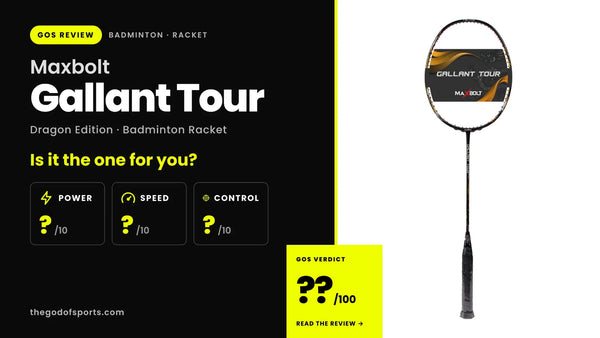 Maxbolt Gallant Tour Dragon Edition Badminton Racket Review — The Lighter 4U Gallant Tour
By GOS TeamOctober 21, 2026
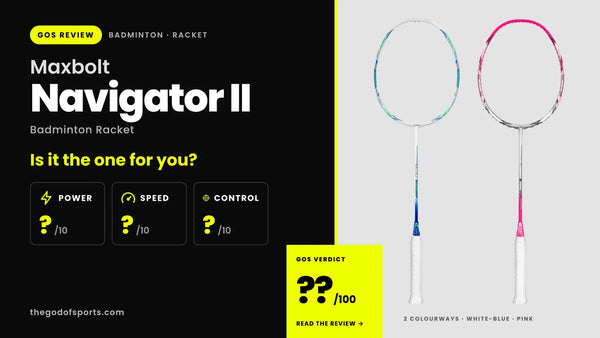 Maxbolt Navigator II Badminton Racket Review — Controlled Power for Improving Players
By GOS TeamOctober 21, 2026
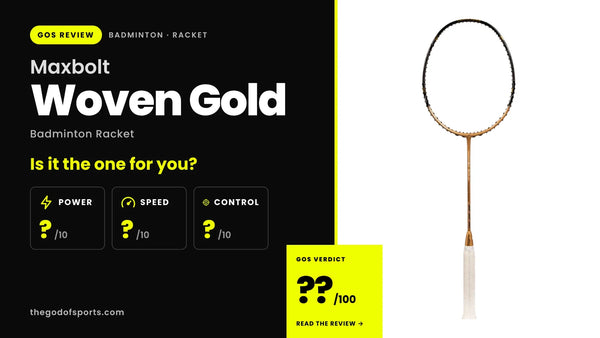 Maxbolt Woven Gold Badminton Racket Review — The Forgiving All-Rounder With No Weak Zone
By GOS TeamOctober 20, 2026
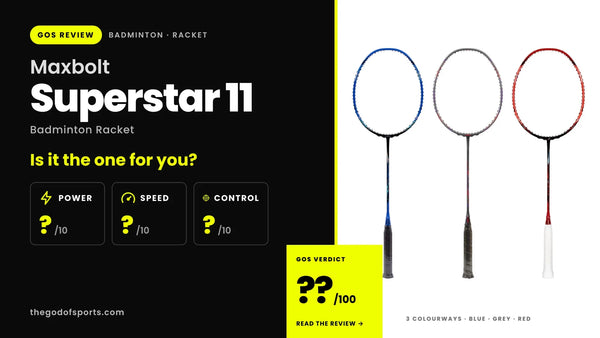 Maxbolt Superstar 11 Badminton Racket Review — One Racket for Every Part of the Rally
By GOS TeamOctober 20, 2026
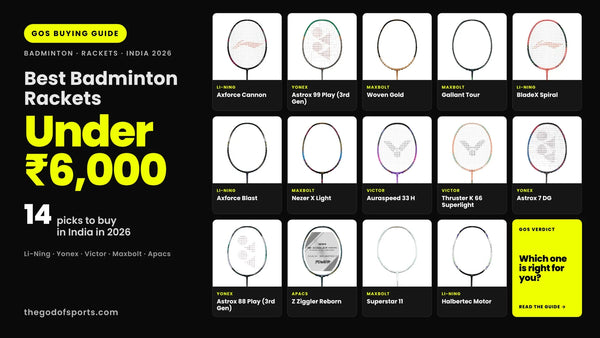 Best Badminton Rackets Under ₹6,000 in India 2026 - by God of Sports
By GOS TeamOctober 18, 2026
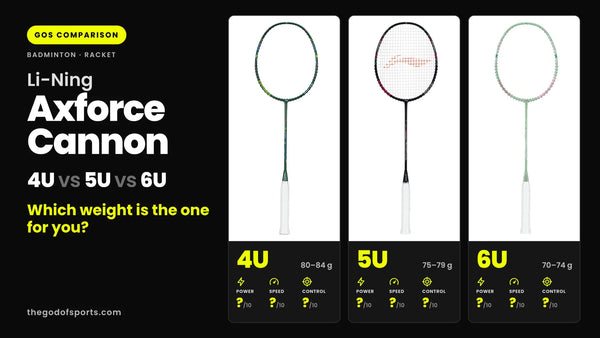 Li-Ning Axforce Cannon Review — 4U vs 5U vs 6U, Which Weight Is Right for You?
By GOS TeamOctober 18, 2026
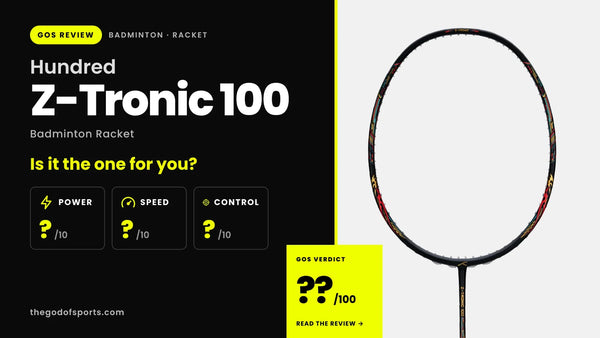 Hundred Z Tronic 100 Badminton Racket Review — A Slim, Stiff, Head-Heavy Smasher
By GOS TeamOctober 18, 2026
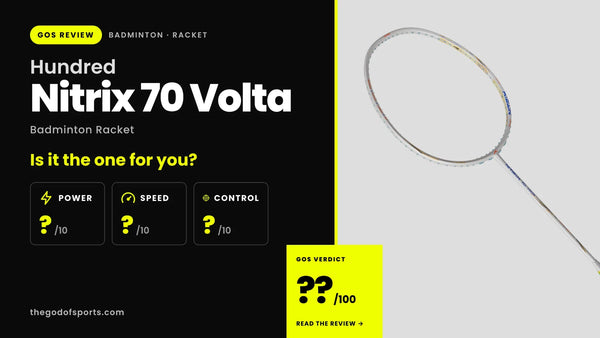 Hundred Nitrix 70 Volta Badminton Racket Review — Nitrix Smash Power with a Flexible Shaft
By GOS TeamOctober 18, 2026
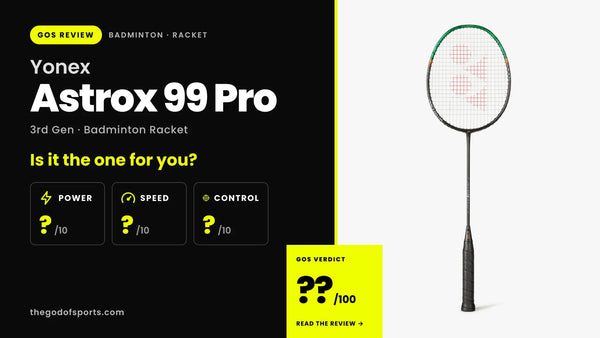 Yonex Astrox 99 Pro (3rd Gen) Badminton Racket Review — More Head Weight, Heavier Smashes
By GOS TeamOctober 18, 2026
 Li-Ning Axforce 90 Badminton Racket Review — Axforce Attack with an Easier-to-Time Shaft
By GOS TeamOctober 16, 2026