
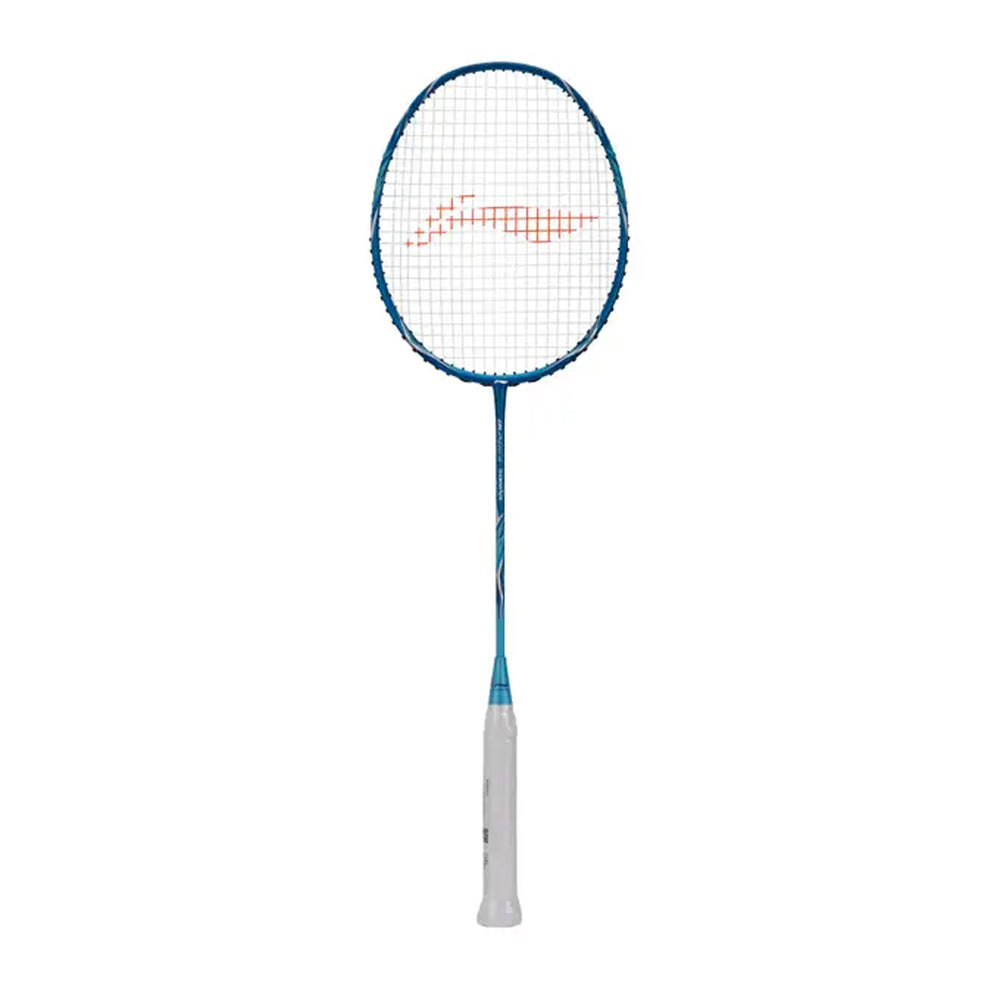

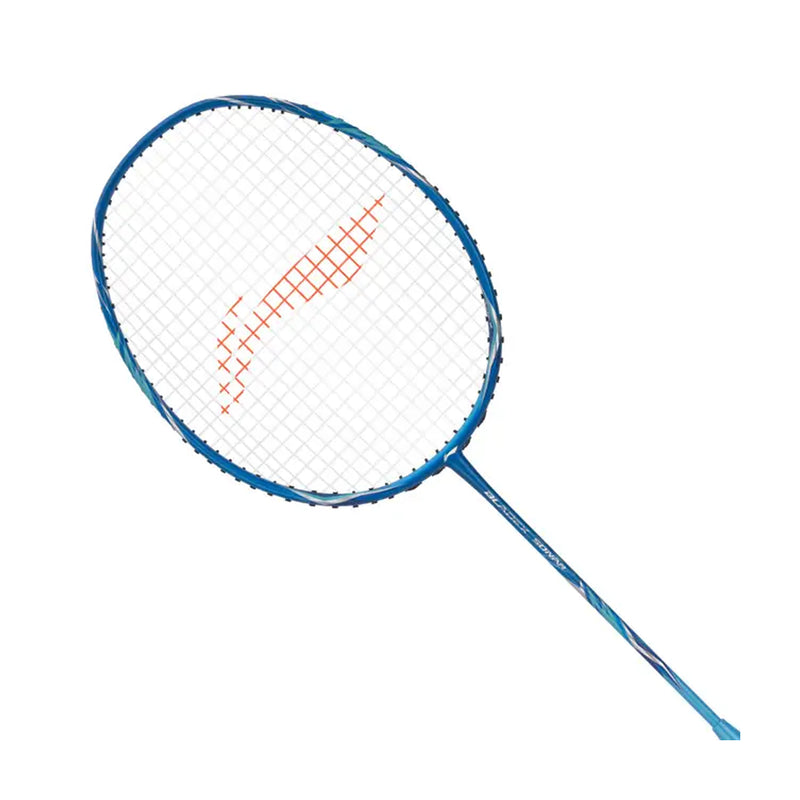


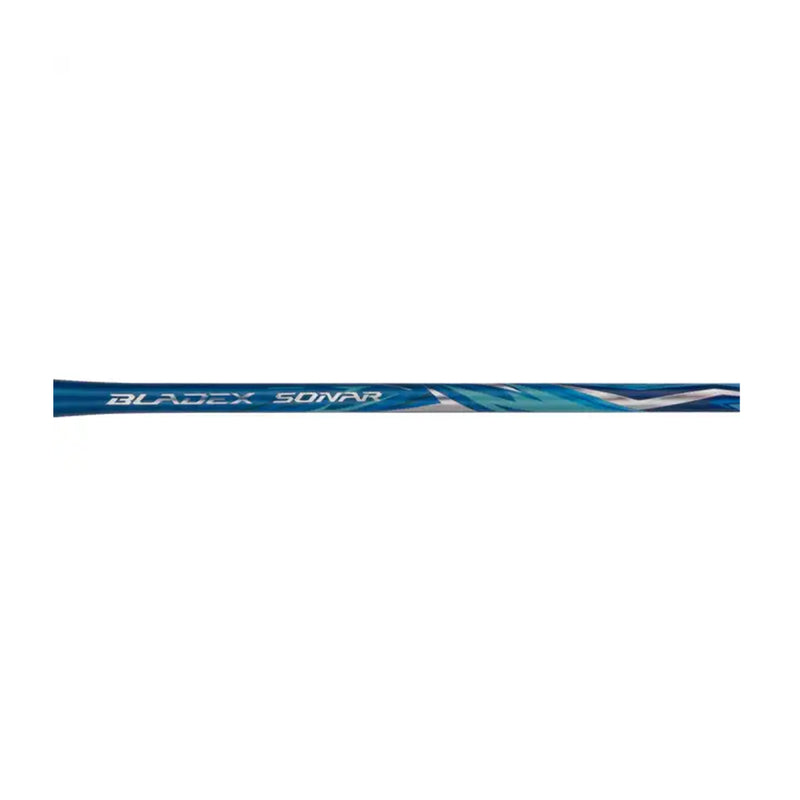

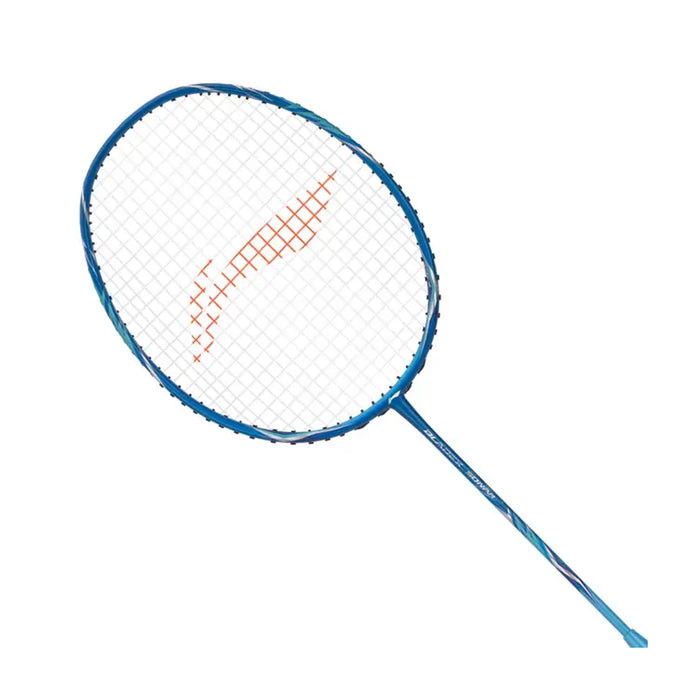
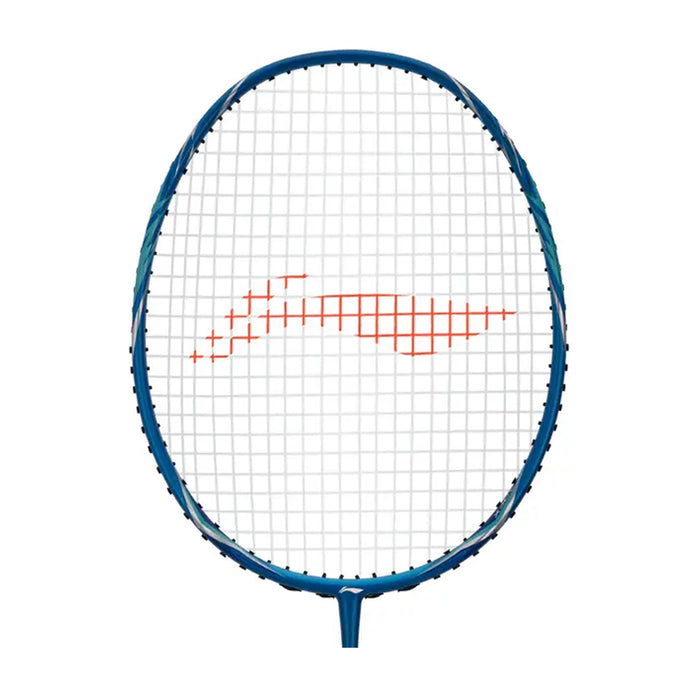

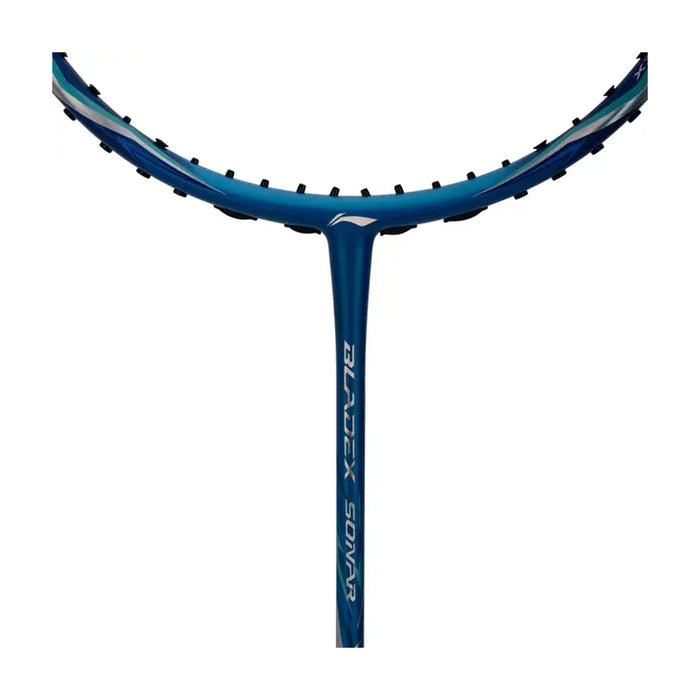
Li-Ning BladeX Sonar Badminton Racket (4U)
Li-Ning BladeX Sonar (4U, head-light, stiff) is a fast, precise speed racket for advanced doubles players.


Estimated Delivery Time: 3 - 6 Days (Delivery subject to pincode)
GOS's Opinion
Know MoreHow you'd like your racquet:

GOS's Opinion
A head-light stiff shaft speed frame engineered for defensive counter-attackers who want the fastest possible court coverage and the most precise directional control on net interceptions and drive exchanges. The most practically useful BladeX Sonar weight class for competitive doubles players who want a light, stiff, and directionally exact speed racket for fast-paced exchanges.

Product Details
| Brand | Li-Ning |
| Model | BladeX Sonar |
| Series | BladeX |
| Weight / Grip | 4U / G5 |
| Balance | Head Light |
| Flex | Stiff (low confidence) |
| Shaft Diameter | 6.8mm (low confidence) |
| Frame Material | Carbon Fibre |
| Shaft Material | Carbon Fibre |
| Max Tension | 28-29 lbs (disputed) |
| Player Level | Advanced |
| MRP | Rs. 13,990 (inclusive of all taxes) |
God of Sports Expert Verdict on Li-Ning BladeX Sonar Badminton Racket (4U):
- The BladeX Sonar at 4U is the lighter, more practically versatile weight class within the Sonar speed line - independent sources verify the 80-84g weight band and the head-light balance category consistent with its defensive, fast-handling identity.
- This is the Sonar weight class most consistently positioned for competitive doubles, where fast court coverage and precise net interceptions matter more than the extra stability the heavier 3U offers.
- The Dynamic Optimum Frame shape carries through from Li-Ning's wider platform, consistent with the Sonar's aerodynamic speed identity.
- This is the racket for a competitive doubles player who wants a light, stiff, and directionally exact speed racket for fast-paced exchanges.
Technology Breakdown:
- Dynamic Optimum Frame — a wider, more forgiving sweet spot: An isometric-style head shape built to enlarge the usable sweet spot.
- Blade-Shaped Aerodynamic Frame — reduced drag through the swing: The BladeX platform's distinct blade-profile frame cross-section, built to cut wind resistance and maintain racket-head speed.
Performance Ratings:
| Category | Score (/10) | Notes |
| Attack | 7 | A speed-first build gives usable pace without a dedicated power frame's weight. |
| Defence | 9 | Quick balance recovery supports fast blocks and resets under pressure. |
| Net Area | 9 | Fast handling is this racket's defining strength at the net. |
| Control | 9 | A stiffer shaft rewards clean, precise technique for directional accuracy. |
On Court Performance Analysis:
-
Tosses & Clears
- Tosses and clears get the job done at a club level, carrying the length you need without demanding an advanced swing to unlock it.
-
Smashes
- Smashing is usable but not the headline feature - it gets the shuttle down with decent pace, though a committed attacker will eventually want more head weight behind the swing.
-
Flat Exchanges
- Flat exchanges have real bite - a stiffer shaft returns energy quickly on fast drives, which matters when a rally speeds up and there's no time for a long swing.
-
Defence
- Defence is a genuine strength - the balance resets quickly after a block, which matters most when you're under repeated pressure at the net or mid-court.
-
Net Dribbles
- Net play is a genuine strength - touch and feel at the net are precise, and the racket rewards a player who wants to control the front of the court.
-
Handling Speed
- Handling speed is comfortable and unremarkable - quick enough for club-level rallies without being a specialist speed frame.
Racket Finder — Is This Right for You?
- Competitive doubles players who want the fastest possible court coverage: the lighter 4U weight makes this the most practically useful Sonar option.
- Players who want precise directional control on net interceptions and drives: the stiffer shaft rewards clean, exact technique.
- Not for you if you want more overhead stability: the heavier 3U BladeX Sonar gives a bit more presence from the rear court.
Playing Style Guide:
-
Rearcourt / Attacking Player
- Usable but not the focus - a speed-first build gives pace without the weight of a dedicated attacking frame.
-
Frontcourt / Net Player
- This is the racket's defining strength - fast handling and quick recovery make net play and defensive resets genuinely strong.
-
All-Round / Singles Player
- Suits an advanced all-round singles player who prioritises court coverage and quick reactions over raw power.
-
Doubles Player
- A strong fit for competitive doubles, where taking the shuttle early at the net matters more than smash power.
Same-Brand Comparison — Other Li-Ning Rackets:
| Model | Weight | Balance | Flex | Max Tension | Best For |
| Li-Ning BladeX Sonar Badminton Racket (4U) | 4U | Head Light | Stiff (low confidence) | 28-29 lbs (disputed) | (this racket) |
| Li-Ning BladeX Sonar (3U) | 3U | Head Light | Stiff (low confidence) | 28-29 lbs (disputed) | A heavier, more stable alternative |
| Li-Ning BladeX 600 (4U) | 4U | Head Light | Medium | 30 lbs | A more forgiving, better-verified speed alternative |
| Li-Ning BladeX 500 | 4U | Head Light | Medium (disputed) | Not independently verified | A more accessible entry-level speed alternative |
Cross-Brand Comparison:
| Model | Brand | Weight | Balance | Flex | Best For |
| Yonex Nanoflare 1000 Play | Yonex | 4U | Head Light | Medium | A widely-reviewed advanced speed alternative |
| Victor Auraspeed TK PL O | Victor | 4U | Head Light | Medium | A comparable speed/doubles alternative |
Other Li-Ning Rackets also at God of Sports:
Is the Li-Ning BladeX Sonar (4U) a good doubles racket?
Yes - it's positioned as the most practically useful BladeX Sonar weight class for competitive doubles, with fast handling and precise directional control.
Is the BladeX Sonar's shaft stiff?
Available sources point to a stiff shaft, though this is only moderately corroborated - we'd recommend verifying this against the physical racket if the exact shaft feel matters.
Is the BladeX Sonar (4U) head-light or head-heavy?
Head-light, consistent with the wider BladeX Sonar speed identity.
What string tension does the BladeX Sonar (4U) take?
Sources give conflicting figures of 28 or 29 lbs - we'd recommend checking the physical racket's box if an exact figure matters for a customer enquiry.
Who should buy the Li-Ning BladeX Sonar (4U)?
A competitive doubles player who wants a light, stiff, and directionally exact speed racket for fast-paced net interceptions and drive exchanges.
Does the BladeX Sonar (4U) suit singles or doubles better?
It leans strongly toward doubles, where fast net play and quick defensive recovery are most valuable.
How does the BladeX Sonar (4U) compare to the 3U?
The 4U is the lighter, faster-handling, more practically versatile option, while the 3U gives a bit more overhead stability and presence.
Similar Products


Recently Viewed
God's Advice
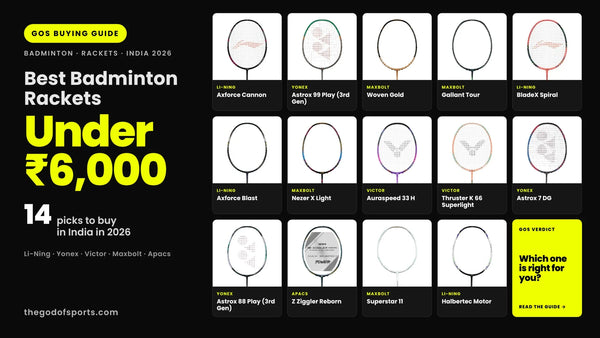 Best Badminton Rackets Under ₹6,000 in India 2026 - by God of Sports
By GOS TeamOctober 18, 2026
Best Badminton Rackets Under ₹6,000 in India 2026 - by God of Sports
By GOS TeamOctober 18, 2026
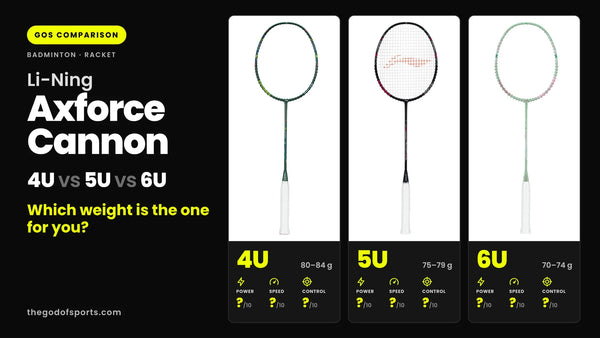 Li-Ning Axforce Cannon Review — 4U vs 5U vs 6U, Which Weight Is Right for You?
By GOS TeamOctober 18, 2026
Li-Ning Axforce Cannon Review — 4U vs 5U vs 6U, Which Weight Is Right for You?
By GOS TeamOctober 18, 2026
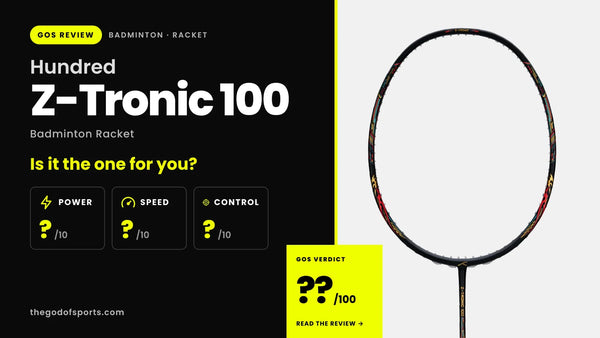 Hundred Z Tronic 100 Badminton Racket Review — A Slim, Stiff, Head-Heavy Smasher
By GOS TeamOctober 18, 2026
Hundred Z Tronic 100 Badminton Racket Review — A Slim, Stiff, Head-Heavy Smasher
By GOS TeamOctober 18, 2026
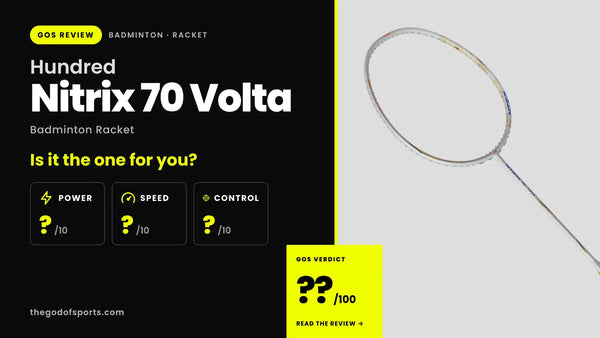 Hundred Nitrix 70 Volta Badminton Racket Review — Nitrix Smash Power with a Flexible Shaft
By GOS TeamOctober 18, 2026
Hundred Nitrix 70 Volta Badminton Racket Review — Nitrix Smash Power with a Flexible Shaft
By GOS TeamOctober 18, 2026
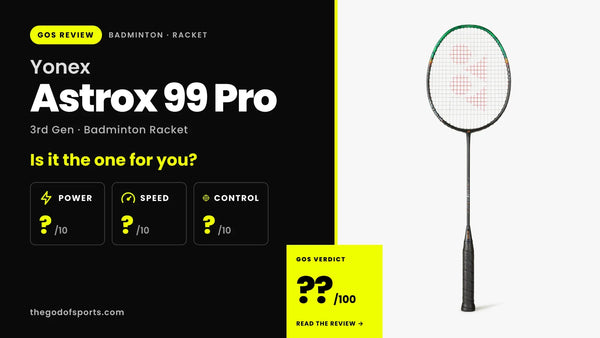 Yonex Astrox 99 Pro (3rd Gen) Badminton Racket Review — More Head Weight, Heavier Smashes
By GOS TeamOctober 18, 2026
Yonex Astrox 99 Pro (3rd Gen) Badminton Racket Review — More Head Weight, Heavier Smashes
By GOS TeamOctober 18, 2026
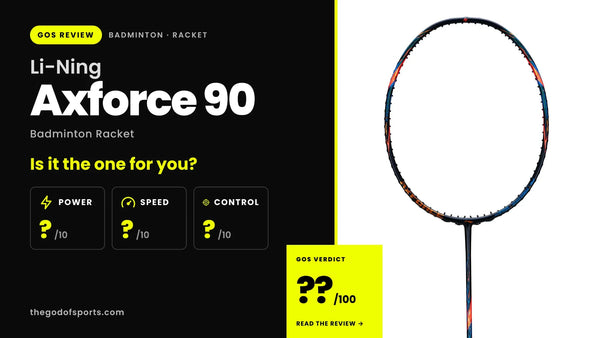 Li-Ning Axforce 90 Badminton Racket Review — Axforce Attack with an Easier-to-Time Shaft
By GOS TeamOctober 16, 2026
Li-Ning Axforce 90 Badminton Racket Review — Axforce Attack with an Easier-to-Time Shaft
By GOS TeamOctober 16, 2026
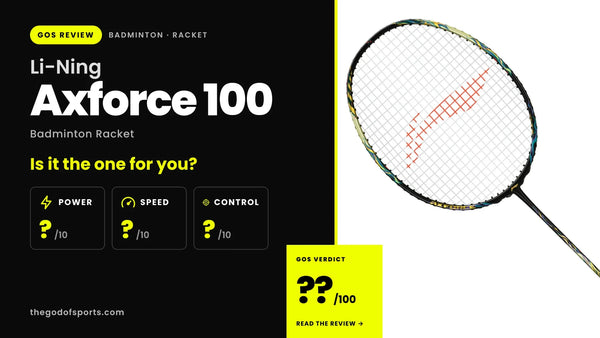 Li-Ning Axforce 100 Badminton Racket Review — Li-Ning's Crispest, Most Direct Attacking Flagship
By GOS TeamOctober 16, 2026
Li-Ning Axforce 100 Badminton Racket Review — Li-Ning's Crispest, Most Direct Attacking Flagship
By GOS TeamOctober 16, 2026
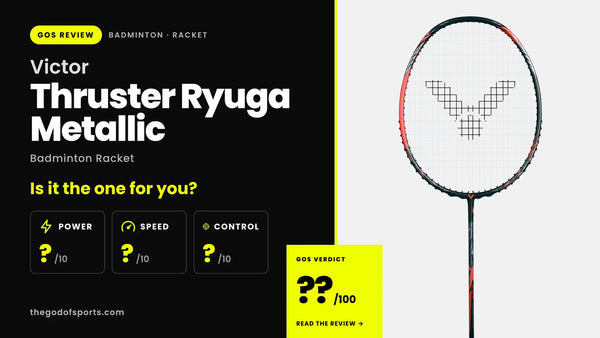 Victor Thruster Ryuga Metallic Badminton Racket Review — Lee Zii Jia's Head-Heavy Power Racket
By GOS TeamOctober 16, 2026
Victor Thruster Ryuga Metallic Badminton Racket Review — Lee Zii Jia's Head-Heavy Power Racket
By GOS TeamOctober 16, 2026
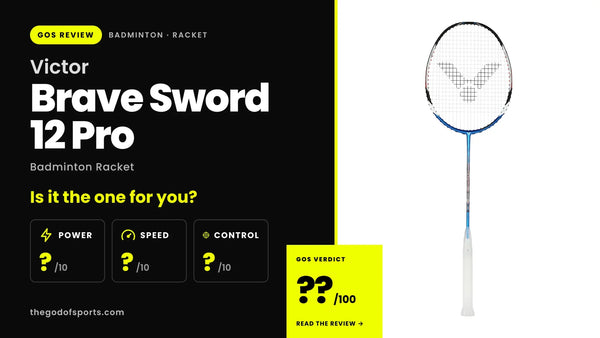 Victor Brave Sword 12 Pro Badminton Racket Review — The Classic Control All-Rounder
By GOS TeamOctober 15, 2026
Victor Brave Sword 12 Pro Badminton Racket Review — The Classic Control All-Rounder
By GOS TeamOctober 15, 2026
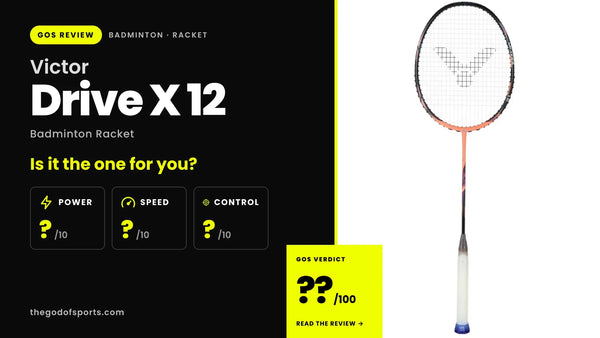 Victor DriveX 12 Badminton Racket Review — Victor's All-Round Flagship
By GOS TeamOctober 15, 2026
Victor DriveX 12 Badminton Racket Review — Victor's All-Round Flagship
By GOS TeamOctober 15, 2026
 Yonex Astrox vs Nanoflare : Which Yonex Series is Built for Your Game? — Complete 2026 Guide
By Sports AnalystApril 7, 2026
Yonex Astrox vs Nanoflare : Which Yonex Series is Built for Your Game? — Complete 2026 Guide
By Sports AnalystApril 7, 2026
 BWF Badminton World Championships 2026 – India : Everything Indian Fans Need to Know
By Sports AnalystApril 7, 2026
BWF Badminton World Championships 2026 – India : Everything Indian Fans Need to Know
By Sports AnalystApril 7, 2026
 NOX vs Adidas Padel Racquets : Which Premium Brand Is Right for Your Game? — Honest 2026 Guide
By Sports AnalystApril 7, 2026
NOX vs Adidas Padel Racquets : Which Premium Brand Is Right for Your Game? — Honest 2026 Guide
By Sports AnalystApril 7, 2026
 Best Tennis Racquet in India 2026 – Complete Buying Guide — All Levels, All Budgets, All Brands Honestly Reviewed
By Harsh ShahApril 6, 2026
Best Tennis Racquet in India 2026 – Complete Buying Guide — All Levels, All Budgets, All Brands Honestly Reviewed
By Harsh ShahApril 6, 2026
 Best Squash Racquet in India 2026 – Complete Buying Guide – All Levels, All Brands, Indian Courts
By Harsh ShahApril 6, 2026
Best Squash Racquet in India 2026 – Complete Buying Guide – All Levels, All Brands, Indian Courts
By Harsh ShahApril 6, 2026
 Best Padel Racquet in India 2026
By Sports AnalystMarch 24, 2026
Best Padel Racquet in India 2026
By Sports AnalystMarch 24, 2026
 Best Badminton Racquet for Beginners in India 2026
By Sports AnalystMarch 24, 2026
Best Badminton Racquet for Beginners in India 2026
By Sports AnalystMarch 24, 2026
 Best Padel Balls in India 2026 Complete Buying Guide (Indian Climate + Tournament Grade)
By Sports AnalystMarch 9, 2026
Best Padel Balls in India 2026 Complete Buying Guide (Indian Climate + Tournament Grade)
By Sports AnalystMarch 9, 2026