


Maxbolt Gallant Sakiko Badminton Racket (White)
Maxbolt Gallant Sakiko (White) is a 4U, head-heavy, medium-flex racket for intermediate players, with a carbon graphite frame strung up to 35 lbs for accessible attacking power.


Estimated Delivery Time: 3 - 6 Days (Delivery subject to pincode)
GOS's Opinion
Know MoreHow you'd like your racquet:

GOS's Opinion
A solid entry into attacking badminton, head-heavy enough to get you smashing well without being too demanding on your technique.

Product Details
| Brand | Maxbolt |
| Model | Gallant Sakiko (White) |
| Series | Gallant Sakiko |
| Weight / Grip | 4U (Avg. 84g) / G5 |
| Balance | Head Heavy |
| Flex | Medium |
| Frame Material | Carbon Graphite |
| Shaft Material | Carbon Graphite |
| Max Tension | Up to 35 lbs |
| Player Level | Intermediate |
| Colour | White |
| MRP | Rs. 8,990 (inclusive of all taxes) |
God of Sports Expert Verdict on Maxbolt Gallant Sakiko Badminton Racket (White):
- The Gallant Sakiko is the accessible entry point into Maxbolt's Gallant attacking family, with a head-heavy balance and medium flex that's easier to handle than the stiffer Gallant Tour or Speed Slim.
- A moderate tension ceiling keeps the frame forgiving, letting a player get real smash weight behind their shots without a fully developed, fast swing yet.
- It shares its carbon graphite construction with the rest of the Gallant family, in a simpler build than the Woven or slim-shaft models in Maxbolt's range.
- This is the racket for an intermediate player who wants head-heavy attacking power that doesn't demand advanced technique to use well.
Technology Breakdown:
- Head-Heavy Balance — real smash weight: Extra mass in the head adds momentum on an overhead swing, giving genuine attacking power rather than a token amount.
- Medium Flex — power without demanding technique: More forgiving than a stiff shaft, helping generate pace without requiring a fully developed, fast swing.
- Carbon Graphite Frame — a straightforward, dependable build: A simple, no-frills construction aimed at being an accessible frame rather than a showcase of exotic materials.
Performance Ratings:
| Category | Score (/10) | Notes |
| Attack | 9 | A head heavy balance and medium shaft are built to put real weight behind the smash. |
| Defence | 8 | A head-heavy balance asks more recovery effort here than an even-balance frame would. |
| Net Area | 7 | Playable at the net, though not the racket's main strength given the balance. |
| Control | 8 | A medium shaft rewards clean technique with precise placement. |
On Court Performance Analysis:
-
Tosses & Clears
- The head-heavy balance and give in the shaft work together here - tosses and clears carry full length with relatively little swing effort, which matters most late in a long rally when your arm is tiring.
-
Smashes
- This is where the racket is built to perform - the head-heavy weight and medium shaft combine for genuinely heavy, steep smashes that opponents have to work to return.
-
Flat Exchanges
- Flat exchanges are competent and controllable, without being the racket's standout strength.
-
Defence
- Defence is solid rather than a standout - the head-heavy balance asks a bit more recovery effort than a lighter frame, but blocks and resets stay controllable with clean technique.
-
Net Dribbles
- Net dribbles are solid and controllable, with reasonable feel for tight exchanges close to the tape.
-
Handling Speed
- Handling speed is the trade-off for the attacking weight up top - this isn't a frame built for lightning-fast reaction exchanges, and it shows most when you're rushed at the net or mid-court.
Racket Finder — Is This Right for You?
- Intermediate players building a smash-first game: head-heavy weight and a forgiving medium flex make the attack accessible without demanding advanced technique.
- Players who want real attacking power, not just a taste of it: the Attack 4.5 rating here reflects genuine smash weight, not a watered-down beginner feel.
- Not for you if you want a fully even-balance, control-first racket: the head-heavy balance is slower to reset for net play - if that's your priority, look at the Woven Gold instead.
Playing Style Guide:
-
Rearcourt / Attacking Player
- This is where the Gallant Sakiko performs best - head-heavy weight and a forgiving flex combine for genuine, accessible smash power.
-
Frontcourt / Net Player
- The head-heavy balance is slower to reset for net play, the usual trade-off for the attacking focus.
-
All-Round / Singles Player
- Workable while attack is your main focus, though a more balanced frame suits a fully all-round singles game better.
-
Doubles Player
- A reasonable pick for a doubles player building their rearcourt attack, paired with a partner covering the net.
Same-Brand Comparison — Other Maxbolt Rackets:
| Model | Weight | Balance | Flex | Max Tension | Best For |
| Gallant Tour (Dragon) | 4U | Head Heavy | Stiff | 43 lbs | Maximum smash power for an advanced attacking player |
| Gallant Tour (Black) | 4U | Head Heavy | Stiff | 43 lbs | Maximum smash power for an advanced attacking player |
| Superstar 10 | 3U | Even | Stiff | 43 lbs | Directed power with quick handling for an experienced player |
Cross-Brand Comparison:
| Model | Brand | Weight | Balance | Flex | Best For |
| Yonex Astrox 77 Play | Yonex | 4U | Head Heavy | Medium | A lighter-swinging head-heavy option from a widely-reviewed brand |
| Li-Ning AxForce 10 | Li-Ning | 5U | Head Heavy | Medium | A lighter head-heavy attacking frame without the heavier swingweight |
Other Maxbolt Rackets also at God of Sports:
Is the Maxbolt Gallant Sakiko a good racket for intermediate attacking players?
Yes - the head-heavy balance and medium flex are built to give real smash weight without demanding the fast, precise swing a stiffer racket would need. It's a strong entry point into head-heavy attacking play for a player who's past beginner level but not yet ready for the stiffer Gallant Tour.
Gallant Sakiko vs Gallant Tour - what's the difference?
The Sakiko uses a simpler carbon graphite construction, a medium flex and a lower tension ceiling, making it the more accessible, forgiving racket of the two. The Gallant Tour uses a stiffer shaft and higher 43 lb tension ceiling for a more advanced player with established technique. Most players start on something like the Sakiko and move up as their swing develops.
What string tension does the Gallant Sakiko take?
It's rated up to 35 lbs. Stringing at the lower end keeps the most built-in forgiveness and power assistance; stringing higher firms up the feel as your technique improves.
Who should buy the Maxbolt Gallant Sakiko?
An intermediate player who wants genuine head-heavy attacking power without the technique demands of Maxbolt's stiffer Gallant rackets. It's not the right pick for a player who wants a fully even-balance, control-first frame - the Woven Gold would suit that better.
Is the Gallant Sakiko head-heavy or even-balanced?
Head-heavy - that's the core of what makes it an attacking racket, paired with a medium flex that keeps it more forgiving than Maxbolt's stiffer attacking frames like the Gallant Tour.
Can a beginner use the Gallant Sakiko?
It's positioned for intermediate players rather than true beginners. The head-heavy balance rewards some existing swing technique - a complete beginner would likely get more out of a lighter, more even-balance frame like the Blade or Bluflare while they build fundamentals.
Does the Gallant Sakiko suit singles or doubles better?
It leans toward a rearcourt attacking role in either format. In singles it suits a player building a smash-first game; in doubles it works well paired with a partner who covers the net while you focus on power from the back.


Similar Products




Recently Viewed
God's Advice
 Maxbolt Predator Badminton Racket Review — Your First Proper Attacking Racket
By GOS TeamOctober 22, 2026
 Maxbolt Thunderbolt Badminton Racket Review — Smash-First Badminton at an Entry Price
By GOS TeamOctober 22, 2026
 Maxbolt Superstar 10 Badminton Racket Review — The 3U Superstar for Precise Power
By GOS TeamOctober 22, 2026
 Maxbolt Silver Badminton Racket Review — Ultra-Light Speed for Long Doubles Sessions
By GOS TeamOctober 21, 2026
 Maxbolt Gallant Force Badminton Racket Review — Gallant Power in a More Forgiving Frame
By GOS TeamOctober 21, 2026
 Maxbolt Gallant Sakiko Badminton Racket Review — The Accessible Way Into Gallant Attack
By GOS TeamOctober 21, 2026
 Maxbolt Gallant Speed Slim Badminton Racket Review — The Speed Racket of the Gallant Family
By GOS TeamOctober 21, 2026
 Maxbolt Gallant Tour Badminton Racket Review — Maxbolt's All-Out Attacking Flagship
By GOS TeamOctober 21, 2026
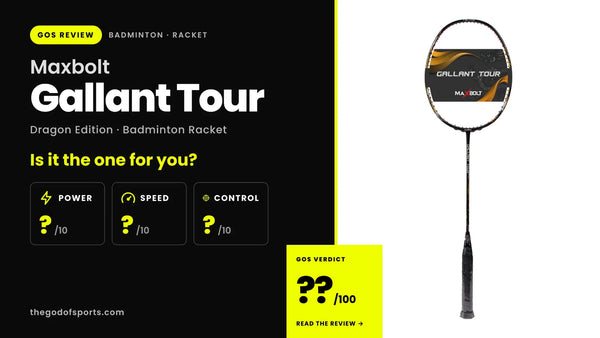 Maxbolt Gallant Tour Dragon Edition Badminton Racket Review — The Lighter 4U Gallant Tour
By GOS TeamOctober 21, 2026
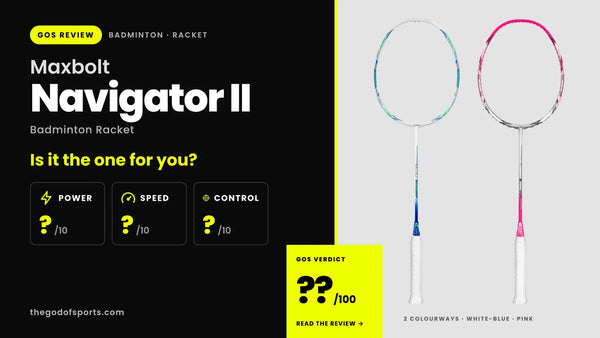 Maxbolt Navigator II Badminton Racket Review — Controlled Power for Improving Players
By GOS TeamOctober 21, 2026
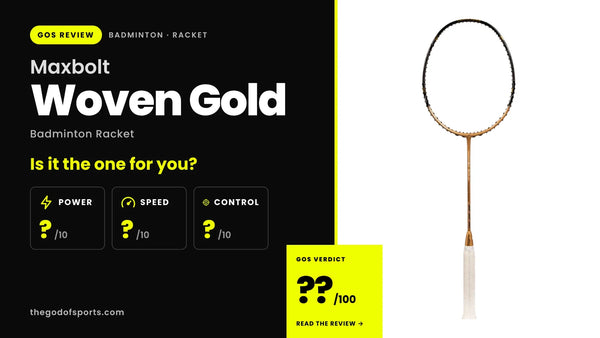 Maxbolt Woven Gold Badminton Racket Review — The Forgiving All-Rounder With No Weak Zone
By GOS TeamOctober 20, 2026
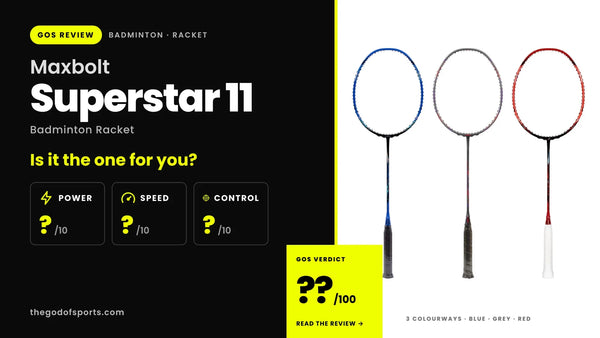 Maxbolt Superstar 11 Badminton Racket Review — One Racket for Every Part of the Rally
By GOS TeamOctober 20, 2026
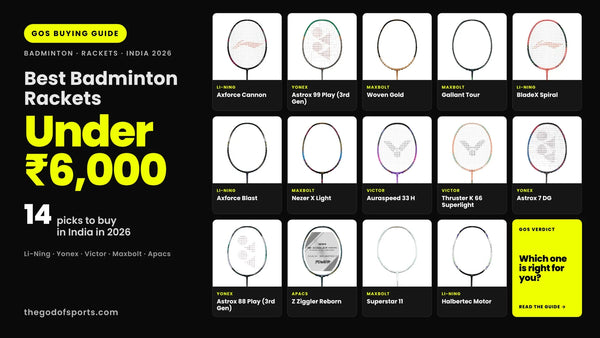 Best Badminton Rackets Under ₹6,000 in India 2026 - by God of Sports
By GOS TeamOctober 18, 2026
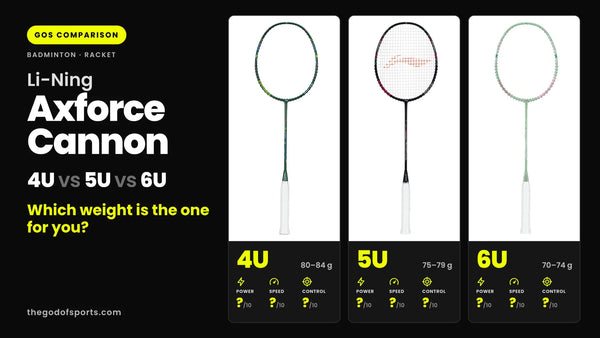 Li-Ning Axforce Cannon Review — 4U vs 5U vs 6U, Which Weight Is Right for You?
By GOS TeamOctober 18, 2026
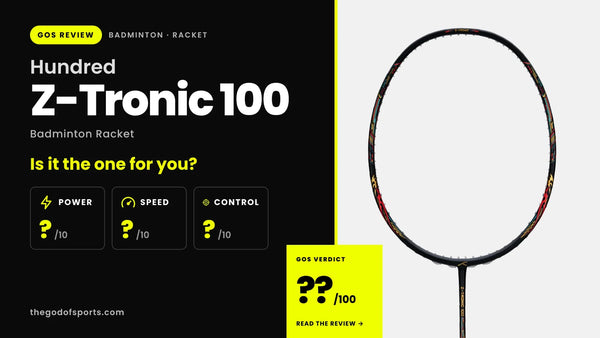 Hundred Z Tronic 100 Badminton Racket Review — A Slim, Stiff, Head-Heavy Smasher
By GOS TeamOctober 18, 2026
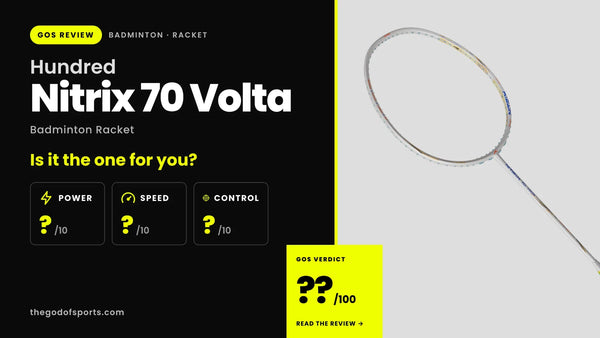 Hundred Nitrix 70 Volta Badminton Racket Review — Nitrix Smash Power with a Flexible Shaft
By GOS TeamOctober 18, 2026
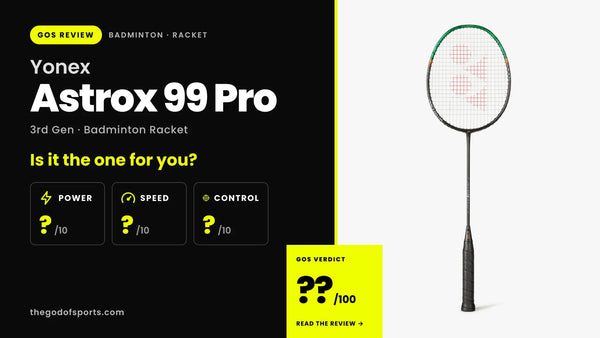 Yonex Astrox 99 Pro (3rd Gen) Badminton Racket Review — More Head Weight, Heavier Smashes
By GOS TeamOctober 18, 2026
 Li-Ning Axforce 90 Badminton Racket Review — Axforce Attack with an Easier-to-Time Shaft
By GOS TeamOctober 16, 2026