


Victor Thruster Ryuga TD Badminton Racket
Victor Thruster Ryuga TD (4U/G5) is a head heavy, stiff-flex racket for intermediate players, strung up to 30 lbs.


Estimated Delivery Time: 3 - 6 Days (Delivery subject to pincode)
GOS's Opinion
Know MoreHow you'd like your racquet:

GOS's Opinion
A Taiwan domestic version of the original Ryuga, keeping the extreme head-heavy balance and powerful attacking character of the flagship at a lower price point. Best suited to advanced club players who want serious rear-court power and are comfortable with a frame that rewards aggression above all else.

Product Details
| Brand | Victor |
| Model | Thruster Ryuga TD |
| Series | Thruster Ryuga |
| Weight / Grip | 4U (Avg. 83g) / G5 |
| Balance | Head Heavy |
| Flex | Stiff |
| Frame Material | High Resilience Modulus Graphite, Hard Cored Technology |
| Shaft Material | High Resilience Modulus Graphite - 6.8mm Shaft |
| Max Tension | Up to 30 lbs |
| Player Level | Intermediate |
| MRP | Rs. 8,999 (inclusive of all taxes) |
God of Sports Expert Verdict on Victor Thruster Ryuga TD Badminton Racket:
- The Ryuga TD carries the original Ryuga's extreme head-heavy, attacking construction at a lower price point.
- There's a genuine, unresolved signal that TD variants may use a simplified construction versus the international flagship rather than identical specs at a lower price - worth knowing going in.
- This is the racket for an advanced club player who wants serious rear-court power and is comfortable with a frame that rewards aggression above everything else.
Technology Breakdown:
- Head-Heavy Balance — mass where the smash happens: Extra weight in the head adds momentum to an overhead swing, the foundation of the Ryuga line's attacking identity.
- Hard Cored Technology — frame rigidity: A multi-layer carbon construction reinforcing the frame against deformation under hard-hitting use.
- Stiff Shaft — direct power transfer: Transfers swing speed straight into the shuttle rather than flexing and absorbing it, rewarding a fast, committed stroke.
Performance Ratings:
| Category | Score (/10) | Notes |
| Attack | 9 | A head-heavy balance and stiff shaft put real weight behind the smash. |
| Defence | 6 | Asks a bit more recovery effort given the balance, but still controllable with clean technique. |
| Net Area | 7 | Workable at the net, though recovery speed is the limiting factor compared with a lighter frame. |
| Control | 7 | A stiff shaft rewards clean, consistent technique with precise placement. |
On Court Performance Analysis:
-
Tosses & Clears
- Tosses and clears come easily off this frame's head-heavy weight, reaching the back tramlines without a full-effort swing - though the stiff shaft means you still need to time the hit cleanly to get that length, rather than relying on the shaft to do the work for you.
-
Smashes
- This is where the racket is built to perform - the head-heavy weight and stiff shaft combine for genuinely heavy, steep smashes that opponents have to work to return.
-
Flat Exchanges
- Drives carry real pace off the stiff shaft, though the head-heavy balance means the racket is a touch slower to reset between consecutive flat exchanges than a lighter-balanced frame.
-
Defence
- Defence asks more effort than it gives back - the head-heavy balance that helps the attack works directly against fast recovery, so blocks and resets take noticeably more arm work than on a lighter frame.
-
Net Dribbles
- Net dribbles are solid and controllable, with reasonable feel for tight exchanges close to the tape.
-
Handling Speed
- Handling speed is the trade-off for the attacking weight up top - this isn't a frame built for lightning-fast reaction exchanges, and it shows most when you're rushed at the net or mid-court.
Racket Finder — Is This Right for You?
- Advanced club players who want serious rearcourt power: the extreme head-heavy balance and stiff shaft are built for exactly that.
- Players who want Ryuga-level aggression at an accessible price: the TD designation generally comes at a lower price than the international flagship.
- Not for you if you're still building a consistent swing: the stiff, head-heavy build amplifies mistimed shots rather than forgiving them.
Playing Style Guide:
-
Rearcourt / Attacking Player
- This is the racket's entire identity - extreme head-heavy balance and a stiff shaft built around rear-court power.
-
Frontcourt / Net Player
- The head-heavy balance is slower to reset for net play, the usual trade-off for the attacking focus.
-
All-Round / Singles Player
- Suits an attack-leaning singles player more than one needing to split time evenly between attack and defence.
-
Doubles Player
- Workable for a rearcourt-focused doubles role, paired with a partner who covers the net.
Same-Brand Comparison — Other Victor Rackets:
| Model | Weight | Balance | Flex | Max Tension | Best For |
| Victor Thruster Ryuga TD | 4U | Head Heavy | Stiff | Up to 30 lbs | (this racket) |
| Victor Thruster Raptor | 4U | Slightly Head Heavy | Stiff | Up to 31 lbs | |
| Victor Thruster Ryuga II TD | 4U | Head Heavy | Stiff | Up to 31 lbs | |
| Victor Thruster Hawk | 5U | Head Heavy | Stiff | Up to 27 lbs |
Cross-Brand Comparison:
| Model | Brand | Weight | Balance | Flex | Best For |
| Li-Ning AxForce 10 (5U) | Li-Ning | 5U | Head Heavy | Medium | A lighter head-heavy attacking racket at a similar price point |
| Yonex Astrox 7 DG | Yonex | 4U | Head Heavy | Medium | A head-heavy attacking racket from a widely-reviewed brand |
Other Victor Rackets also at God of Sports:
What does 'TD' mean on the Ryuga TD?
TD is part of the model name and is commonly associated with the Taiwan market. It may differ in construction from the international Ryuga flagship, so don't treat it as identical specs at a lower price.
Is the Ryuga TD a good attacking racket?
Yes - it carries the original Ryuga's extreme head-heavy, stiff-shaft attacking construction, built for powerful, aggressive rear-court play.
What string tension does the Ryuga TD take?
It's rated up to 30 lbs, though sources varied between 29 and 31 lbs - treat this as an approximate figure.
Who should buy the Victor Ryuga TD?
An advanced club player who wants serious rear-court power at a more accessible price than the international Ryuga. It rewards aggression and committed technique rather than forgiving a developing swing.
Is the Ryuga TD head-heavy or even-balanced?
Head-heavy - in fact described as extreme head-heavy, consistent with the Ryuga line's reputation as one of Victor's most committed attacking platforms.
Does the Ryuga TD suit singles or doubles better?
It leans toward singles, where its head-heavy attacking power can be used to dominate from the rearcourt. In doubles, it works best paired with a partner who covers the net.
How does the Ryuga TD compare to the Ryuga II TD?
Both share the extreme head-heavy Ryuga attacking identity, and the Ryuga II adds refinements over the original.
Similar Products




Recently Viewed
God's Advice
 Maxbolt Predator Badminton Racket Review — Your First Proper Attacking Racket
By GOS TeamOctober 22, 2026
 Maxbolt Thunderbolt Badminton Racket Review — Smash-First Badminton at an Entry Price
By GOS TeamOctober 22, 2026
 Maxbolt Superstar 10 Badminton Racket Review — The 3U Superstar for Precise Power
By GOS TeamOctober 22, 2026
 Maxbolt Silver Badminton Racket Review — Ultra-Light Speed for Long Doubles Sessions
By GOS TeamOctober 21, 2026
 Maxbolt Gallant Force Badminton Racket Review — Gallant Power in a More Forgiving Frame
By GOS TeamOctober 21, 2026
 Maxbolt Gallant Sakiko Badminton Racket Review — The Accessible Way Into Gallant Attack
By GOS TeamOctober 21, 2026
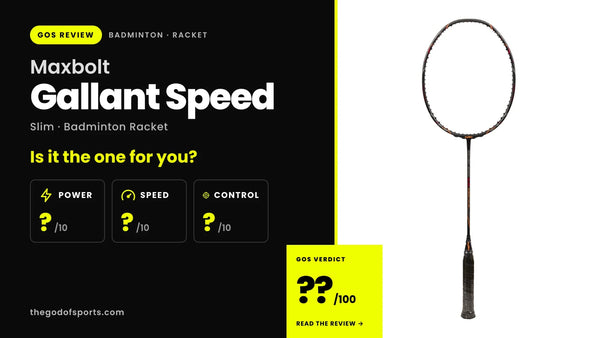 Maxbolt Gallant Speed Slim Badminton Racket Review — The Speed Racket of the Gallant Family
By GOS TeamOctober 21, 2026
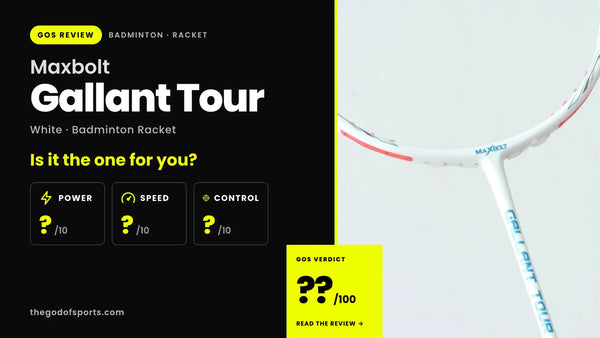 Maxbolt Gallant Tour Badminton Racket Review — Maxbolt's All-Out Attacking Flagship
By GOS TeamOctober 21, 2026
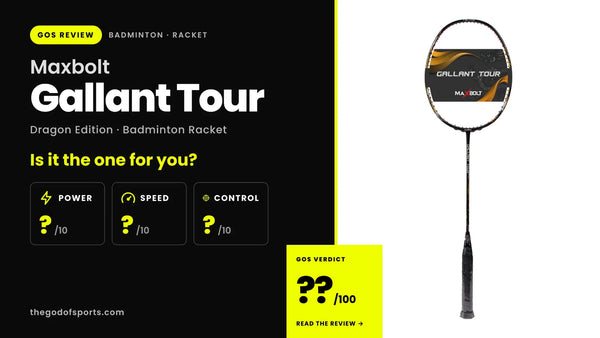 Maxbolt Gallant Tour Dragon Edition Badminton Racket Review — The Lighter 4U Gallant Tour
By GOS TeamOctober 21, 2026
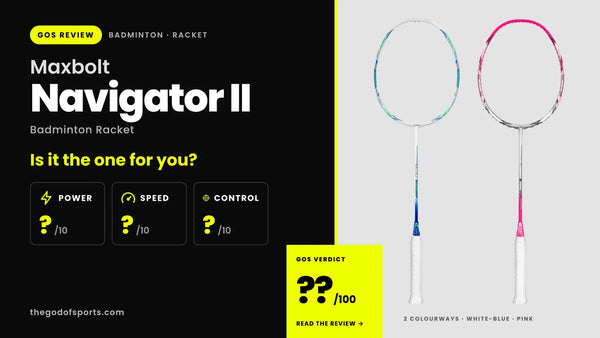 Maxbolt Navigator II Badminton Racket Review — Controlled Power for Improving Players
By GOS TeamOctober 21, 2026
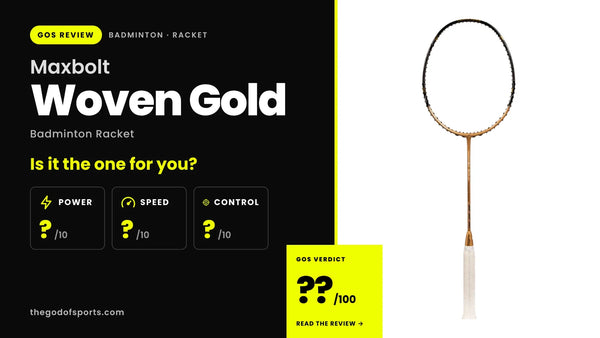 Maxbolt Woven Gold Badminton Racket Review — The Forgiving All-Rounder With No Weak Zone
By GOS TeamOctober 20, 2026
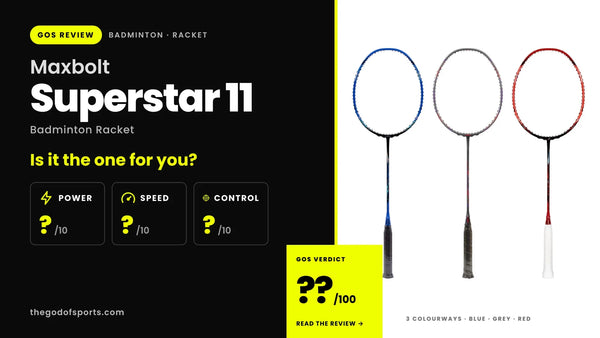 Maxbolt Superstar 11 Badminton Racket Review — One Racket for Every Part of the Rally
By GOS TeamOctober 20, 2026
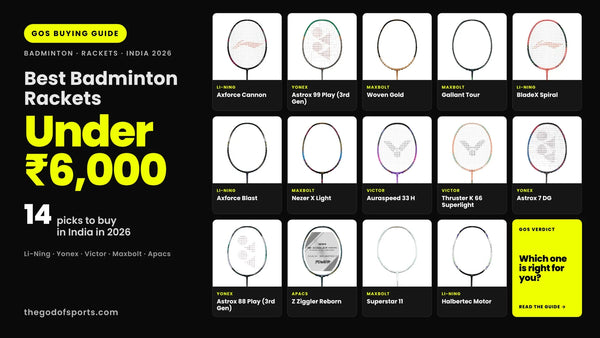 Best Badminton Rackets Under ₹6,000 in India 2026 - by God of Sports
By GOS TeamOctober 18, 2026
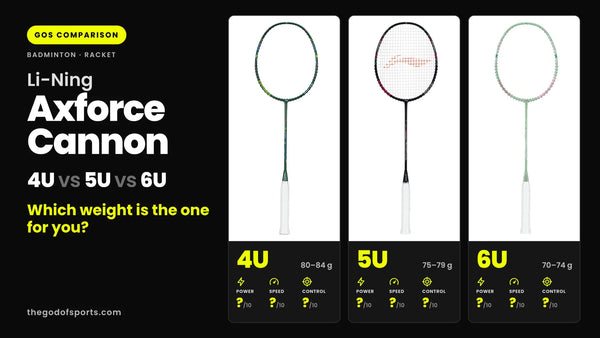 Li-Ning Axforce Cannon Review — 4U vs 5U vs 6U, Which Weight Is Right for You?
By GOS TeamOctober 18, 2026
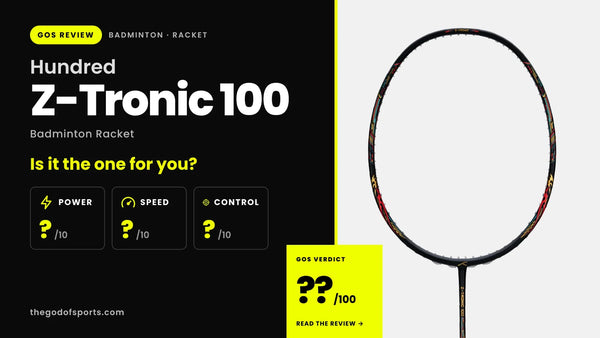 Hundred Z Tronic 100 Badminton Racket Review — A Slim, Stiff, Head-Heavy Smasher
By GOS TeamOctober 18, 2026
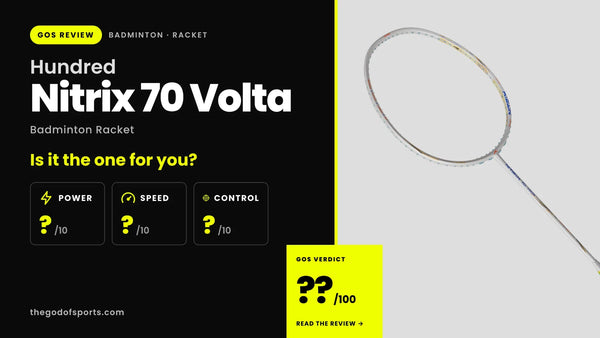 Hundred Nitrix 70 Volta Badminton Racket Review — Nitrix Smash Power with a Flexible Shaft
By GOS TeamOctober 18, 2026
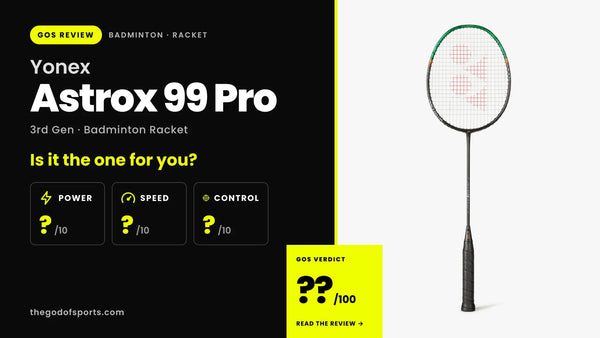 Yonex Astrox 99 Pro (3rd Gen) Badminton Racket Review — More Head Weight, Heavier Smashes
By GOS TeamOctober 18, 2026
 Li-Ning Axforce 90 Badminton Racket Review — Axforce Attack with an Easier-to-Time Shaft
By GOS TeamOctober 16, 2026